


Table of Contents
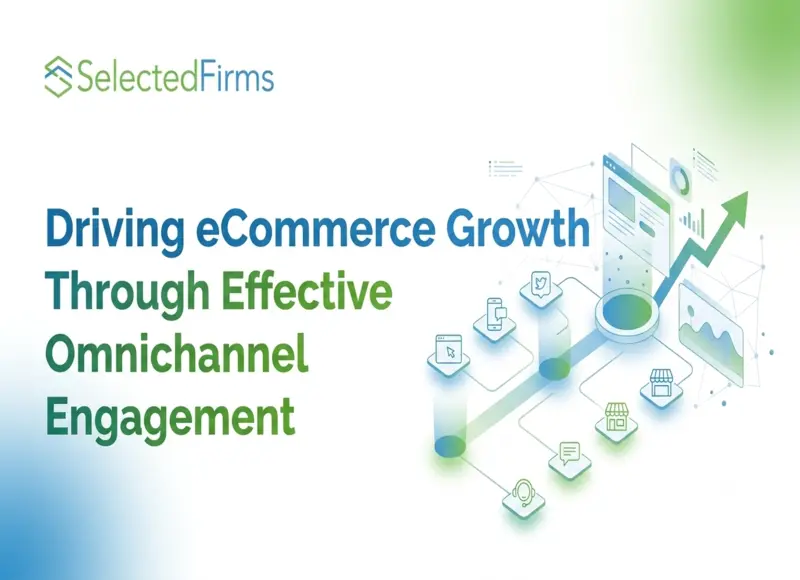
Discover how an effective omnichannel engagement strategy helps eCommerce brands increase customer loyalty, improve personalization, unify customer experiences, and drive sustainable revenue growth. Learn practical strategies for connecting channels, leve
Key Takeaways:
- Omnichannel retailers retain 89% of customers vs. 33% for brands with weak cross-channel strategies. Closing the gap between channels, in messaging, pricing, and data, is one of the highest-leverage growth moves available to eCommerce brands today.
- Brands that connect customer signals across channels (browse history, cart behavior, past purchases) and act on them in real time see measurably higher loyalty and satisfaction scores. The key is treating data as a single view, not siloed by channel.
- Social commerce is on track to surpass $1 trillion globally by 2028, and seamless post-sale service directly drives repeat purchases and referrals. Brands that integrate both into their broader omnichannel strategy grow through engagement rather than spend.
In eCommerce, customers expectations have gone past what most brands can really handle. Shoppers don’t think in channels. They flow between a brand’s Instagram page, website, mobile app, and even a physical store, expecting each touchpoint to feel linked, almost seamless. When that connection is missing, they bounce, and often quickly. When it’s present, they tend to purchase more, linger longer, and return.
While yes, building a true omnichannel engagement strategy isn't simple, especially for growing brands managing multiple platforms and customer touchpoints, there's still a clear path to doing it well. One has to understand where each channel fits into the customer journey. It's also important to know how consistency, data, and personalization work together to turn casual browsers into loyal buyers. For growing brands, though, this is one of the most direct levers for sustainable eCommerce growth available today.
If you're an eCommerce brand looking to grow revenue without just spending more on acquisition, read on to learn how effective omnichannel engagement can transform the way your customers experience your brand.
Consistent Cross-Channel Experiences Keep Customers Coming Back
What does a customer actually feel when an experience is truly seamless? They don't notice the channel transition at all. They add an item to their cart on mobile, pick up the session on desktop, and receive a timely follow-up in their inbox, all without having to start over. That kind of continuity is what turns a first purchase into a lasting customer relationship.
The numbers back this up. Omnichannel retailers retain 89% of customers on average, compared to just 33% for brands with weak cross-channel strategies. That gap in customer loyalty compounds quickly. One can think of it as a leaky bucket: no amount of new traffic fills it if existing customers are dropping off at every channel transition. Multi-channel campaigns also drive 287% higher purchase rates than single-channel efforts, so the revenue case is hard to ignore.
For eCommerce brands, making every channel feel like one means connecting the right data across the right platforms, so that what a customer does in one place informs what they see in another. Cart abandonment, repeated customer queries, and inconsistent messaging across touchpoints are all signs of a disconnected experience. Each one is a growth opportunity waiting to be addressed.
When teams have trouble talking across departments, this mismatch tends to show up in the customer experience too. It seems like all that internal inconsistency, and yeah, it leaks outward. Fragmented internal tools can cause fragmented external interactions. So investing in unified communications that combine voice, video, and messaging across teams might be the better fit for businesses trying to bridge that internal gap before it turns into something customers can actually feel.
Making Every Channel Feel Like One
How do you actually unify the experience across channels without a massive technology overhaul? Start with your customer data. One has to know where customers are entering the journey, where they're dropping off, and what they're engaging with most. From there, creating smarter transitions becomes possible, ones that respect what the customer has already done rather than making them repeat it.
Consistency in tone, offer, and content across every touchpoint really matters, a lot, even when it seems minor. Like, a customer who sees a discount on social media should not then stumble into a different price on the website. Those little mismatches, they chew through trust fast. The brands that do this well usually treat every channel as part of one ongoing conversation, not as if it were a separate promotion or two worlds.
Personalization Turns Browsers Into Buyers

Did you know that personalization leaders are 71% more likely to report improved customer loyalty? That's not a marginal gain. It's the difference between customers who browse and forget and customers who come back because they feel genuinely understood.
Personalized experiences begin with customer data. Every purchase, browse session, and even the customer communication tells a sort of story about what they want next. Bringing these signals together into one view, instead of letting them sit in separate silos by channel, is what enables brands to send the right message at the right time. And yes, that holds up whether you are personalizing a homepage, tweaking an email subject line, or placing a product suggestion inside the checkout flow.
Data collection done well is also respectful. Customers are more comfortable sharing information when they see it translated into value: offers that are actually relevant, content that matches where they are in the customer journey. That reciprocity is what builds the kind of customer relationships that go well beyond a single transaction. It also drives higher customer satisfaction scores over time, since customers feel recognized rather than processed.
Delivering the Right Message at the Right Time
Artificial intelligence and machine learning have made it significantly easier to act on customer data at scale. Brands can now trigger in-app messages when a user lingers on a product page, send text messaging reminders when a cart's been left behind, or use Generative AI to adapt product descriptions based on browsing history. These aren't futuristic concepts. They're already in use by eCommerce brands of all sizes.
Real-time analytics play a key role too, not just a nice extra. Instead of looking over last week's data and then reacting later, brands can tweak campaigns and content based on what customers are doing right now. That responsiveness becomes, in itself, a kind of personalization. It signals to the customer that the brand is watching, attentive, in real time. And when you pair that with advanced analytics that expose longer-term patterns across the customer journey, you end up with a feedback loop that keeps upgrading the whole experience.
Social Commerce Turns Engagement Into Revenue
Social media has shifted from a brand awareness tool into something more direct, like a revenue lane. As per Statista market data, global social commerce revenues are expected to pass one trillion dollars by 2028, with most of the momentum coming from platforms that have made discovery, assessment, and buying simpler than before, without users having to exit the app. For eCommerce brands, treating social as a fully integrated omnichannel route rather than a one-way broadcast is a wiser move.
The distinction matters more than most brands realize. A post that drives traffic to a disconnected product page with no context is a lost opportunity. One that drops a customer into a curated, personalized landing experience, consistent with the ad they just saw, keeps the momentum going. Social commerce that's woven into the broader customer journey converts at a significantly higher rate.
Mobile apps also play an important role here. Customers who engage through a brand's mobile app alongside social channels tend to show higher customer satisfaction scores and spend more per order. The key is continuity: every channel reinforces the next, rather than competing for the customer's attention in isolation. That integration is what separates brands that grow through engagement from those that grow only through spend.
Advanced Analytics Reveal Where Growth Is Being Left Behind
How do you find out which bits in your omnichannel strategy are actually working, y’know. Advanced analytics will show it to you, but only when you’re tracking the proper things. Look at customer journey data, channel attribution, drop-off rates, plus customer feedback, they all together sketch a full view of where people are growing in confidence and where they’re quietly stepping away.
Real-time analytics add another dimension. Brands that can see what's happening across channels right now, rather than reviewing reports after the fact, can respond quickly enough to actually recover a customer before they leave. That speed matters in eCommerce, where attention is short, and alternatives are always a click away.
Generative AI is also playing a growing role in how brands process and then act on this data. It can bring out patterns across millions of customer interactions, flag anomalies, and propose optimizations that might otherwise take weeks to find. Digital transformation efforts that include AI-driven analytics often unlock growth opportunities that manual reporting simply misses.
Brands that want a clearer picture of which tools to use can start by exploring omnichannel retail software options that are built specifically for cross-channel data consolidation. It's also worth considering data privacy in this context. Customers are increasingly aware of how their data is used, and brands that handle it responsibly tend to build stronger, longer-lasting customer relationships as a result.
Unified Customer Service Closes the Loop on the Sale
Customer service is often treated as a post-sale function, something that kicks in when something goes wrong. In a strong omnichannel strategy though, it's far more than that. It's a direct driver of customer satisfaction, repeat purchases, and word-of-mouth referrals.
A good example is being a customer who contacts a brand through live chat, then follows up by phone, and the agent already has the full conversation history. No need to repeat the issue. No frustration at being transferred without context. That kind of seamless customer communication is what separates brands that retain customers from those that constantly have to replace them.
Other things worth knowing include wait times, customer query resolution rates, and first-contact resolution scores. These are all tied to omnichannel engagement quality. Brands that monitor these closely and invest in consistent service across every channel, from call center to in-app support, tend to see stronger customer loyalty and higher lifetime value. The customer experience doesn't end at checkout. For brands that want to grow sustainably, it's where the real work begins.
Where You Go From Here
For those looking to grow sustainably, effective omnichannel engagement will always be one of the most reliable paths forward. It's worth noting though that the brands that see the biggest gains are the ones that treat every channel as part of a single, coherent strategy, not a collection of separate campaigns. So, start by auditing where your customer experience breaks down across channels, then invest in the data, tools, and team alignment that bring those channels together, before finally watching the loyalty and revenue outcomes compound over time.


Head Of Digital Marketing
Recent Blogs

Elia Martell
5 Virtual Recruiting Support Operations for Tech and Healthcare Teams
-

09 Oct 2026
-

8 Min
-

477
Jane Hart
Why LinkedIn Campaign Optimization Requires More Than CPC and CTR
-
09 Oct 2026
-
8 Min
-
155

Jane Hart
How to Vet an Offshore SEO Partner: A Due-Diligence Checklist for Agencies and Brands
-
08 Oct 2026
-
8 Min
-
263
Jane Hart
Benchmarking GPU Providers: A Practical Guide to Comparing Cloud Compute Options
-
07 Oct 2026
-
6 Min
-
173
