


Table of Contents
Running a startup is hard enough without juggling spreadsheets, overflowing inboxes, and repetitive tasks. Explore SaaS tools that help you save time, stay organized, and keep your operations running smoothly.
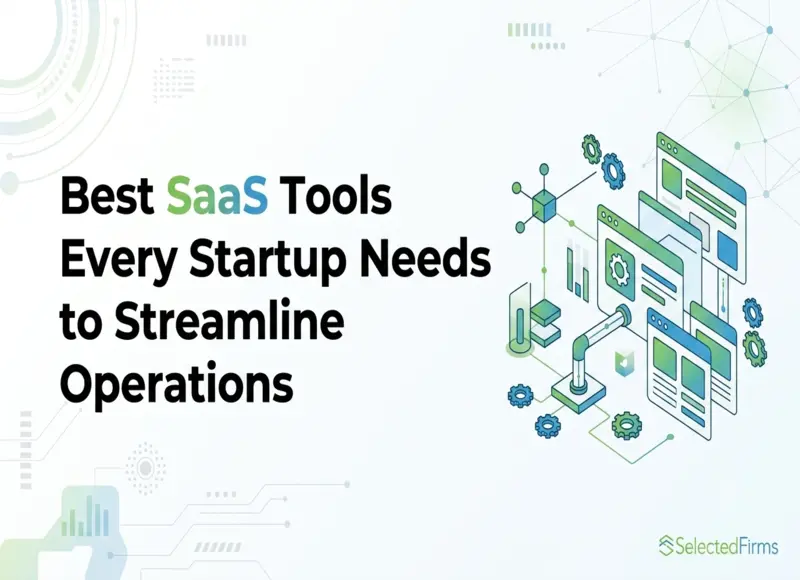
Startups run on limited time and even more limited headcount. The right software does not remove the work. It simply keeps routine tasks from taking over the day. Founders who wait too long to move off spreadsheets usually don't realize it until a dropped deal or a missed filing forces the switch.
In this guide, we will explore six categories that are helpful to set up in advance, including CRM, accounting, human resources, marketing, email efficiency, and security, with three tools.
1. CRM (Customer Relationship Management)
A spreadsheet works fine for your first ten customers. After that, deals can start slipping through the cracks, and it becomes harder to see exactly what is happening in the sales pipeline.
CRM software fixes that by keeping every conversation and deal stage in one searchable place. Businesses that adopt CRM software see an average return of $8.71 for every $1 spent, and 91% of companies with ten or more employees now run one.
|
Tool |
Best For |
Description |
Price |
|
HubSpot CRM |
Free, full-featured CRM with no learning curve |
Contact management, deal tracking, and email logging, with no credit card required to start |
Free plan; paid from $20/mo/seat |
|
Pipedrive |
Sales first teams that want a simple visual pipeline |
Built around a single drag-and-drop pipeline view, so nothing gets buried in extra menus |
From $14/mo/user (annual) |
|
Zoho CRM |
Budget-conscious founders who want room to grow |
Covers the basics cheaply, then scales into automation and AI lead scoring |
Free up to 3 users; from $14/mo/user |
2. Accounting Software
Spreadsheet bookkeeping can work in the early stages. Tax season or an investor call can quickly show why proper accounting software matters. It automates invoicing and expense tracking so you're not rebuilding six months of records under deadline pressure.
Roughly 64% of small business owners already use accounting software, and 78% of small businesses worldwide now rely on digital finance tools.
|
Tool |
Best For |
Description |
Price |
|
QuickBooks Online |
Teams working closely with an accountant |
The industry default, with a large accountant and bookkeeper network already trained on it |
From $35/mo |
|
Xero |
Founders who want a clean UI with strong integrations |
Modern interface with a large app marketplace for inventory, time tracking, and more |
From $20/mo |
|
Wave |
Bootstrapped founders on a tight budget |
Free invoicing and bookkeeping, with charges only on payment processing or payroll |
Free accounting; paid add-ons for payroll/payments |
3. HR Software
Once you hire your third or fourth employee, HR becomes harder to manage manually. Onboarding, time-off requests, and compliance deadlines pile up fast, and a missed filing can turn into a real legal problem.
Payroll, tax, and compliance requirements vary by country, so founders should choose HR software services that support their local regulations and hiring needs.
|
Tool |
Best For |
Description |
Price |
|
Gusto |
First U.S. hires |
Payroll, benefits, and new hire paperwork in one dashboard, with automatic tax filing |
From $49/mo + ~$6/person |
|
BambooHR |
Dedicated employee records and reviews |
Moves employee data out of spreadsheets into searchable profiles, with simple performance reviews |
~$6–$8/employee/mo |
|
Rippling |
HR, IT, and payroll in one system |
Adds device and software provisioning on top of payroll, useful for remote, multi-state teams |
From $8/mo/user + modules |
4. Marketing Automation
Manually sending every welcome email and follow up doesn't scale past your first few dozen customers. Marketing automation tools help businesses automate email campaigns, nurture leads, segment audiences, and trigger personalized communication based on customer actions. Marketing automation delivers an average of $5.44 for every $1 invested, and small businesses using it report roughly a 25% increase in marketing ROI.
|
Tool |
Best For |
Description |
Price |
|
HubSpot Marketing Hub |
Teams already on HubSpot CRM |
Ties campaigns and lead scoring directly to CRM data, so sales and marketing see the same picture |
Free tools; paid from $20/mo |
|
Mailchimp |
Simple newsletters and basic automation |
Drag-and-drop email builder with pre built sequences for welcomes and abandoned carts |
Free plan; paid from $13/mo |
|
ActiveCampaign |
Deeper automation without enterprise pricing |
Builds detailed automations based on customer behavior, not just a single trigger |
From $15/mo |
5. Email Productivity & Inbox Management
As startups grow, founders receive newsletters, vendor updates, product announcements, marketing emails, and customer messages every day. Email productivity tools help organize inboxes, reduce distractions, and ensure important business conversations aren't buried under promotional messages.
Solutions in this category may include email clients, inbox organizers, and subscription management tools. If unwanted subscriptions are most of the clutter, this roundup of the best unsubscribe apps is worth a look before picking a tool.
The average professional now receives 117 to 126 business emails a day, and knowledge workers spend roughly 28% of their workweek on email.
|
Tool? |
Best For |
Description |
Price |
|
SaneBox |
Cleaning up your existing inbox automatically |
Sorts low priority emails like newsletters and CCs into folders in the background, no client switch needed |
From $7/mo (annual) |
|
Against Data |
Unsubscribing from unwanted emails |
One of the best unsubscribe apps which helps users identify and remove unwanted subscriptions, a go-to app for startup founders |
From $39/year |
|
Superhuman |
Speed focused founders who live in email |
Keyboard shortcut driven inbox with AI triage, built for speed above everything else |
~$30/mo/user |
6. Security Software
A single breach can create serious financial and reputational damage. Small businesses are also frequent targets because attackers often assume smaller teams have weaker defenses. Security software helps protect passwords, employee devices, websites, and business data before small issues become costly incidents. 43% of all cyberattacks target small businesses, yet 47% of businesses with fewer than 50 employees allocate zero cybersecurity budget.
|
Tool |
Best For |
Description |
Price |
|
ProtonPass |
Secure password management for teams |
Securely stores passwords with a built-in password generator 12 characters feature. |
Free plan available; paid from $1.99/user/month (annual) |
|
Malwarebytes for Business |
Straightforward endpoint protection |
Runs quietly on company devices, catching malware before it spreads |
~$6–$10/endpoint/mo |
|
Cloudflare |
Protecting your website and internal tools |
Shields your site from attacks and speeds up load times, with Zero Trust tools for remote access |
Free plan; paid from $20/mo |
Conclusion
The right SaaS stack should make a startup easier to run, not create more work. Start with the areas that take up the most time or create the most risk, then add tools as your team grows. A CRM can organize sales, accounting software can simplify finances, HR tools can handle employee tasks, and security software can protect the business as it scales.
You do not need every tool at once. Choose software that fits your current needs, budget, and team size, then review your stack as the business changes.
FAQs
Most startups should start with CRM, accounting, and basic security software. HR and marketing tools become more useful as the team and customer base grow.
There is no fixed number. Start with the tools that solve immediate operational problems and add others only when they provide clear value.
Yes, free plans can be enough for startups with small teams and simple needs. Paid plans become useful when you need more users, automation, integrations, or advanced features.
Compare each tool based on its features, pricing, ease of use, integrations, security, and ability to support your expected growth. Avoid paying for features your team does not currently need.
Not necessarily. An all-in-one platform can reduce the number of systems to manage, but specialized tools may offer better features for specific business functions.


Head Of Digital Marketing
Recent Blogs

Elia Martell
5 Virtual Recruiting Support Operations for Tech and Healthcare Teams
-

09 Oct 2026
-

8 Min
-

477
Jane Hart
Why LinkedIn Campaign Optimization Requires More Than CPC and CTR
-
09 Oct 2026
-
8 Min
-
155
Jane Hart
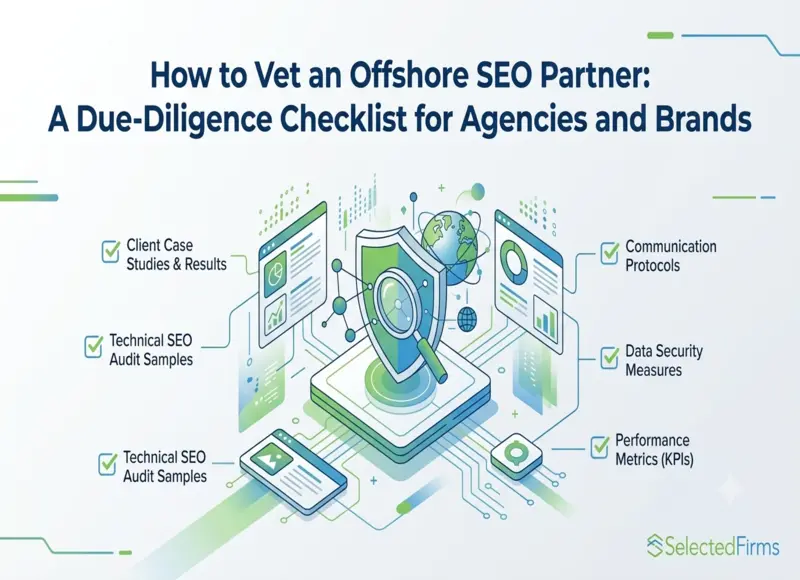
How to Vet an Offshore SEO Partner: A Due-Diligence Checklist for Agencies and Brands
-
08 Oct 2026
-
8 Min
-
263
Jane Hart
Benchmarking GPU Providers: A Practical Guide to Comparing Cloud Compute Options
-
07 Oct 2026
-
6 Min
-
173
