


Table of Contents
Customers move across channels, but most retail systems don’t. Discover how a retail software development company unifies data, connects platforms, and creates seamless omnichannel experiences that drive growth.
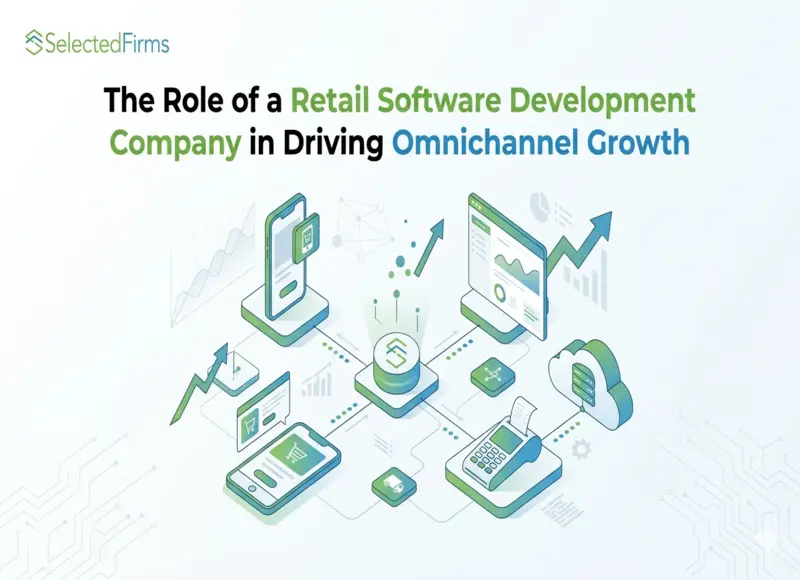
You’re likely feeling the friction of an omnichannel problem, but if you look closer, you’ll find it’s actually a systems issue in disguise. The strategy is simple: meet customers wherever they are and offer a consistent, easy experience. The real challenge is making disconnected systems work together in real time across all channels.
This is where a specialized retail software development service becomes valuable. Instead of adding more software to an already complex setup, they create connections that help a fragmented operation feel unified for customers, store teams, and executives who need clear data.
Understanding Omnichannel Retail in 2026
At its core, omnichannel retail means every channel works as part of a single system. This includes:
- Physical store
- Website
- Mobile app
- Social commerce
- Marketplace
Customers don’t see just the website or the store. They experience the brand and expect it to know who they are, what they’ve bought, and what they want, no matter which channel they use.
The New Non-Linear Path to Purchase
In 2026, the path to purchase is a loop, not a straight line. A customer might:
- Discover a product on social media
- Research specifications on their mobile phone
- Test the product in-store
- Complete the purchase online
If there’s a break in this journey, like a price difference between channels, missing inventory, or loyalty points that don’t sync, the brand has failed the customer, even if the sale happens.
The Two Biggest Obstacles to Success
The biggest obstacles to omnichannel success are data silos and broken customer journeys.
|
Challenge |
Technical Root Cause |
Business Risk |
|
Data Silos |
POS, CRM, and Inventory systems operate on isolated, non-matching records |
Decisions are based on fragmented data, creating a "blind spot" in your operations |
|
Fragmented Journeys |
Customer experience "restarts" at every touchpoint instead of continuing |
High friction leads to abandoned carts, lost trust, and a failed brand experience |
The right retail technology solutions can solve both problems, but it takes careful planning, not just picking new tools.
The Role of a Retail Software Development Company in Omnichannel Growth
A custom retail software development company takes a different approach to omnichannel than a typical software vendor. Vendors sell a platform and expect you to adjust your operations to fit it. In contrast, a development partner begins with your operations and builds technology to support them.
This difference is important when you need to bring together channels that have grown separately, each with its own systems and processes.
Building the Invisible Orchestration Layer
The practical work involves:
- Integration between systems
- Resolving conflicts between competing sources of truth
- Building the orchestration layer that keeps everything synchronized as transactions happen in real time
A skilled retail software development team makes this invisible to the customer, who sees a seamless experience. They also make it manageable for operations teams, who see accurate data, clear processes, and fewer manual exceptions.
Consistency as a Trust Multiplier
Beyond integration, a comprehensive retail software development service focuses on consistency. The team ensures pricing, promotions, product details, and inventory are consistent everywhere. Consistency builds customer trust, and trust is what turns omnichannel capability into real growth.
Key Technologies Driving Omnichannel Success
Effective omnichannel execution runs on a small set of technologies that, when properly integrated, make the system work.
Cloud-Based Infrastructure
Cloud enables real-time data access across multiple channels. When inventory updates, pricing changes, or a new order is placed, cloud architecture ensures every downstream system sees the change immediately, whether that is a store associate's tablet, a customer's app, or a warehouse fulfillment system. Without it, omnichannel is a promise the infrastructure cannot keep.
POS System Integration
The point of sale is where online and offline come together. Connecting POS to the rest of retail control solutions means in-store sales update inventory instantly, customer profiles include purchase history, and prices match the website. If POS is separate, each sale can cause problems that need to be fixed manually.
CRM Systems
A CRM that only tracks online behavior tells only half the story. Integrated solutions for retailers gather data from every channel into one customer profile. This data includes:
- Purchase history
- Returns
- Loyalty status
- Preferences
This way, personalization matches how each customer really shops, not just their online habits.
Mobile Solutions
Mobile connects digital and physical shopping. Smart retail technology lets customers use their phones for click-and-collect, in-store navigation, mobile payments, and scan-and-go, whether they’re at home or in-store. It also gives store staff tools to check inventory, handle sales, and see customer info anywhere in the store.
Data Integration and Real-Time Insights
Unified data is the backbone of omnichannel retail.
Without it, each channel operates with incomplete information:
- The website doesn’t know what the store sold today
- The CRM doesn’t know what’s in the warehouse
- The buying team plans based on last week’s data rather than what’s happening now
Building the Single Source of Truth
A skilled retail software development team creates a data layer that connects POS, e-commerce, inventory, and CRM systems into a single, real-time source of truth.
This gives a complete view of both the customer and the business, not just for reports, but as live information that guides every decision.
|
System |
The Siloed Problem |
The Unified Advantage |
|---|---|---|
|
Inventory |
Blind spots lead to stockouts or overstock |
Proactive, global visibility across all nodes |
|
CRM |
Marketing is based on generic segments |
Personalization based on real-time behavior |
|
Pricing |
Fixed margins that lag behind market shifts |
Dynamic adjustments based on live demand |
Three Pillars of Real-Time Value
Real-time data is most valuable in three areas:
- Inventory management becomes proactive
- Marketing is personalized based on real behavior
- Pricing can adjust to live demand instead of waiting for weekly reviews
Each area improves margins and customer experience on its own, but together they create a strong advantage.
Enhancing Customer Experience Across Channels
The key to customer experience in omnichannel is simple: every interaction should feel connected, not like starting over. If a customer browsed your website last night and visits your store today, the staff should know that. If a customer calls support about an in-store purchase, the agent should see their full history. Retail industry software that keeps customer context across all touchpoints makes this possible.
AI-Driven Anticipation vs. Generic Reaction
AI and machine learning are enabling large-scale personalization like never before. Retail commerce solutions built with AI shift the experience from generic to anticipatory.
|
Capability |
Traditional Approach |
AI-Driven Approach |
|---|---|---|
|
Product Discovery |
Recommends items based only on the current web session |
Suggests products based on total cross-channel shopping habits |
|
Churn Prevention |
Offers a discount only after a customer has stopped buying |
Identifies early behavioral shifts and triggers outreach before the customer leaves |
|
Customer Service |
Responds only when a customer asks a question or has a problem |
Uses data trends to suggest refills or accessories, acting as a proactive partner |
Improving Inventory Management and Fulfillment
Inventory is often where omnichannel goals run into real-world problems. If you promise same-day pickup but can’t deliver, you lose a sale and, even worse, trust. Software for retail shop environments that manage inventory across all channels from a single platform eliminates the gaps that cause these issues.
Modern omnichannel fulfillment is a set of options that must work together. The table below shows how each fulfillment method works, what software supports it, and what customers get from it:
|
Fulfillment Method |
What Software Must Enable |
Customer Benefit |
|---|---|---|
|
Click & Collect |
Real-time in-store inventory sync, automated pickup confirmation, slot reservation logic |
Guaranteed availability, no shipping wait, flexible pickup window |
|
Direct Home Delivery |
Multi-warehouse routing, carrier integration, live tracking updates |
Fast, reliable delivery with full visibility from order to door |
|
Ship from Store |
Distributed inventory visibility, store-level pick-pack workflows, label generation |
Faster local delivery, reduced out-of-stock experiences |
|
Dropshipping |
Supplier inventory feeds, automated PO generation, order status sync |
Broader product range without inventory risk |
|
In-Store Returns (online purchases) |
Cross-channel order lookup, refund logic across payment methods, and restocking triggers |
Frictionless returns experience regardless of purchase channel |
The logistics behind all of this are managed by software. Routing, fulfilment priorities, and carrier choices are determined by system rules, not by manual decisions. This is where retail control solutions show their value, turning fulfilment costs into a competitive advantage.
The Future of Omnichannel Retail and Software Innovation
The next wave of omnichannel innovation is already starting at the top retailers. Augmented reality is becoming a real sales tool, with virtual try-on for clothes and beauty, room visualisation for furniture, and size-matching features that help customers buy with confidence and reduce returns.
All of these are available now from leading custom retail software development companies.
Next-Gen Experience Drivers
Leading retail technology partners are currently deploying these three high-impact innovations:
- AR Commerce (virtual try-ons and room visualization)
- Conversational AI (AI assistants replacing the search box)
- Contextual Discovery (search tools that understand natural language)
The Innovation Readiness Checklist
The key to making all this work is having the right architecture. To move fast, your stack must meet these three requirements:
|
Requirement |
Why it Matters for 2026 |
|
API-First Design |
Allows new features (like AR or AI) to "plug in" to existing data |
|
Modular Architecture |
Ensures updates to one channel don't break the entire system |
|
Open Standards |
Prevents vendor lock-in and simplifies third-party integrations |
A good retail software development team builds platforms that are ready for today’s needs and make future changes easy, not disruptive.
Building Omnichannel Growth on the Right Foundation
Omnichannel isn’t just a feature you add to a retail business. It’s the way modern retail works, and the technology behind it is the foundation for everything else. Building that foundation takes more than picking the right tools. You need a retail software development company that understands your operations, plans for integration from the start, and treats your growth as a key part of the design.
Brands that invested early in unified retail software now have a big advantage: better customer data, more efficient operations, and the flexibility to add new channels without major problems. Brands still using fragmented systems are struggling to offer a unified customer experience on a foundation that wasn’t built for it.
The gap between these brands grows every quarter. Choosing the right technology vendor now is about making sure your next phase of growth doesn’t mean rebuilding the foundation you could have built from the beginning.


Head Of Digital Marketing
Recent Blogs

Elia Martell
5 Virtual Recruiting Support Operations for Tech and Healthcare Teams
-

09 Oct 2026
-

8 Min
-

477

Jane Hart
Why LinkedIn Campaign Optimization Requires More Than CPC and CTR
-
09 Oct 2026
-
8 Min
-
155

Jane Hart
How to Vet an Offshore SEO Partner: A Due-Diligence Checklist for Agencies and Brands
-
08 Oct 2026
-
8 Min
-
263
Jane Hart
Benchmarking GPU Providers: A Practical Guide to Comparing Cloud Compute Options
-
07 Oct 2026
-
6 Min
-
173
