


When Does Vibe Coding Become a Threat?
-
Last Updated:

04 Jun 2026
-
Read Time:

4 Min Read
-
Written By:
 Isha Choksi
-
1204
Table of Contents
From rapid prototyping to security risks, vibe coding is reshaping development workflows. Explore the benefits, limitations, and safeguards every team should understand before making AI-generated code part of their process.
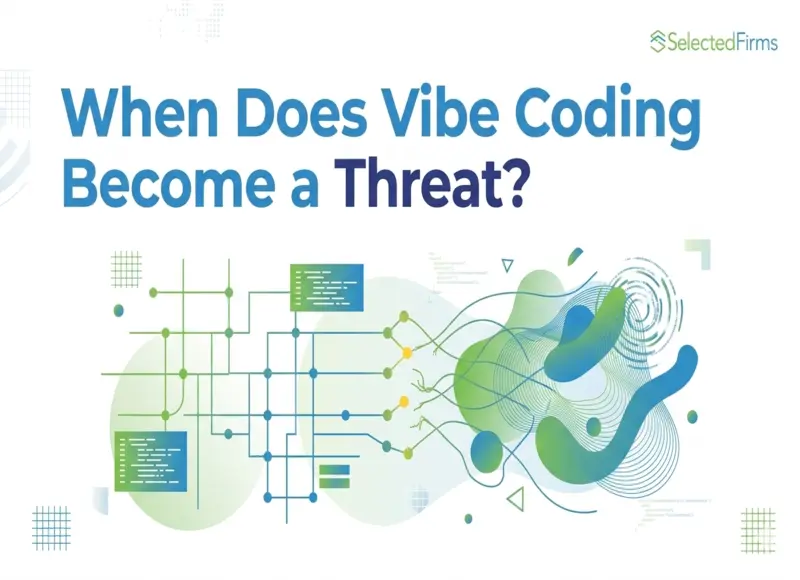
Vibe coding is the perfect example of AI’s high-speed disruptive potential. Andrej Karpathy treated it as a meme at first, yet in less than a year, vibe coding has become an accepted workflow used by everyone from complete novices to developers with decades of industry experience. While the gains are undeniable, overreliance on vibe coding can quickly cost a company more than just the price of wasted tokens.
Why has vibe coding caught on so fast? What drawbacks are we becoming aware of? Most importantly, how should you and your team approach vibe coding to reap the benefits without the accompanying security and quality risks? This is what you need to know.
The Meteoric Rise of Vibe Coding
AI-assisted programming, or vibe coding, took the world by storm. Two major factors contributed to its overnight popularity – accessibility and speed.
On the one hand, the shift from manually using one’s computer programming knowledge to describing one’s intent, which an AI then turns into code, drastically lowered the barrier to entry. If you’re a non-technical startup founder with an interesting idea, vibe coding lets you cobble together an MVP in a couple of days.
Speed is the more important factor. Vibe coding’s greatest strength is empowering already knowledgeable software engineers to work exponentially faster. This is particularly useful in the early stages of experimentation, since it lets engineering teams test, iterate on, and discard many ideas in a fraction of the time it would take to prototype just one.
Vibe coding is also imposing a fundamental shift in how professionals approach coding. Rather than having to implement logic or write boilerplate code manually, they’re increasingly responsible for orchestration. That means software engineers are taking on more advisory roles: validating AI outputs, reviewing architecture, and ensuring safe deployment.
The Pitfalls of Vibe Coding Overreliance
Presentation is among the most insidious qualities of AI-generated code. It’s easy for beginners to be taken in by the clean formatting, impeccable naming conventions, or accompanying comments and documentation. The product of vibe coding might look plausible and possess immediate functionality. But more often than not, it’s mediocre or incomplete on a fundamental level. Not to mention unsafe and hard to maintain. Here are the main concerns to be aware of.
Code Vulnerability
Since they’re trained on large datasets, LLMs tend to produce code that compiles and does what it claims to, but only in best-case scenarios. Edge cases are rarely explored, and even fundamental security measures that any junior dev should have a handle on are often absent.
For example, AI-generated code is notorious for exposing secrets and relying on weak authentication practices. It’s also routinely vulnerable to threats like cross-site scripting and SQL injection. Experienced developers need to waste time on hunting down and fixing these issues. Worse yet, someone who only knows how to vibe code won't realize they’re problems to begin with.
Data Leaks
A major concern, especially at the enterprise level, comes from unsafe user interactions with external AI systems. Specifically, the very real fear is that users will accidentally expose sensitive information during these interactions. The information itself can range from proprietary source code and access credentials to API keys and customer information.
Without proper policies and guardrails in place, the organization may lose exclusive control over its data. Even if sensitive information doesn’t leak outright, LLM coders may incorporate it into their training data and reuse it. An enterprise-level AI agent builder can help create an environment that doesn't train on sensitive business data.
Undocumented Dependencies
Vibe coding tools operate on large datasets and produce code based on averages. This means they’ll often introduce unnecessary dependency bloat or include outdated frameworks and abandoned libraries. They may even hallucinate non-existent packages, which malicious actors can exploit to disguise malware.
Insecure Coding Practices
Since public code is part of the training data, LLMs may also perpetuate general unsafe practices. Bypassing security checks, incorrect password storage, and skipped validation are only the most egregious consequences of using accessible code written to demonstrate principles rather than adhere to industry standards.
Vibe Coding Best Practices
Most of Vibe Coding's shortcomings can be addressed through secure practices, the right tools, or awareness of its limitations. The essentials include:
- Treating AI code as inherently untrustworthy until proven otherwise by human review.
- Never expose secrets to AI tools directly.
- Ensuring secure access to Vibe coding tools. VPNs are a must, and using discounts like NordVPN coupons helps save money while staying protected.
- Further hardening access through password managers and MFA, and enforcing the principle of least privilege.
- Practicing dependency audits and management.

Head of SEO Operations
Recent Blogs


Elia Martell
5 Virtual Recruiting Support Operations for Tech and Healthcare Teams
-
09 Oct 2026
-
8 Min
-

462

Jane Hart
Why LinkedIn Campaign Optimization Requires More Than CPC and CTR
-
09 Oct 2026
-
8 Min
-
149

Jane Hart
How to Vet an Offshore SEO Partner: A Due-Diligence Checklist for Agencies and Brands
-
08 Oct 2026
-
8 Min
-
249

Jane Hart
Benchmarking GPU Providers: A Practical Guide to Comparing Cloud Compute Options
-
07 Oct 2026
-
6 Min
-
171
