


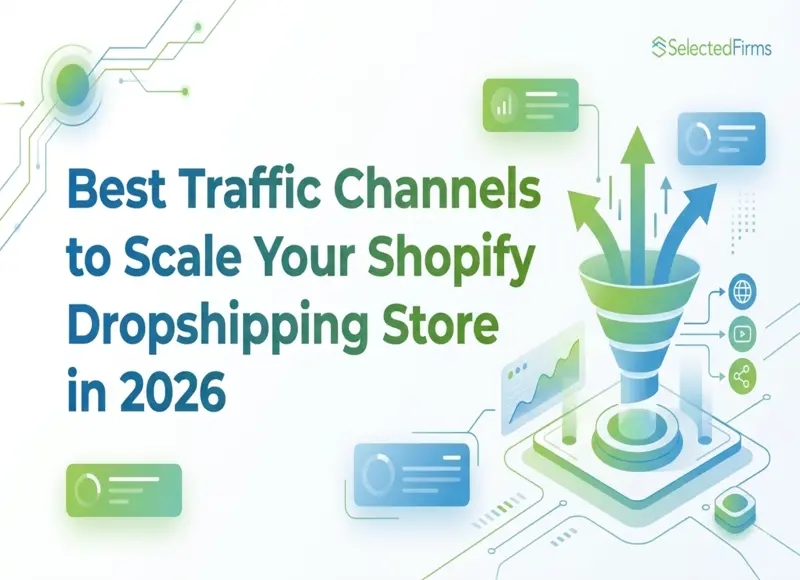
Best Traffic Channels to Scale Your Shopify Dropshipping Store in 2026
-
Last Updated:

13 Aug 2026
-
Read Time:

5 Min Read
-
Written By:
 Isha Choksi
-
507
Table of Contents
Struggling to get consistent Shopify sales? Explore the traffic channels that can help you reach the right buyers and scale with confidence.
Finding a winning product is only half the job. The other half is getting that product in front of buyers who are ready to click and pay. Store owners often burn through ad budgets testing channels that bring clicks but fail to generate profitable sales.
Traffic sources keep expanding past Facebook and Google Ads. This channel reaches audiences who spend hours daily inside messaging apps rather than scrolling social feeds. Combining several traffic sources reduces dependency on algorithm changes of a single platform.
Why Diversifying Traffic Sources Matters
No Shopify store should depend on a single ad network. Sales can be wiped out overnight by account bans, rising CPCs, and policy changes. Instead, smart sellers allocate their budget across three or four channels. This strategy can reduce the impact when one platform underperforms and gives stores more opportunities to find profitable audiences.
Experimenting with new channels also shows audiences that competitors have not exploited yet. A product that fails on Facebook could do well with search or native advertisements. Testing different channels can help sellers identify stronger audiences and potentially lower customer acquisition costs over time.
Paid Search and Shopping Ads
Google Shopping continues to perform well on products with clear search intent. Cold audiences convert more slowly than buyers who are already seeking a particular item. This channel depends on a clean, well-maintained product feed.
- Search ads work best with niche or problem-solving products
- Users who enter specific search terms are closer to making a purchase
- Combining Shopping campaigns with regular search ads increases overall conversion rates
Social Media and Native Advertising
Facebook and Instagram continue to drive strong engagement for visual products. Video ads that show a product in action tend to outperform still images. Short, punchy creative wins over cold traffic more reliably than generic ads.
Native ad networks insert advertisements within news and blog feeds. These placements are less obtrusive than standard banner ads and work especially well with impulse-buy products that are highly visual.
TikTok has also become a serious traffic source for Shopify stores. Trend-driven products can go viral without any paid spend. Sellers who spot a trend early and act quickly usually see the highest returns. Running Telegram ads alongside these platforms can give sellers another channel to test, particularly when their target audience is active on messaging platforms.
Influencer and Affiliate Partnerships
Micro-influencers offer an affordable way to reach engaged niche audiences. Their recommendations can feel more authentic than traditional brand advertising, particularly within a focused niche. Smaller stores also take on less risk with commission-based deals.
Affiliate networks connect sellers to content creators who already have an audience. This model shifts a significant portion of marketing expense to a pay-per-sale basis. It works best for products with margins healthy enough to support commissions.
Email and SMS Retargeting
New traffic sources matter, but retaining current customers matters just as much. Abandoned cart email flows can recover lost sales, while SMS can provide another direct way to reach opted-in customers.
- Building a subscriber list early pays off in later promotions
- Repeat customers are much cheaper to convert than new visitors
- An effective retargeting system can meaningfully increase overall store sales
If your store needs technical or conversion-focused improvements, comparing Shopify development companies can help you find specialists with relevant ecommerce experience.
Testing Framework for New Channels
Test any new channel with a small campaign before committing a large budget. Track cost per click, conversion rate, and overall return on ad spend. Give each test enough time and traffic to produce meaningful data rather than judging performance after a few clicks or sales.
|
Testing Principle |
What to Do |
|
Limit downside risk |
Start with a modest daily budget |
|
Ensure a fair comparison |
Use the same creative across channels |
|
Avoid conflated results |
Track metrics separately for each channel |
These measures help determine which channels deserve a larger budget. Growing too fast on untested traffic can be a costly mistake.
Building a Balanced Traffic Mix
Many Shopify stores benefit from maintaining more than one active acquisition channel. This combination usually includes one search-based, one social, and one messaging platform. Balanced spending across these categories minimizes risk to the business.
Periodic review of performance data helps redistribute budget to the best performers. The channels that performed well last quarter may not do the same well as competition intensifies. Being adaptable on ad spend makes a store profitable amid market changes.
The stores that scale sustainably treat traffic generation as an ongoing process rather than a one-time campaign. They test new channels, measure profitability, improve the customer experience, and shift spending toward what works. The goal is not simply to attract more visitors. It is to build a reliable mix of channels that consistently turns traffic into sales.
Conclusion
Scaling a Shopify dropshipping store is not about finding one traffic channel that works forever. It is about testing different sources, understanding which audiences convert, and putting more budget behind channels that produce sustainable returns.
The right mix will vary by product, audience, margins, and buying behavior. Keep testing, track the numbers, and make sure your store experience can support the traffic you generate. That approach can help turn traffic into consistent sales without relying too heavily on a single platform.
FAQs
There is no single best channel for every store. Google, social media, influencers, affiliates, and messaging platforms can all work depending on the product and target audience.
Most stores can start with two or three channels and expand after finding what works. Testing too many channels at once can make results harder to measure.
Look at conversion rate, customer acquisition cost, and return on ad spend. A channel is worth scaling when it consistently brings profitable customers.
Yes. SEO, organic social media, influencer partnerships, affiliate marketing, and content can generate traffic without direct ad spend. However, organic channels often take longer to build.
Your store should be ready to convert visitors before you significantly increase traffic. More visitors will not help much if product pages, mobile experience, or checkout create friction.

Head of SEO Operations
Recent Blogs

Elia Martell
5 Virtual Recruiting Support Operations for Tech and Healthcare Teams
-
09 Oct 2026
-
8 Min
-

462

Jane Hart
Why LinkedIn Campaign Optimization Requires More Than CPC and CTR
-
09 Oct 2026
-
8 Min
-
150
Jane Hart
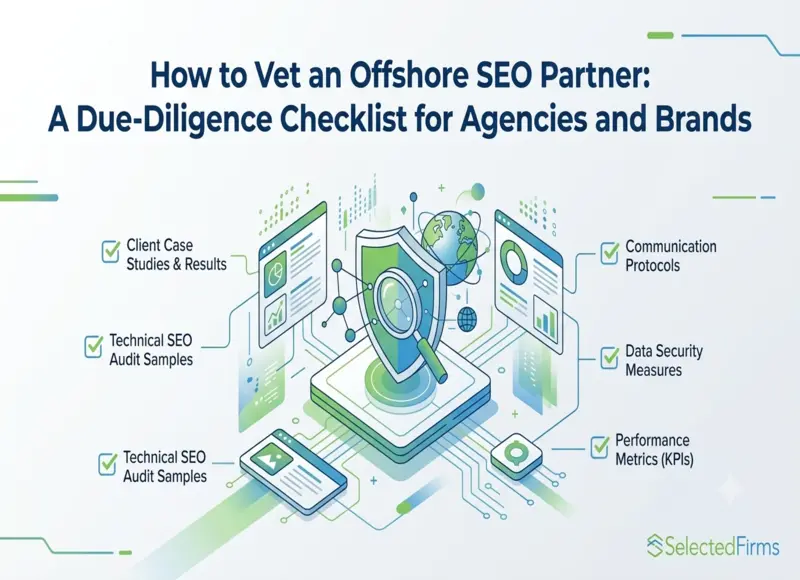
How to Vet an Offshore SEO Partner: A Due-Diligence Checklist for Agencies and Brands
-
08 Oct 2026
-
8 Min
-
249
Jane Hart
Benchmarking GPU Providers: A Practical Guide to Comparing Cloud Compute Options
-
07 Oct 2026
-
6 Min
-
171
