


Marketing Measurement: How to Turn Data into Better Business Decisions
-
Last Updated:

24 Jun 2026
-
Read Time:

7 Min Read
-
Written By:
 Elia Martell
-
753
Table of Contents
Marketing measurement helps businesses evaluate campaign performance, understand channel effectiveness, and optimize investments using data-driven insights. Learn how MMM, MTA, and experimentation support smarter marketing decisions and sustainable busine
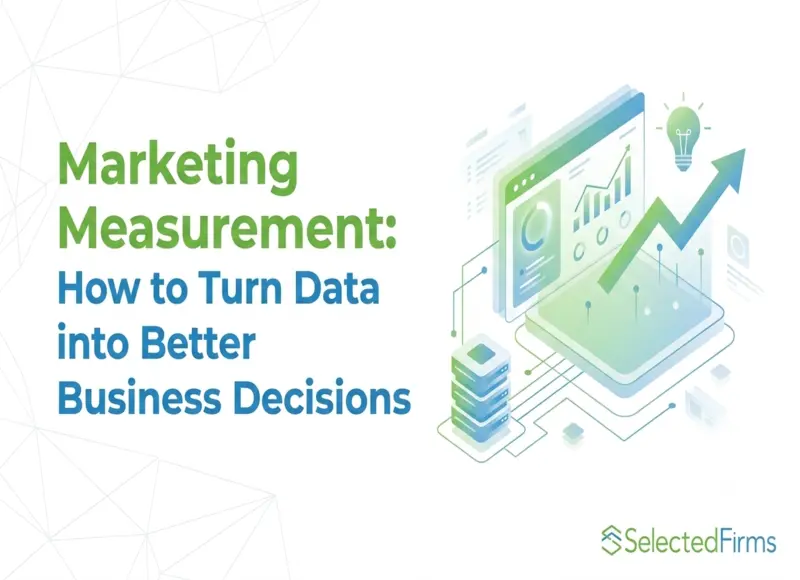
Marketing measurement is no longer just a reporting task. As media costs continue to rise, customer journeys become increasingly fragmented, and privacy regulations limit traditional tracking methods, businesses need more than surface-level campaign metrics. They need a clear understanding of what truly drives revenue, which channels contribute to sustainable brand growth, and where future marketing investments should be made.
That is why marketing effectiveness measurement has become a strategic priority for organizations that want to connect marketing activity with real business outcomes. Instead of asking only how many clicks, impressions, views, or leads a campaign generated, marketing leaders are now focused on answering a much more valuable question: What impact did marketing actually have on revenue, profitability, customer acquisition, and long-term business growth?
A well-designed measurement framework enables businesses to move beyond assumptions and make confident, data-driven decisions. Rather than simply reporting on past performance, marketing measurement helps organizations continuously optimize future investments and maximize return on every marketing dollar.
What is marketing measurement?
Marketing measurement is the process of evaluating how marketing activities influence business performance. It combines data from advertising channels, sales, pricing, promotions, customer behavior, competitive activity, and external market conditions to understand which marketing actions create measurable business value.
Unlike the usual campaign reporting, marketing measurement doesn’t really stay stuck only on digital metrics like clicks or conversions. Instead it sort of looks at the whole customer journey, plus the wider business environment, to judge how each marketing effort, actually fits into and affects the overall performance.
A strong measurement framework goes beyond last-click attribution. It considers the entire marketing mix, including:
- Digital advertising
- Paid search
- Social media
- Television
- Radio
- Out-of-home advertising
- Retail media
- Email marketing
- Promotions and discounts
- Pricing changes
- Seasonality
- Economic conditions
- Competitor activity
By analyzing all of these factors together, businesses gain a much more balanced and accurate view of marketing effectiveness rather than relying only on immediate conversions.
Why marketing effectiveness measurement matters
Without dependable measurement, marketing decisions often rely on fragmented data, incomplete attribution models, or assumptions that fail to capture the full customer journey.
For example, a paid search campaign might look crazy successful just because it triggers the final click right before purchase. But earlier touch points, like those coming from television, social media, influencer marketing, or even display advertising may have built the first sparks , the awareness, and the “I want this” kind of desire. So if marketers only watch the last interaction , they can end up throwing more money at lower-funnel channels, while barely supporting the actions that actually grow tomorrow’s demand.
Similarly, promotional campaigns may produce a temporary increase in sales while reducing profit margins or weakening long-term brand value. Without proper measurement, businesses can mistake short-term gains for sustainable growth.
Marketing effectiveness measurement reduces this uncertainty by providing evidence-based insights into how marketing investments influence business outcomes. It helps organizations:
- Identify which channels deliver the highest return on investment
- Detect areas where marketing budgets are being wasted
- Understand interactions between different marketing channels
- Forecast future performance more accurately
- Improve budget allocation across campaigns
- Demonstrate marketing's contribution to overall business performance
For executive leadership, these insights kind of firm up the link between marketing strategy and commercial goals, so marketing becomes a kind of measurable spark for business growth, not just a cost center.
MMM, MTA, and experiments: building a complete measurement framework
No single measurement methodology can explain every aspect of marketing performance. Each approach answers different business questions, which is why leading organizations combine multiple measurement techniques to create a more complete understanding of marketing effectiveness.
|
Method |
Best For |
Key Benefit |
|
Marketing Mix Modeling (MMM) |
Strategic budget allocation and channel-level ROI |
Privacy-safe measurement using aggregated data |
|
Multi-Touch Attribution (MTA) |
Understanding digital customer journeys |
Granular insight into individual touchpoint contribution |
|
Experiments |
Validating campaign or market changes |
Direct evidence of incremental business impact |
Marketing Mix Modeling (MMM)
Marketing Mix Modeling is kinda valuable for strategic planning, in a way that helps you see the bigger picture. With statistical analysis, MMM looks at how each marketing channel contributes to sales, but it also tries to cover external factors such as pricing, seasonality, broader economic movement, weather patterns, and even what competitors are doing.
Since MMM is built on aggregated signals rather than individual customer records, it has been getting more and more important in today’s privacy-focused marketing world. It lets organizations judge both digital and offline media channels, and at the same time it supports long-term budget planning without relying on more personal data than needed.
Multi-Touch Attribution (MTA)
Multi Touch Attribution really zooms in on those digital customer journeys, by giving value to several interactions before the conversion happens. Instead of handing all the credit just to the last click, MTA enables marketers to grasp how different touchpoints such as paid search, display advertising, email campaigns, social media, and website visits, all play off each other to nudge customer decisions.
This granular level of insight helps optimize digital campaigns, improve customer experiences, and refine audience targeting.
Experiments and Incrementality Testing
Controlled experiments, like A/B testing , geo lift studies, holdout tests, and incrementality testing give pretty direct evidence of marketing influence by looking at what happens in the exposed group vs the control group , and comparing those outcomes.
Experiments help validate assumptions generated by MMM and MTA, allowing organizations to confirm whether specific campaigns, creative changes, pricing adjustments, or channel investments genuinely drive incremental sales.
When combined, MMM, MTA, and experimentation provide a robust measurement framework that balances strategic planning with tactical optimization.
Key metrics for marketing measurement
The right marketing metrics depend on each organization's goals, industry, and business model. However, effective measurement should always focus on indicators that connect marketing activity to business outcomes rather than vanity metrics.
Common performance indicators include:
- Revenue attributed to marketing
- Return on Marketing Investment (ROMI)
- Return on Advertising Spend (ROAS)
- Incremental sales
- Customer Acquisition Cost (CAC)
- Customer Lifetime Value (CLV)
- Conversion rate
- Brand awareness and brand demand
- Market share
- Profit contribution
- Customer retention
- Revenue growth
It is important not to measure channels in isolation. Paid search can grab demand that was started by TV or social media. A brand campaign might not yield immediate conversions, but it helps lift performance across lower funnel channels, too. Good measurement lets you show these connections rather than trying to force each channel into the same quick term reporting logic.
Strong marketing measurement reveals these relationships, enabling businesses to optimize the entire customer journey rather than maximizing the performance of individual channels independently.
Why more companies are bringing marketing measurement in-house
As marketing becomes increasingly data-driven, many organizations are choosing to build internal measurement capabilities instead of relying entirely on external agencies or consultants.
In-house marketing measurement gives more control over the data, the analytical models, and strategic decision making. Instead of just waiting on those periodic reports, internal teams can dig into different scenarios test their assumptions, refresh the models and do quick reactions when market conditions shift. It is kind of more agile, even if the setup takes some effort at first.
Bringing measurement in-house also offers several additional benefits:
- Better control over sensitive business and customer data
- Faster reporting and decision-making
- Improved collaboration between marketing, finance, analytics, and leadership teams
- Greater transparency in measurement methodologies
- Stronger organizational knowledge retention
- Reduced dependence on external vendors
With modern analytics platforms and expert technology partners, organizations can maintain ownership of their measurement processes while benefiting from advanced modeling capabilities and automation.
Building a connected measurement framework for smarter marketing decisions
Organizations can boost their marketing effectiveness by using a sort of connected measurement setup, that ties together several analytical approaches, like Marketing Mix Modeling, Multi Touch Attribution, plus data integration, forecasting and ongoing performance optimization. In practice it can feel a bit like coordinating different ways of looking at the same signal, where the pieces sort of click together instead of staying in silos.
By combining advanced analytics with clear and accessible reporting, marketing teams can better understand what drives growth, identify areas for improvement, and make more informed investment decisions.
A well-structured measurement framework enables organizations to:
- Compare channel performance using consistent and standardized methodologies
- Allocate budgets based on evidence rather than assumptions
- Forecast potential outcomes before committing resources
- Identify risks and performance gaps early
- Measure both short-term campaign impact and long-term brand effects
- Continuously refine strategies to improve return on investment
When supported by reliable data and robust analytical methods, marketing can be managed as a measurable driver of business growth rather than simply a cost center.
From reporting to optimization
The true value of marketing measurement lies not in documenting what happened yesterday but in improving the decisions made tomorrow.
Modern marketing measurement transforms fragmented datasets into practical recommendations. It helps businesses determine where additional investment will generate the greatest returns, where spending should be reduced, how different channels reinforce one another, and which strategies create sustainable long-term growth.
As markets become more competitive and customer behavior continues to evolve, organizations that invest in robust measurement frameworks gain a significant advantage. They can adapt more quickly, allocate budgets more efficiently, and demonstrate marketing's contribution to business performance with confidence.
For companies seeking stronger accountability, smarter planning, and higher returns on marketing investment, marketing effectiveness measurement is no longer optional—it is a strategic capability that supports better decisions, more efficient budgets, and sustainable business growth. By combining advanced analytics with continuous optimization, businesses can move beyond simple reporting and transform marketing into one of their most powerful drivers of competitive advantage.

Marketing Manager
Recent Blogs

Elia Martell
5 Virtual Recruiting Support Operations for Tech and Healthcare Teams
-
09 Oct 2026
-
8 Min
-

627

Jane Hart
Why LinkedIn Campaign Optimization Requires More Than CPC and CTR
-
09 Oct 2026
-
8 Min
-
189

Jane Hart
How to Vet an Offshore SEO Partner: A Due-Diligence Checklist for Agencies and Brands
-
08 Oct 2026
-
8 Min
-
323
Jane Hart
Benchmarking GPU Providers: A Practical Guide to Comparing Cloud Compute Options
-
07 Oct 2026
-
6 Min
-
187
