


Table of Contents
Learn how to analyze Facebook Ads campaign data effectively. Discover key metrics, reporting techniques, and optimization strategies to improve performance, reduce costs, and make data-driven decisions that boost your advertising results.
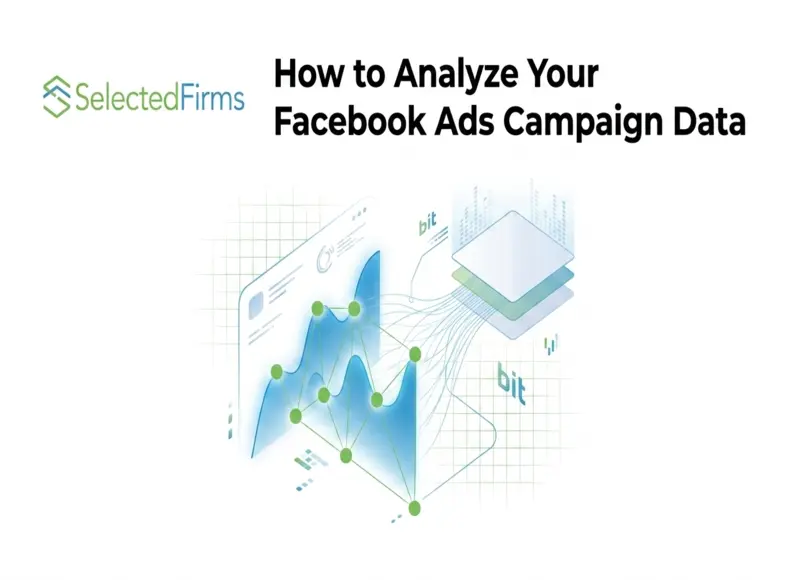
Analyzing Facebook advertising campaigns is no longer a purely technical process. Today, it is a true strategic tool. It allows businesses not only to evaluate results but also to make informed decisions for growth. Many marketers face a situation where there is a lot of data, but not enough of a clear understanding of what exactly to do with it. That is why it is important to learn not just to look at the numbers, but to interpret them correctly. So, how does in-depth Facebook Ads analysis work?

Image Source: Depositphotos
Fundamentals of Facebook Ads Analysis
Facebook Ads Analysis begins with a clear understanding of what data is available and how it is generated. The Meta Ads Manager platform provides a wide range of metrics. Nevertheless, not all of them are equally useful for decision-making. The secret to effective analysis is focusing on metrics that directly impact business results.
First step: Define the campaign’s goal.
- If it’s traffic, then CTR and CPC are important.
- If it’s sales, then ROAS and conversions.
Without this, any analysis will be detached from reality and will provide no value. Also, when working with large volumes of Facebook Ads data, there is often a need for more convenient tools for visualizing and consolidating data. In particular, integrations allow you to automate data transfer to external analytics platforms. From this perspective, you may want to consider working with Facebook Ads data in Looker Studio, which will allow you to do various useful things.
Specifically, you can centralize metrics, create dashboards, and update data automatically without manual export. This approach simplifies analysis and helps you identify patterns in campaigns more quickly. This also improves Facebook leads management, since having campaign and lead data in one place makes it easier to track lead quality, route follow-ups faster, and connect ad performance with actual conversions.
Facebook Ads Performance Metrics Guide. Core Metrics
It’s important not just to know the names of these metrics, but to understand their impact on the overall effectiveness of your campaign. A comprehensive analysis of these metrics allows you to:
- Make informed decisions;
- Identify areas for growth to improve your ad performance.
Click-Through Rate
With CTR, you can see how well your ads capture the audience’s attention. It is the ratio of clicks to impressions. A low CTR often signals that:
- The creative is weak;
- The audience is not the right fit.
It’s important to analyze CTR in context. A high CTR doesn’t always mean success if the traffic isn’t converting. But a consistently low CTR is always a signal to reevaluate your approach.
Cost Per Click
With CPC, you see how much you pay per click. This metric is critical for budget control. If CPC is rising, check:
- Competition,
- Ad relevance,
- Audience quality.
The system rewards more relevant ads. That's why lowering CPC is often achieved by improving CTR.
Conversions
These show how many users completed the target action:
- Purchase,
- Registration,
- Other desired action.
For accurate analysis, set up Facebook Pixel or the Conversion API correctly. Without this, the data will be incorrect or incomplete.
Return on Ad Spend
ROAS is one of the most important performance metrics. It shows how much revenue each dollar spent generates. If ROAS is below the desired level, this is a signal to optimize:
- Audience,
- Creatives,
- Bidding strategy.

Image Source: Depositphotos
Identify Trends. Use Facebook Ads Analytics
This analytics allows you to not only look at individual metrics but also identify trends. It is these trends that help you understand how your campaign is performing over time.
- If the CTR is gradually declining, this may indicate “ad fatigue.” In other words, the audience has grown tired of the ad. In this case, you need to update your creatives.
- Analyzing data by time periods helps identify peak hours or days when ads perform best. With this information, you can optimize your ad schedule.
Also segment data by:
- Age,
- Geography,
- Devices.
Often, opportunities to improve results are hidden within these segments.
Use Facebook Ads Reporting Tools Effectively
Facebook Ads Reporting Tools allow you to organize data and turn it into clear reports. This is important for internal analysis as well as for communicating with clients or your team.
How to create Facebook Ads reports
Define your goal. The report should answer a specific question:
Is the campaign working?
Where are the issues?
What steps do you need to take next?
An effective report includes:
- Key metrics (CTR, CPC, ROAS),
- Comparisons with previous periods,
- Conclusions and recommendations.
Avoid data overload. It’s better to have fewer metrics but more insight.
Automating reporting processes
This automation saves a significant amount of time. With integrations and dashboards, you can get up-to-date data without manual effort. It’s crucial for large campaigns where manual analysis takes hours or even days.
To streamline reporting and analysis, marketers often rely on tools like Coupler.io, which enables automated data transfer from Facebook Ads to platforms like Google Sheets, Excel, or Power BI for real-time reporting. Native tools like Meta Ads Manager provide direct access to campaign performance data and essential metrics, while Looker Studio helps build interactive dashboards, and Google Analytics supports deeper conversion tracking and attribution analysis.
Turn Facebook Ads Data into Optimization Strategies
Data is most valuable when used for optimization.
Improving creatives
Your creatives are one of the strongest factors influencing results. If your CTR is low, test new visuals or copy.
A/B testing helps you identify the most effective options.
Optimizing targeting
By analyzing your audiences, you’ll understand which ones deliver the best results. If one age group has a significantly higher ROAS, it’s worth reallocating your budget in its favor.
Lookalike audiences also require constant testing and adjustment.
Budget allocation
Proper budget allocation is data-driven. Campaigns or ad sets with high ROAS should receive more resources.
At the same time, regularly test new approaches so as not to miss out on growth opportunities.
Facebook Ads Analysis and Common Mistakes
Even experienced marketers sometimes make mistakes when analyzing data.
- One of the most common mistakes is focusing on just one metric. Specifically, focusing solely on CPC without considering conversions.
- Decisions cannot be made based on too small a data set. Therefore, another mistake is ignoring statistical significance.
- The influence of external factors is often underestimated. This includes seasonality, competition, and changes in algorithms.
Conclusion
Analyzing Facebook ad campaigns is not about reviewing numbers, but about systematic work with data. This work requires attention, logic, and strategic thinking. By using the approach described in this article, you can better understand your campaign results and actively influence them. Remember that every metric only makes sense in context. Data alone does not provide answers. However, it does offer clues. The success of your advertising campaigns depends on your ability to interpret them correctly. Over time, by combining Facebook Ads Analysis with modern reporting tools, you can create an effective system that consistently delivers results and helps you scale your business.


Head Of Digital Marketing
Recent Blogs


Elia Martell
5 Virtual Recruiting Support Operations for Tech and Healthcare Teams
-

09 Oct 2026
-

8 Min
-

477
Jane Hart
Why LinkedIn Campaign Optimization Requires More Than CPC and CTR
-
09 Oct 2026
-
8 Min
-
155

Jane Hart
How to Vet an Offshore SEO Partner: A Due-Diligence Checklist for Agencies and Brands
-
08 Oct 2026
-
8 Min
-
263
Jane Hart
Benchmarking GPU Providers: A Practical Guide to Comparing Cloud Compute Options
-
07 Oct 2026
-
6 Min
-
173
