


Table of Contents
Turn creative into your strongest growth engine. Discover how DTC brands reduce CAC with smarter testing, compelling hooks, authentic UGC, audience-first messaging, and high-performing paid social campaigns that attract customers who are ready to buy.
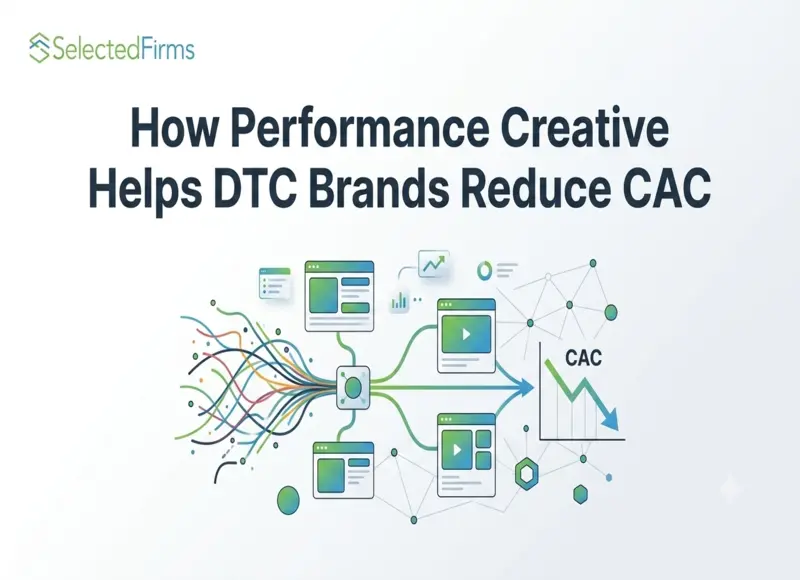
Customer acquisition cost has become one of the biggest growth challenges for DTC brands. Paid social is more competitive, manual targeting is less reliable than it used to be, and shoppers are exposed to more ads than ever. For many brands, lowering CAC is no longer as simple as changing campaign settings, adjusting bids, or moving budget between ad sets.
The bigger lever is often creative.
Performance creative helps DTC brands reduce CAC because it directly affects click-through rate, conversion intent, audience relevance, platform learning, and post-click performance. When creative is clear, varied, and built around real buyer motivations, paid social campaigns have a better chance of attracting qualified customers at a lower cost.
Why CAC Keeps Rising for DTC Brands
DTC brands are dealing with several pressures at once. Competition has increased across Meta, TikTok, Google, and other paid channels. CPMs are higher in crowded consumer categories. Attribution is harder to trust. Audiences also see more ads, which means creative fatigue can happen quickly.
Another major issue is weak message match. An ad may promise one benefit, but the landing page may focus on something else. That disconnect lowers conversion rates and makes paid traffic more expensive.
When creative stops resonating, everything gets harder. Fewer people click, fewer visitors convert, and platforms receive weaker engagement and conversion signals. The result is often a rising Meta ads CAC, even when the media buying setup looks technically sound.
What Performance Creative Actually Means
Performance creative is not just attractive design or polished brand content. It is creative built to drive measurable acquisition outcomes, such as lower CAC, stronger conversion rates, better qualified traffic, and more efficient paid social learning.
Strong performance creative for DTC brands usually includes:
- A clear hook that earns attention quickly
- Product positioning that is easy to understand
- Audience-specific pain points
- Objection handling
- Social proof
- Platform-native formats
- Clear offer framing
- A strong reason to click or buy
Brand creative builds recognition and trust. Performance creative goes further by testing, learning, persuading, and converting. The best DTC teams need both, but when CAC is the problem, performance creative often becomes the more immediate lever.
Why Creative Is Now a CAC Lever
Creative fatigue tends to show up when people keep seeing the same ad over and over, or when a brand keeps coming back to the same angles and formats too. Even a really strong ad will start to feel less effective when it gets repeated too much, eventually.
For DTC brands, it helps to reduce that drop by swapping in fresh hooks, updating the visuals, testing different creators, leaning into UGC-style videos, and also trying founder-led content. You can build product demos and keep experimenting with comparison creative, so the message does not stale out. Static posts and carousels can also help support video campaigns since platforms get more placements to test in, even if it is the same core concept.
As Meta and TikTok campaigns become more automated, creative is one of the main ways brands guide platform learning. In that sense, creative is not just a design task. It is part of acquisition strategy.
Build a Creative Testing System, Not Just More Ads
Many DTC brands respond to rising CAC by producing more ads. But more volume alone does not solve the problem. The real advantage comes from a structured DTC creative testing system.
A strong creative testing system includes testing one clear variable at a time. For example, a brand might test multiple hooks for the same product angle, different customer pain points, or different formats such as UGC creative, founder-led videos, product demos, statics, and carousels.
The goal is not just to find one winning ad. The goal is to learn why an ad works and turn that insight into new iterations.
For DTC teams that already have product-market fit but are struggling with rising CAC on Meta, the issue is often not the campaign structure alone. It is the lack of a repeatable creative system. This is where performance creative agencies can support growth by bringing together creative diversity, creator-led assets, and structured paid social testing systems that help brands identify what actually drives conversions.
Match Creative to Buyer Intent
Not every buyer needs the exact same message. Cold audiences require that clear problem-solution setup, quick product education, and strong attention hooks. Warm audiences can lean on social proof, clear comparisons, objection handling, and those deeper benefits that feel more human and personal.
Retargeting audiences usually need reminders, urgency, quick FAQs, promotional offers, testimonials, and extra trust signals, so they can move forward without hesitation.
Existing customers may respond better to replenishment, cross-sell, upsell, or loyalty-focused creative.
CAC often rises when brands show the same message to every audience. Performance creative lowers acquisition costs by matching the message to the buyer’s level of awareness.
Reduce Creative Fatigue With Format Diversity
Creative fatigue tends to kick in when people see that same ad too many times, or when the brand keeps serving up the same angles and layouts. Even a very solid ad will, eventually, lose some efficiency if it gets overused.
DTC brands can reduce that tired effect by rotating fresh hooks, updating visuals, testing various creators, leaning into UGC style videos, trying founder-led content, making room for product demos, and running comparison-based creative experiments. Static posts and carousels can also back video campaigns by giving each platform extra placements to try out and measure.
Partnership ads can be especially useful because they allow brands to run creator-led content through a more native-looking distribution method. This can make ads feel less like traditional brand advertising and more like trusted social content.
Improve Message Match After the Click
Performance creative does not stop at the ad. If the ad and landing page are disconnected, CAC can still rise even when CTR looks healthy.
If the ad is really about price, the landing page should make the offer easy to get, no extra fog. If the ad is about a product advantage, then the landing page should lock in that upside quickly. When the ad tackles a concern, the landing page needs to back up the statement with solid proof, like evidence, not just talk. And if the ad leans on creator-led social proof, the landing page should keep nurturing confidence, bit by bit.
Better message match improves conversion rate from paid traffic. That can reduce CAC even when media costs stay the same.
Measure Creative by CAC, Not Just Engagement
Engagement metrics are useful, but they do not always show whether creative is profitable. A funny or entertaining ad may generate clicks without attracting serious buyers. Meanwhile, a lower-engagement ad may drive stronger customers if the message is more qualified.
DTC teams should review metrics such as CAC, CPA, conversion rate, CTR, thumb-stop rate, hook rate, hold rate, ROAS, blended CAC, LTV: CAC, revenue by creative angle, and spend by winning concept.
The main point is simple: judge creative performance by business outcomes, not vanity metrics alone.
Common Creative Mistakes That Increase CAC
Some creative habits make paid social more expensive. One common mistake is relying on a single winning ad for too long. Another is copying competitor ads without understanding the strategy behind them.
Brands also increase CAC when they test too many variables at once, produce UGC without a clear brief, ignore landing page alignment, or measure success only through platform-reported ROAS. Using the same creative for cold, warm, and retargeting audiences is another common issue.
These mistakes slow down learning and make it harder to understand what is actually driving acquisition performance.
Final Takeaway
DTC brands reduce CAC when they build creative systems that learn faster than the market. The goal is not just to make better-looking ads. The goal is to understand which hooks, formats, pain points, offers, and proof points attract profitable customers.
Performance creative improves both the ad experience and the buying journey. Brands that test consistently, refresh creative regularly, measure the right metrics, and connect creative insights to media buying decisions are better positioned to scale efficiently without letting CAC control growth.


Head Of Digital Marketing
Recent Blogs


Elia Martell
5 Virtual Recruiting Support Operations for Tech and Healthcare Teams
-

09 Oct 2026
-

8 Min
-

477
Jane Hart
Why LinkedIn Campaign Optimization Requires More Than CPC and CTR
-
09 Oct 2026
-
8 Min
-
155

Jane Hart
How to Vet an Offshore SEO Partner: A Due-Diligence Checklist for Agencies and Brands
-
08 Oct 2026
-
8 Min
-
263

Jane Hart
Benchmarking GPU Providers: A Practical Guide to Comparing Cloud Compute Options
-
07 Oct 2026
-
6 Min
-
173
