


How to Hire Dedicated Developers in the USA (2026 Guide)
-
Last Updated:

03 Sep 2026
-
Read Time:

8 Min Read
-
Written By:
 Isha Choksi
-
374
Table of Contents
Compare 2026 US developer rates by seniority, tech stack, and location, and learn how to vet, hire, and manage dedicated developers while avoiding common hiring red flags.
If you've gotten far enough to search for this, you've probably already ruled out hiring in-house. Maybe the roadmap runs six months or longer. Maybe your last two local job postings sat open for ten weeks.
Either way, you're not here to be convinced that outsourced development works. You're here to figure out what it costs, how not to get burned, and where to actually find someone worth hiring.
What does "Hiring Dedicated Developers" Mean?
A dedicated developer works exclusively on your project. Not a freelancer juggling five clients. Not an agency team that vanishes after one deliverable.
Key traits of a truly dedicated developer:
- bot
- Works only on your product during contracted hours
- Reports into your workflow and process
- The provider handles their payroll, benefits, and management
- You get in-house-level output without the recruiting cycle
One question to always ask a vendor: Does this person work only on my project, or are they splitting time across other clients? This single answer changes both price and quality more than anything else in this blog.
Why US Companies Are Choosing This Model in 2026
Local hiring is slow.
- Senior developer hires now take an average of 90+ days, up from 52 days in 2024.
- Engineering roles overall take about 62 days to fill, well past the 42-day average for all roles.
- Every day a role sits open costs roughly $500. A 44-day hire burns about $22,000 before day one.
The talent shortage is real, not a headline.
- The US is projected to face a shortage of 1.2 million developers by 2026, with 545,000 current engineers expected to leave the workforce.
- 87% of US tech leaders say they're struggling to find skilled talent (Robert Half).
- Three forces are colliding: AI tripling demand for senior engineers, a wave of senior developers retiring before 2027, and visa restrictions cutting the workforce by ~45,000 developers a year.
Outsourcing is now the default, not the backup plan.
- 92% of large (Global 2000) companies now outsource. 80% plan to keep or increase that spend. (Source: procurement tactics)
- As per Deloitte 2024 Global Outsourcing Survey, on average, 76% of all IT work is now delivered by external providers or shared-services teams.
- Cost used to be the #1 reason companies outsourced (70% in 2020). Now it's talent access. Only 34% say cost is the main driver today.(Source: Deloitte Report, 2024)
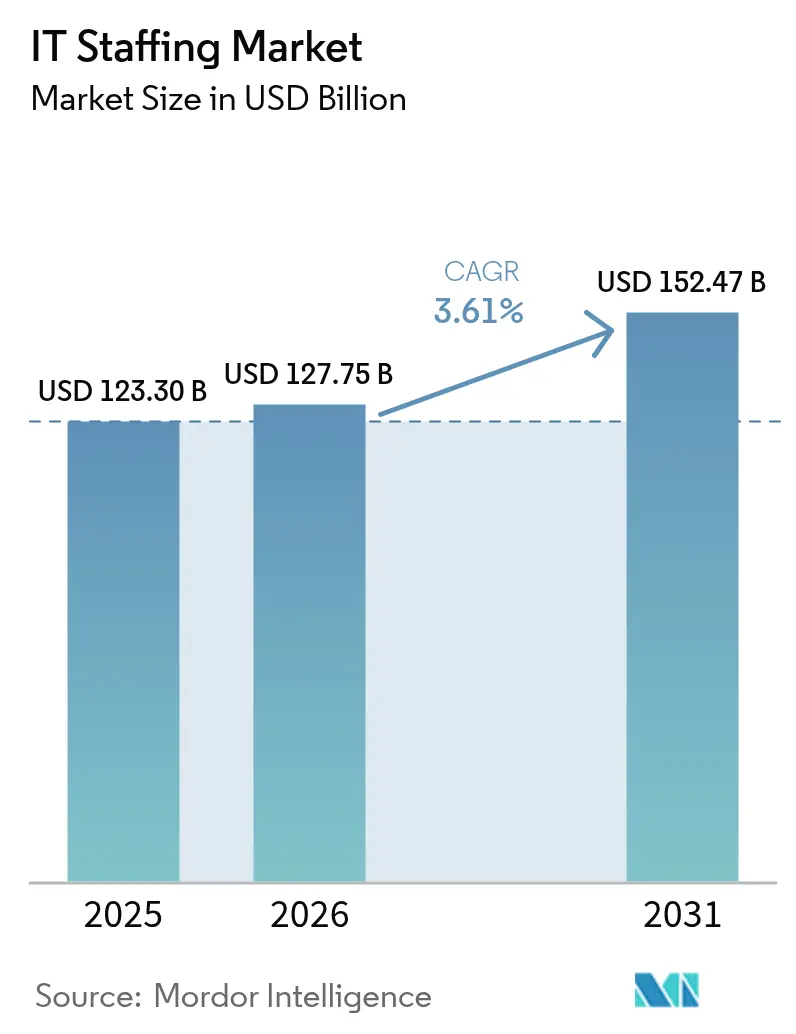
- The global IT staffing market is projected to grow from $127.75 billion in 2026 to $152.47 billion by 2031, at a CAGR of 3.61%.
Comment end
Bottom line: waiting three-plus months to hire locally has a real, calculable cost. That's the number to weigh against the rates below.
Dedicated Developers vs. Staff Aug vs. Freelancers vs. Agency Work
Quick comparison so you pick the right model on the first try:
|
Model |
Best for |
Commitment |
Watch out for |
|
Dedicated developer |
Ongoing product work, evolving roadmap |
6+ months |
You need to manage them like an employee |
|
Staff augmentation |
Filling one skill gap fast |
1-6 months |
Less continuity than a full dedicated team |
|
Freelancer |
Small, well-defined tasks |
Days to weeks |
No backup if they drop off mid-project |
|
Agency (fixed scope) |
A defined build with a clear end date |
Project duration |
Scope changes cost extra, less flexible |
Simple rule: Roadmap keeps changing → go dedicated or staff aug. One narrow skill gap for a few months → staff aug is cheaper. One fixed deliverable, no ongoing relationship → agency project work.
Need flexible capacity without a full-time dedicated hire? Browse staff augmentation companies.
Should You Hire Dedicated Developers? (Quick Checklist)
Yes, if:
- Your roadmap runs 6+ months
- Scope will evolve as you learn from users
- Local hiring is too slow or expensive right now
- You want direct input on sprint planning
- Someone on your team can actually manage remote engineers
No, if:
- You need one feature built and shipped, nothing ongoing (go with agency work instead)
- Nobody on your team has time to manage a remote hire (this is the #1 reason these engagements fail, not talent quality)
2026 US Developer Rates by Seniority
US developer rates in 2026 vary sharply by experience level, from entry-level hires to specialized senior talent.
|
Seniority |
US-based agency rate |
Nearshore (Latin America) |
Offshore (Eastern Europe / Asia) |
|
Junior (0-2 yrs) |
$45-65/hr |
$30-45/hr |
$18-35/hr |
|
Mid-level (2-5 yrs) |
$65-95/hr |
$45-65/hr |
$30-55/hr |
|
Senior (5+ yrs) |
$95-140/hr |
$65-90/hr |
$45-70/hr |
|
Specialized (AI/ML, security, architecture) |
$130-200+/hr |
$80-120/hr |
$60-95/hr |
Quick stat: Offshore and nearshore senior engineers typically cost 40-70% less than US-based senior developers, and up to about 75% less for AI/ML specialists specifically.
2026 US Rates by Framework / Tech Stack
Not all code costs the same. Rates shift sharply depending on the framework, stack, and specialization involved.
React / Front-end Frameworks
- Typical range: $51-75/hr (median $63/hr)
- Senior devs earn 40-65% more than juniors on the same stack. Add Next.js, GraphQL, or React Native, and rates go up another 15-35%.
Full-Stack (MERN, MEAN, Python, Node.js)
- Typical range: $61-80/hr average, up to $180/hr for complex work
- AI-literate full-stack developers who can integrate LLMs or build AI agents can charge 20-30% more.
Mobile (iOS, Android, Flutter, React Native)
- Typical range: $45-50/hr at senior level
- Flutter developers currently earn the most ($47.60/hr mid-level median) because cross-platform demand is outpacing supply. Android and iOS sit close behind.
DevOps / Cloud Services
- Typical range: $100-200+/hr in major US hubs
- DevOps and AI/ML engineers command the highest premiums in the market right now due to a genuine supply shortage.
AI / ML Engineering
- Typical range: $150-250/hr for senior US talent
- This is currently the highest-paying specialization in software development, ahead of DevOps/cloud and mobile.
Simple takeaway: Generalist stacks (basic front-end, standard CRUD apps) price competitively. Anything touching AI, DevOps, or cloud architecture costs more, and that gap isn't shrinking in 2026.
2026 US Developers Cost Rates by City and State
Location still shapes developer pay in 2026, even for remote roles, with wide gaps across US states and cities.
Highest state-level hourly pay:
- California: ~$101/hr
- Washington: ~$100/hr
- New York: ~$95/hr
- Massachusetts: ~$91/hr
- Maryland: ~$87/hr
City spotlights:
- San Francisco Bay Area: Developers here earn 30.6% more than the national average, though the region also has the highest cost of living in the US (15.6% above the national average).
- San Jose: The single highest-paying US market for developers, at $221,710 average, nearly $74,000 above the national mean.
- Austin, TX: Median developer pay is around $130,500, adjusting to $134,294 once the cost of living is factored in. Strong value without Bay Area housing costs.
One thing budgets always miss: The true cost of a US employee runs 1.25x to 1.4x their base salary once you add payroll taxes, benefits, and overhead. A dedicated-developer rate usually has most of that already baked in, which is why the hourly number can look higher than a raw salary conversion until you run the full math.
Step-by-Step Process to Hire Dedicated Developers in the USA
- Define scope and stack first. Know if you need one full-stack generalist or a team split across frontend/backend/DevOps before you talk to a vendor.
- Source from a vetted directory, not a cold search. Saves you the work of separating real capability from marketing copy.
- Run a paid trial task. A 1-2 week paid pilot on real (small) backlog work tells you more than any reference call.
- Check references; ask specifically about turnover. Did the same developer stay on the project, or did the vendor rotate people mid-engagement?
- Lock IP and security terms in writing. Confirm the contract transfers full IP to you, and ask about SOC 2 or ISO 27001 if you handle sensitive data.
- Onboard them like a new hire. Give tool access, documentation, and a real point of contact. This is what determines a 2-week ramp vs. a 6-week one.
Considering a full-time software development company instead of one developer? Same steps apply, just scaled up.
Red Flags to Watch For When Hiring Dedicated Developers
- Vague references, or references who won't take a call
- No willingness to run a paid trial
- No SOC 2 / ISO 27001 when your product needs it
- Pressure to sign a 6-12 month contract before seeing any work
- A rate way below market for the stated seniority (usually means a bait-and-switch on who actually gets assigned)
- Won't tell you who specifically will work on your project
Where to Find Vetted Dedicated Developers in the USA
The hard part isn't defining scope. It's telling real, verified vendors apart from agencies with polished but unverifiable case studies, especially with 92% of large companies now outsourcing and every provider competing for your business.
Browse vetted software development companies in the USA on SelectedFirms. Listings are tied to verified client reviews, not self-reported claims, so you can compare real delivery history before your first sales call.
FAQs
$45-65/hr for junior, $95-140/hr for senior, $130-200+/hr for AI/ML or security specialists. Nearshore (Latin America) runs 30-50% cheaper. Offshore (Eastern Europe, South Asia) runs 40-75% cheaper depending on the stack.
Speed and supply. Local senior hires now take 90+ days. The US faces a 1.2 million developer shortfall. Every open role costs money every day it stays unfilled.
Dedicated developer = long-term, exclusive to your product. Staff augmentation = shorter-term, usually filling one specific skill gap. Ask any vendor directly how they structure it, since the terms get used loosely.
2-4 weeks to vet a vendor and run a trial. Another 2-4 weeks to onboard to full productivity. Total: about 1-2 months, versus 90+ days for local hiring alone.
Either. One developer works for a narrow skill gap or a smaller product. A full team makes sense when frontend, backend, and QA need to move in parallel.

Head of SEO Operations
Recent Blogs

Elia Martell
5 Virtual Recruiting Support Operations for Tech and Healthcare Teams
-
09 Oct 2026
-
8 Min
-

462


Jane Hart
Why LinkedIn Campaign Optimization Requires More Than CPC and CTR
-
09 Oct 2026
-
8 Min
-
149

Jane Hart
How to Vet an Offshore SEO Partner: A Due-Diligence Checklist for Agencies and Brands
-
08 Oct 2026
-
8 Min
-
249
Jane Hart
Benchmarking GPU Providers: A Practical Guide to Comparing Cloud Compute Options
-
07 Oct 2026
-
6 Min
-
171
