


Table of Contents
Data breaches can severely impact SMEs through downtime, financial loss, operational disruption, and damaged customer trust. Learn the real cost of a breach and discover practical cybersecurity measures like MFA, dark web monitoring, and password manageme
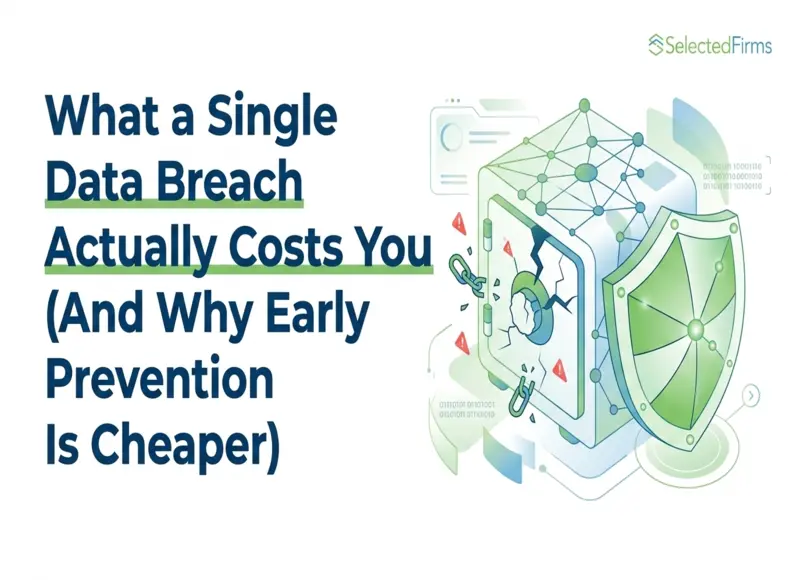
When you hear that the average data breach costs $4.4 million, it’s easy to think: “We’re not a large business. It won’t cost us that much.” Maybe not. But that doesn’t make the risk harmless.
A breach can lead to emergency IT support, legal advice, downtime, customer notifications, delayed work, and lost sales. It also pulls you and your team away from the work that keeps the business thriving.
The True Scale and Cost of Data Breaches for SMEs
US small-business data paints a tough picture: According to the Identity Theft Resource Center's 2025 Business Impact Report, 81% reported a security breach, data breach, or both in the past year. Among breached small businesses, 62.5% reported a total financial impact above $250,000.
SME breaches may cost less than enterprise breaches in absolute terms. But smaller businesses often have less cash, fewer backup systems, and less room to absorb the disruption.
In a smaller company, disruption spreads quickly. If your CRM or payment system goes down, the people who should be selling, shipping, invoicing, or supporting customers may have to switch into breach-response mode instead.
Vendor Access Increases Risk
Most SMEs outsource some work, which widens access to business systems. A software partner may have access to code, or a marketing agency may have access to customer lists. If attackers expose one of those accounts, your business risk grows.
IBM found that third-party vendor compromise was the second most common way attackers got in, accounting for 15% of breaches. These supply chain breaches are also hard to contain, taking 267 days on average to identify and resolve.
Fixing the Weak Points
Not every breach starts with a sophisticated hack. Often, attackers find a login that still works, such as a reused password, shared account, or old vendor login that nobody removed.
If employees or vendors reuse passwords across tools, attackers can test the same details against email, cloud storage, CRMs, project management tools, and admin portals.
The first step is knowing when your credentials have already been exposed. Next, make sure they are harder to exploit in the first place.
Set Up Dark Web Monitoring
Leaked login details often appear in breach dumps, hidden forums, and dark web marketplaces. Dark web monitoring can help you find out when those details may already be exposed.
NordVPN’s Dark Web Monitor works by continuously scanning breach databases and dark web sources for data tied to the email addresses you add to your NordVPN account. If any of them appear in a known breach, you get an immediate alert.
For a business owner or founder, that means you can monitor the email addresses most critical to your operation (your own account, a shared admin address, a billing inbox) and know quickly if any of them have been exposed. NordVPN's Dark Web Monitor covers up to five email addresses on the standard plan. Dark Web Monitor Pro extends monitoring to phone numbers, credit card numbers, and national ID numbers.
|
Without dark web monitoring |
With dark web monitoring |
|
Business discovers the issue after account misuse or customer impact |
Alert appears when NordVPN’s Dark Web Monitor finds your email address in a known breach |
|
Emergency IT support may be needed |
Passwords can be reset quickly |
|
Systems may need a forensic review |
Active sessions can be revoked |
|
Customer notifications may be required |
Vendor access can be reviewed early |
|
Downtime, lost sales, and reputation damage can grow |
Damage can be contained before it reaches customers or systems |
For founders concerned about personal identity exposure beyond business accounts, Coveron (formerly NordProtect) adds active restoration support, including up to $1M in identity theft recovery, credit monitoring, and online fraud coverage.
Use Multi-Factor Authentication
Multi-factor authentication (MFA) adds another login step, such as a one-time code, authenticator app, or biometric check, rather than simply relying on a password. It’s a good idea to enable MFA on all business-critical tools, including email, cloud storage, accounting software, CRMs, admin dashboards, code repositories, and project management platforms.
MFA is even more important for vendor accounts because those logins may sit outside your daily control.
Remove Access When People No Longer Need It
Review access regularly, remove permissions when projects end, and avoid shared logins where possible. A quarterly access review can help you find accounts that no longer need to exist.
Use Strong, Unique Passwords
Each business account should have a unique password. It means that if one account is exposed, attackers cannot reuse the same details across your business.
A password manager helps by creating long, unique passwords and storing them in an encrypted vault. Your team does not have to rely on memory or reuse familiar passwords.
Treat Vendor Security as Part of Your Own Security
If a vendor has access to your systems, their security habits affect your risk. Before giving access, ask:
- Do they use MFA?
- Who will have access to your account or data?
- How do they store passwords?
- How quickly do they remove access when staff leave?
- What happens if their account is compromised?
You do not need to turn every vendor conversation into a full security audit, but you should know who has access and how to remove it.
Also consider what data each vendor can see. If exposed data includes personal details belonging to owners, employees, or customers, the issue can move from business security into identity protection.
Reduce Risk Before Recovery Costs Add Up
A data breach may not cost your SME millions, but it can still cause serious disruption. The cheaper option is to reduce the risk early by monitoring for exposed data, using MFA, removing old access, creating stronger passwords, and reviewing vendor accounts regularly. Tools like NordVPN’s Dark Web Monitor help you spot leaked login details sooner, giving you more time to act before a small exposure becomes a big problem.
Conclusion
Data breaches are showing up more often, and SMEs don’t stay hidden anymore. Even one account that gets exposed can end up causing expensive chaos; it disrupts daily work, shakes customer confidence, and slows longer-term growth. Proactive security habits like dark web monitoring, multi-factor authentication, disciplined password management, and routine checks of who gets vendor access all help limit exposure before major harm happens. In cybersecurity, prevention isn’t only a technical choice; it is a workable financial plan that shields your organization and your customers.


Head Of Digital Marketing
Recent Blogs

Elia Martell
5 Virtual Recruiting Support Operations for Tech and Healthcare Teams
-

09 Oct 2026
-

8 Min
-

477

Jane Hart
Why LinkedIn Campaign Optimization Requires More Than CPC and CTR
-
09 Oct 2026
-
8 Min
-
155
Jane Hart
How to Vet an Offshore SEO Partner: A Due-Diligence Checklist for Agencies and Brands
-
08 Oct 2026
-
8 Min
-
263
Jane Hart
Benchmarking GPU Providers: A Practical Guide to Comparing Cloud Compute Options
-
07 Oct 2026
-
6 Min
-
173
