


Table of Contents
Looking for a Vapi alternative? Discover the top AI-powered call handling platforms for 2026, including solutions for SMBs, agencies, and enterprise teams. Compare features, pricing, integrations, and deployment options to choose the best fit for your bus
Vapi is a popular developer-first platform for building AI voice agents, but it is not the right fit for every team. Many businesses looking at the best Vapi alternatives for automatic call handling in 2026 want something with less engineering overhead, deeper CRM workflows, or a ready-made AI receptionist that picks up calls without a sprint of custom development. This listicle walks through five credible options across SMB, agency, enterprise, and mid-market use cases so buyers can match the platform to their actual call volume, team size, and integration stack.
Comparison Table: Top 5 Vapi Alternatives in 2026
|
Tool |
Best For |
AI Call Handling Capability |
Starting Price |
|
CloudTalk |
Growing SMBs scaling inbound and outbound |
AIVA AI Receptionist and AI Specialist |
$25/user/month |
|
Synthflow AI |
Marketing agencies and no-code builders |
No-code AI voice agent builder |
$29/month (entry tier) |
|
Five9 |
Large enterprise outbound contact centers |
Intelligent Virtual Agents |
Custom pricing (around $149/user/month) |
|
Talkdesk |
Enterprise customer experience teams |
Talkdesk Autopilot AI agents |
Custom pricing (around $85/user/month) |
|
Dialpad Ai |
Mid-market unified communications |
Ai Agents and Ai Receptionist |
$15/user/month |
The Ultimate List of Best Vapi Alternatives for Automatic Call Handling
1. CloudTalk
CloudTalk is a cloud-based business phone system and AI voice platform, built for small and mid-market companies that want to grow without bolting together a developer-heavy stack. For teams looking for Vapi alternatives focused on automatic call handling in 2026, CloudTalk packages its AIVA voice agents with a full call center suite, so inbound calls get answered, routed, and logged, without a single line of custom code. Reps work inside familiar tools, like HubSpot or Salesforce. Meanwhile, AIVA manages repetitive inbound questions, qualifies callers, and blocks missed opportunities across business hours and after-hours coverage.
What are CloudTalk's Key Features?
- AIVA (AI Voice Agent): Handles inbound FAQs, qualifies callers, and prevents missed calls.
- Power Dialer: Automatically dials the next number in a campaign queue to lift rep productivity.
- Interactive Voice Response (IVR): Multi-level menus route callers to the correct agent or team.
- Call Recording and Monitoring: Captures every call with listen, whisper, and barge controls for coaching.
- Real-Time Analytics: Live dashboards, wallboards, and agent performance reports for managers.
- International Numbers: Local, mobile, and toll-free numbers available in 160+ countries.
What are CloudTalk's Best Integrations?
CloudTalk's best integrations include HubSpot, Salesforce, Pipedrive, Zendesk, Intercom, and Gong, alongside 100+ other native integrations and middleware connections through Zapier and Make.
Who is CloudTalk Best For?
CloudTalk is best for growing SMBs and mid-market sales and support teams that need a scalable AI calling platform with strong CRM integrations and global number coverage.
How Much Does CloudTalk Cost?
CloudTalk's pricing starts at $25 per user per month on the Starter plan, with Essential, Expert, and Custom tiers available for larger teams and advanced AI workflows.
2. Synthflow AI
Synthflow AI is a no-code platform that lets agencies, consultants, and product teams roll out AI voice agents without any engineering support or real hand-holding, more or less. It aims at a slightly different crowd than CloudTalk, because it is leaning toward marketing agencies and service businesses that want to spin up voice agents for lead qualification, appointment booking, and handling inbound FAQ on behalf of their clients. The drag and drop flow builder, prompt-based agent logic, and white label options, all together make Synthflow a natural pick for teams building voice automations as a service instead of running their own internal sales floor or contact center.
What are Synthflow AI's Key Features?
- No-Code AI Voice Builder: Drag-and-drop flow designer for inbound and outbound agents.
- Appointment Booking: Native calendar integrations for automatic scheduling on calls.
- Multi-Language Support: Voice agents in 30+ languages for international deployments.
- White-Label Mode: Agencies can rebrand the platform for client-facing delivery.
- Conversation Recording: Full transcripts and audio recordings for review and training.
- Webhook Workflows: Trigger downstream tools when calls reach specific outcomes.
What are Synthflow AI's Best Integrations?
Synthflow AI's best integrations include HubSpot, Salesforce, Google Calendar, Calendly, GoHighLevel, and Zapier, alongside webhook support for custom downstream tools.
Who is Synthflow AI Best For?
Synthflow AI is the best pick for marketing agencies and no-code builders who deploy AI voice agents for clients. You do this without having to write custom code, which is nice. It just works better in practice than you might expect.
How Much Does Synthflow AI Cost?
Synthflow AI's pricing starts at $29 per month on the entry tier, with Pro and Agency plans scaling on call minutes, concurrent calls, and white-label features.
3. Five9
Five9 is an enterprise cloud contact center platform built for large outbound inbound and blended operations that run through thousands of seats. It targets a clearly different segment from CloudTalk, sitting in the high-volume enterprise space where compliance, omnichannel scale and Intelligent Virtual Agents matter more than a fast setup.
Operations leaders use Five9 to automate repetitive call work, route conversations across voice email, chat and social, and pair human agents with AI co-pilots that bring up next best actions. The platform feels like a heavyweight choice for buyers who already have a dedicated telephony admin team, and they want the structure to stay put.
What are Five9's Key Features?
- Intelligent Virtual Agents (IVA): Conversational AI handles common inbound calls end-to-end.
- Predictive and Power Dialing: High-volume outbound modes for sales and collections teams.
- Workforce Engagement Management: Forecasting, scheduling, and quality management tools.
- Omnichannel Routing: Unified queue across voice, email, chat, SMS, and social channels.
- Agent Assist: Real-time prompts and call summaries powered by generative AI.
- Compliance Controls: TCPA dialing rules, call recording, and HIPAA support.
What are Five9's Best Integrations?
Five9's best integrations include Salesforce, Microsoft Dynamics 365, ServiceNow, Oracle Service Cloud, Zendesk, and Microsoft Teams, alongside a public REST API for custom builds.
Who is Five9 Best For?
Five9 is best for large enterprise contact centers running high-volume outbound or omnichannel operations with dedicated telephony and operations teams.
How Much Does Five9 Cost?
Five9's pricing is custom and quote-based, with public reports indicating per-seat costs starting around $149 per user per month and rising with AI, WEM, and digital add-ons.
4. Talkdesk
Talkdesk is an enterprise customer experience platform that blends a cloud contact center with the Talkdesk Autopilot family of AI voice agents. It targets a different crowd from CloudTalk, focused on enterprise CX leaders who need to automate more intricate customer service pathways across retail, healthcare, financial services, and travel.
For operations teams, Talkdesk helps reduce repetitive incoming calls, also it can summarize live conversations for agents, and evaluates every interaction for quality scoring. The platform pairs ready-to-use industry workflows with AI agents that can resolve everyday requests completely, with no human intervention.
What are Talkdesk's Key Features?
- Talkdesk Autopilot: AI voice agents resolve common inbound calls without human escalation.
- Talkdesk Copilot: Real-time agent assist with summaries and recommended responses.
- Industry-Specific Workflows: Pre-built templates for retail, healthcare, and financial services.
- Interaction Analytics: 100% call recording and AI-driven quality management.
- Workforce Engagement: Forecasting, scheduling, and adherence tracking for large teams.
- Omnichannel Routing: Unified queue across voice, digital, and self-service channels.
What are Talkdesk's Best Integrations?
Talkdesk's best integrations include Salesforce, Microsoft Dynamics 365, ServiceNow, Zendesk, Slack, and Microsoft Teams, with an AppConnect marketplace covering 80+ pre-built apps.
Who is Talkdesk Best For?
Talkdesk is best for large enterprise CX teams in regulated industries that need vertical-specific AI workflows and deep contact center analytics.
How Much Does Talkdesk Cost?
Talkdesk's pricing is quote-based, with public sources indicating CX Cloud Essentials starts around $85 per user per month, and Elite and Enterprise tiers are priced higher.
5. Dialpad AI
Dialpad AI is an AI-first unified communications platform that kinda bundles business phone, video meetings, messaging and even contact center capabilities into one single stack. It speaks to a slightly different group than CloudTalk, maybe, targeting mid-market and IT-led organizations that want a single vendor for both internal and external communications.
Dialpad’s AI Receptionist and AI Agents do the automatic call handling for inbound questions, while live transcription and post-call recap cover internal sessions, and sales calls too. The whole platform seems to fit for buyers who think AI calling belongs inside a broader collaboration enhancement, not just a standalone sales gadget.
What are Dialpad AI's Key Features?
- Ai Receptionist: Automatically answers, qualifies, and routes inbound calls.
- Ai Agents: Handles outbound and inbound conversations end-to-end for common use cases.
- Live Transcription: Real-time call and meeting transcripts with speaker labels.
- Ai Recap: Automatic post-call summaries, action items, and CRM logging.
- Unified Communications: Voice, video, and chat in a single desktop and mobile app.
- Contact Center Mode: ACD routing, supervisor monitoring, and workforce tools for support teams.
What are Dialpad AI's Best Integrations?
Dialpad AI's best integrations include Salesforce, HubSpot, Zendesk, Microsoft 365, Google Workspace, and ServiceNow, alongside a public API for custom workflows.
Who is Dialpad AI best for?
Dialpad AI is best for mid-market and IT-led organizations that want a single AI-driven platform covering phone, video, messaging, and contact center workflows.
How Much Does Dialpad AI Cost?
Dialpad AI's pricing starts at $15 per user per month on the Standard plan, with Pro and Enterprise tiers adding contact center features and advanced AI.
How We Chose the Best Vapi Alternatives for Automatic Call Handling in 2026
To figure out the best Vapi alternatives, we used the same evaluation style, looking at product quality, how much the market actually adopts it, the day-to-day usability, and the total business value. The idea was to point to the choices that deliver dependable features but also still fit a blend of business needs, team sizes, and the real operational requirements .
Each platform was assessed across several key criteria to ensure a balanced and practical comparison:
- Feature Completeness: Availability of essential capabilities for voice automation, call management, and workflow optimization.
- Customer Adoption: Evidence of strong market presence through verified user reviews, ratings, and customer feedback.
- Ease of Implementation: Simplicity of setup, onboarding, and day-to-day management.
- Scalability: Ability to support growing call volumes, larger teams, and evolving business demands.
- Integration Ecosystem: Compatibility with CRM platforms, communication tools, and other business applications.
- Pricing Transparency: Availability of clear pricing information or accessible cost structures for buyers.
- Reliability and Performance: Platform stability, service quality, and overall user satisfaction.
- Support and Resources: Quality of customer support, documentation, and training materials.
- Target Use Cases: Fit for various business situations, from small teams and organizations that keep expanding to full enterprise-scale operations, with a focus on how well it works when needs change over time.
- Overall Value: The balance between functionality, flexibility, customer experience, and cost.
The final selection was set up to show a wide spread of solutions, allowing businesses to compare the options based on their own needs , not just by leaning on feature lists or polished marketing claims.
Why You Need a Vapi Alternative for Automatic Call Handling
Switching from a pure developer voice platform to a packaged AI call handling tool unlocks measurable operational gains.
- Faster deployment: Pre-built AI voice agents launch in days rather than the multi-week sprints typical of fully custom builds.
- Reduced engineering load: No-code and low-code flows free product and engineering teams from maintaining voice infrastructure.
- Higher answer rates: AI receptionists pick up after-hours and overflow calls, cutting missed-call losses for inbound sales and support.
- Better data hygiene: Native CRM integrations log every conversation, transcript, and outcome without manual entry.
- Stronger compliance: Built-in GDPR, SOC 2, and call recording controls reduce regulatory risk for handled conversations.
- Predictable pricing: Per-user or per-minute models replace usage-based billing surprises common in pure infrastructure tools.
How to Choose the Right Solution
Picking the right platform is not just about staring at a product page and checking features; it is a little deeper than that. The best fit should mirror your business goals, what your team can actually manage, your budget limits, and those long-range growth plans you are aiming for. If you run a more structured evaluation process, even a simple one, it becomes easier to filter the options and land on the platform that works the most in line with your needs.
When comparing solutions, consider the following factors:
- Business Requirements: Define your primary goals, workflows, and operational challenges before evaluating platforms.
- Ease of Use: Look for solutions that offer an intuitive interface and a smooth onboarding experience for your team.
- Scalability: Ensure the platform can support future growth, increased usage, and evolving business needs.
- Customization Options: Evaluate how easily the solution can be adapted to your specific processes and requirements.
- Integration Capabilities: Check compatibility with your existing software stack, including CRM, communication, and productivity tools.
- Technical Resources: Consider whether your team has the expertise needed to manage, customize, and maintain the platform effectively.
- Security and Compliance: Verify that the solution meets relevant security standards, data protection requirements, and industry regulations.
- Customer Support: Assess the quality of support channels, documentation, training resources, and response times.
- Pricing Structure: Review subscription costs, usage-based fees, add-ons, implementation expenses, and potential scaling costs.
- Overall Value: Compare the platform's capabilities, reliability, and support against its total cost to determine the best return on investment.
Taking the time to evaluate these factors can help ensure that the solution you choose not only meets your current needs but also supports your organization as it grows and evolves.
Conclusion
The market offers a wide range of solutions, each designed to address different business needs, team structures, and operational requirements. Some platforms prioritize ease of use and rapid deployment, while others focus on advanced customization, scalability, and enterprise-grade capabilities.
Rather than looking for a single best option, organizations should evaluate solutions based on their specific goals, expected usage, integration requirements, and available resources. Factors such as user experience, automation features, support quality, compliance standards, and total cost of ownership can all play an important role in the decision-making process.
Before making a long-term commitment, it's advisable to shortlist a few suitable options and test them in real-world scenarios. Hands-on evaluation can provide valuable insights into performance, reliability, and overall fit, helping ensure the selected solution aligns with both current needs and future growth plans.


Head Of Digital Marketing
Recent Blogs

Elia Martell
5 Virtual Recruiting Support Operations for Tech and Healthcare Teams
-

09 Oct 2026
-

8 Min
-

477
Jane Hart
Why LinkedIn Campaign Optimization Requires More Than CPC and CTR
-
09 Oct 2026
-
8 Min
-
155
Jane Hart
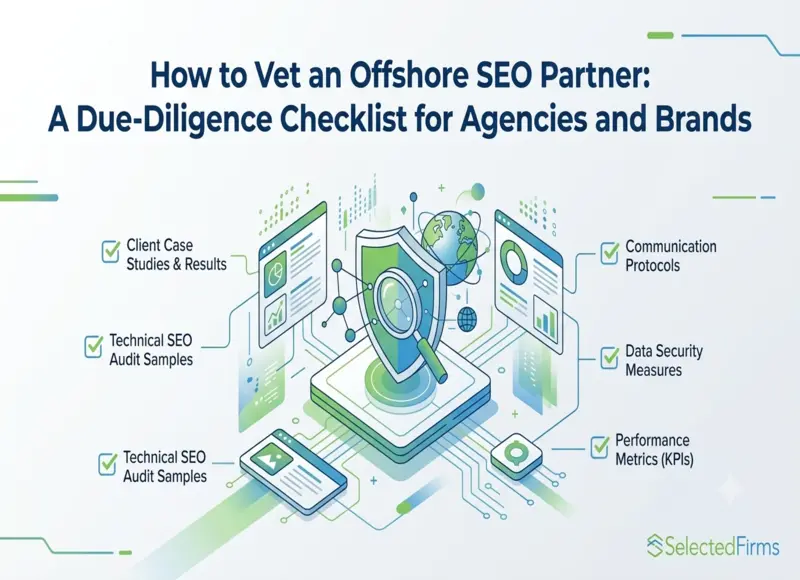
How to Vet an Offshore SEO Partner: A Due-Diligence Checklist for Agencies and Brands
-
08 Oct 2026
-
8 Min
-
263
Jane Hart
Benchmarking GPU Providers: A Practical Guide to Comparing Cloud Compute Options
-
07 Oct 2026
-
6 Min
-
173
