


Table of Contents
Learn why the traditional SEO agency model is becoming unsustainable and how automation, AI-powered content systems, and programmatic SEO are helping agencies scale faster, increase profit margins, and deliver better results for clients.
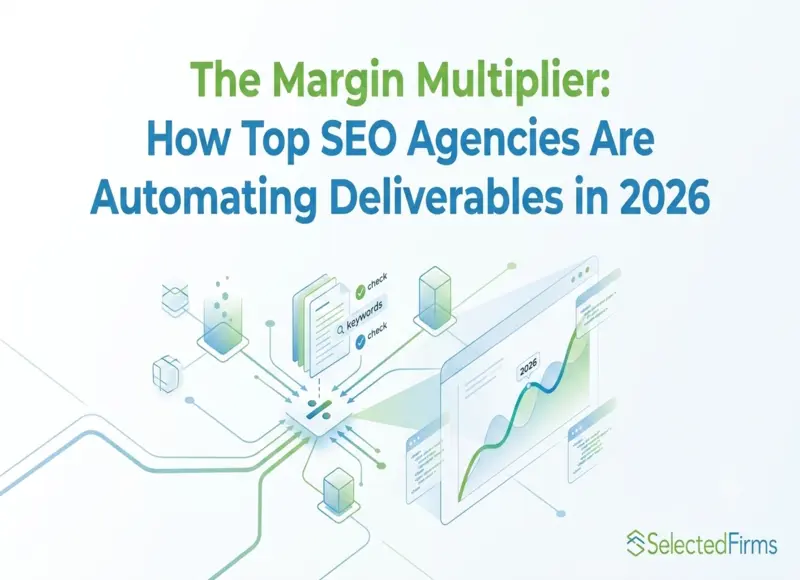
?I grabbed coffee with an agency founder last week. Heavy rain was pounding the glass. He looked completely dead behind the eyes. He runs a highly respected boutique marketing firm. His overhead is massive. He spends forty hours a week managing a Slack channel filled with twenty different freelance writers spread across four time zones. He constantly chases them for missed deadlines.
He corrects their terrible grammar. He drops into Slack to beg them to use semantic terms naturally instead of dumping them at the bottom of the page. It is completely exhausting. He is not running a high-ticket digital firm. He is managing a remote babysitting operation.
My hot take on this industry is simple. The traditional agency model is completely broken. If your core product offering is selling four handcrafted blog posts a month for three thousand dollars, you are going to go bankrupt very soon. Clients are getting significantly smarter. They want immediate scale. They want index domination. You simply cannot provide that by hiring English majors to write five hundred words on a Tuesday.
You have to stop selling your time. You have to start selling infrastructure.
The Artisan Trap
The financial math of a standard agency retainer is completely backward.
You sign a brand new client for five thousand dollars a month. You promise them a steady, compounding flow of organic search traffic. You celebrate the closed deal. Then the bleeding immediately starts.
You pay a senior strategist to perform keyword research. You pay a freelance writer to draft the initial copy. You pay an in-house editor to fix the messy copy. You pay a virtual assistant to upload the final text into WordPress and hunt down decent stock photos.
Then the client gets involved. The Chief Marketing Officer opens the Google Document. They leave thirty different comments. They complain about the brand voice. They want to change the title. You send it back to the writer. The revision cycle takes another two weeks.
By the time the month is over, your actual profit margin is hovering around twelve percent. You are working yourself into an early grave for pennies.
Then the inevitable happens. The client churns. They canceled the contract after five months of service. Why? Because four articles a month do not move the needle in a highly competitive digital market. The search engine bot barely registers the activity on their domain. The client looks at their Google Analytics dashboard. They see a completely flat line. They fire you.
You blame the algorithm. The algorithm is entirely innocent. You failed because you brought a butter knife to a gunfight. You tried to win a numbers game with artisanal methods.
Swapping Copywriters for Code
Content is no longer a precious artifact. It is structural data.
Search engine crawlers do not care about your elegant prose. They do not feel emotion when they index a webpage. They parse the data hierarchy. They look for semantic HTML. They hunt for tightly clustered internal links. They evaluate the code structure to determine if your page actually answers the user intent.
Smart agency operators figured this out two years ago. They completely abandoned the old model. They stopped hiring writers. They started building automated infrastructure.
They leverage a dedicated ai article writer to automate the entire production pipeline from start to finish. They shifted their identity. They stopped acting like boutique publishers. They became high-speed data engineers.
This is not about generating pure garbage and throwing it at the wall. It is about strategic programmatic coverage.
A client comes to you wanting to dominate the enterprise project management software niche. You do not pitch them a slow, agonizing six-month editorial calendar. You map out two hundred long tail comparison queries. You find every single obscure technical question a potential buyer might ask. You feed those exact variables into the automation engine. You generate two hundred structurally perfect, deeply interlinked pages in a single afternoon.
You push the entire batch to the client site via an API. You force the search index to swallow the entire topical cluster all at once. You establish instant topical authority.
The Mechanics of Margin Expansion
Let us look closely at the new financial math. It is a beautiful thing to behold.
You still charge the exact same client five thousand dollars a month. The perceived value remains exactly the same. You are still selling organic visibility, pipeline growth, and lead generation. The client does not care about the input. They only care about the output.
But your fulfillment costs just dropped to absolute zero.
You cut the expensive strategist. You fired the unreliable writers. You eliminated the editor position entirely.
Your software system executes the keyword mapping autonomously. The engine compiles the semantic HTML layouts. It generates data tables comparing software features. It automatically cross links every new page to the client's core service pages to pass PageRank effectively. You spend perhaps two hours configuring the initial batch logic and setting the parameters. The machine does the rest of the heavy lifting.
Your profit margin skyrockets from twelve percent to ninety five percent overnight.
You just built a highly scalable margin multiplier. You can onboard ten new enterprise clients next week without hiring a single new human employee. Try doing that with a Slack channel full of sensitive freelancers. It is physically impossible. Your agency transforms into a hyper efficient printing press.
Protecting the Index
You have to be extremely careful here. Look at the bottom of page ten on Google. It is a graveyard of dead agencies. They tried to scale with automation and suffered catastrophic algorithmic penalties.
They died because they used the wrong tools.They opened a free conversational chatbot. They typed a lazy, one sentence prompt. They copied a massive wall of unformatted text. They pasted it blindly into a client's content management system.
Google absolutely destroys these sites. The spam updates wipe them off the map instantly. They lose all their rankings overnight. The agency gets sued by the angry client.
To survive and thrive, your digital infrastructure must prioritize architecture over raw copy. Search bots look for specific signals of technical quality. They want clean code. They want perfectly nested header tags. They demand a logical internal linking taxonomy that allows the crawler to navigate the domain without hitting dead ends. If you feed the bot a giant block of text, it classifies it as low tier spam.
The code must be pristine. The layout must serve the specific intent of the user. You have to generate FAQ schemas, comparison tables, and bulleted lists programmatically. This is how you bypass the spam filters. You provide actual structural value that a raw text generator simply cannot mimic.
Selling the Machine to the Client
Agency owners always ask me the exact same panicked question. How do I explain this process to the client during the sales pitch? Do I tell them an algorithm built their entire site architecture?
You are asking the completely wrong question.
You do not sell the pen. You sell the house.
When a commercial real estate firm builds a high rise apartment building, the wealthy buyer does not ask if the concrete was mixed by a human hand or by an automated industrial machine. The buyer only cares if the building is structurally sound. They care if the plumbing works. They care if the elevators go up and down smoothly. They care if the view from the penthouse is unobstructed.
You are building digital real estate. Stop selling the manual labor. Sell the asset.
You sit down with the B2B buyer on a Zoom call. You open a spreadsheet. You show them a map of the search index. You highlight the massive, glaring gaps where their direct competitors are currently stealing their highest converting traffic. You tell them you are going to deploy a massive programmatic net to capture every single one of those specific long tail queries. You promise them total market coverage.
They will not ask you about the typing speed of your writers. They will not ask to review the editorial calendar. They will ask you how fast you can launch the net. They only care how many leads the net catches.
The Inevitable Shift
The window of opportunity for this arbitrage is closing very fast. The boutique agencies that stubbornly refuse to adapt are going to be crushed by the sheer weight of their own operational overhead.
They will be forced to keep raising their monthly retainer fees just to cover the rising costs of human labor and project management software. Their best clients will eventually leave them for leaner, faster competitors who deliver ten times the output volume for exactly half the price. It is a simple law of economics. Efficiency always wins in a commoditized market.
You have a very clear choice sitting directly in front of you today.
You can continue running a stressful babysitting service for mediocre writers. You can keep agonizing over shrinking profit margins while your business bank account slowly bleeds out month after month. You can keep fighting with clients over comma placement in a Google Document.
Or you can plug into the machine. You can own the technical architecture. You can turn your agency into a hyper profitable, fully automated scaling engine. Decide right now if you want to manage emotional people or if you want to manage highly predictable APIs.


Head Of Digital Marketing
Recent Blogs


Elia Martell
5 Virtual Recruiting Support Operations for Tech and Healthcare Teams
-

09 Oct 2026
-

8 Min
-

477
Jane Hart
Why LinkedIn Campaign Optimization Requires More Than CPC and CTR
-
09 Oct 2026
-
8 Min
-
155

Jane Hart
How to Vet an Offshore SEO Partner: A Due-Diligence Checklist for Agencies and Brands
-
08 Oct 2026
-
8 Min
-
263
Jane Hart
Benchmarking GPU Providers: A Practical Guide to Comparing Cloud Compute Options
-
07 Oct 2026
-
6 Min
-
173
