


- Home
- Interviews
Interview with Zohaib, CEO of Zubix
Zohaib Ahmed, CEO of The Zubix, explains how businesses can turn website traffic into inquiries, choose marketing channels smartly on a limited budget, and spot warning signs when hiring an agency.
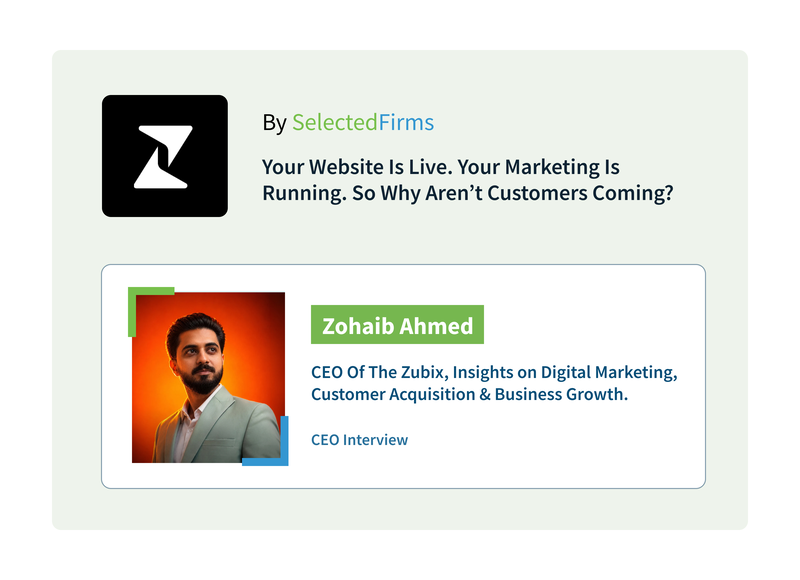
Every business wants to be visible online, but visibility alone doesn't guarantee growth. A website can look impressive and still struggle to attract visitors. Marketing campaigns can generate traffic without bringing enquiries, and even businesses investing in SEO or paid advertising may find it difficult to turn that attention into customers.
In a conversation with SelectedFirms, Zohaib Ahmed, CEO of The Zubix, shares his perspective on what businesses should get right to grow online. From improving website performance and choosing the right marketing channels to reaching new audiences and finding the right digital marketing agency, here's what he had to say.
Key Takeaways
- SEO needs the right foundation: Technical health, keyword targeting, and relevant content help businesses build search visibility.
- Website traffic must lead somewhere: A good user experience, clear messaging, and strong calls to action turn visitors into potential customers.
- Choose marketing channels wisely: SEO, Google Ads, and social media serve different purposes. Focus on the channels that match your business goals.
- Know your audience before expanding: Local SEO, multilingual content, and relevant influencer campaigns can help businesses reach the right customers.
- Choose an agency that understands your goals: Look for relevant experience, transparent communication, clear deliverables, and realistic growth expectations.
-
Many small businesses struggle to get traffic from Google, even after launching their websites. Where should they start, and how long does SEO usually take to show results?
The first step is understanding whether the website is technically healthy and properly optimized for search engines. I would start with keyword research, website structure, page speed, mobile responsiveness, and relevant content. For local businesses, setting up and optimizing a Google Business Profile is equally important.
SEO is a long-term investment, and businesses should generally allow three to six months to start seeing meaningful progress. The timeline depends on competition, the website's current condition, and the strategy being implemented.
-
Some businesses attract visitors to their websites but struggle to turn that traffic into inquiries or sales. What could be causing this, and how can they identify the problem?
Low conversions can come from several connected issues, including unclear messaging, poor user experience, slow page speed, weak calls to action or attracting the wrong audience. The first step is to review analytics and understand visitor behaviour, including where people leave and how they move through important pages. Landing pages and enquiry journeys should also be assessed. Design, content and marketing need to work together; improving only one area may not solve the underlying problem.
-
With limited marketing budgets, how should businesses decide between investing in SEO, Google Ads, or social media?
It depends on the business, its target audience, and immediate goals. SEO is suitable for building long-term organic visibility, while Google Ads can help reach people actively searching for specific products or services. Social media is valuable for building brand awareness, engagement, and trust.
With a limited budget, I would first identify where potential customers spend their time and focus on one or two channels rather than spreading the budget too thinly.
-
Fashion, beauty, and e-commerce brands often rely on social media to reach customers. Which platforms and influencer marketing strategies are worth investing in?
For fashion and beauty brands, Instagram and TikTok are strong starting points because visual content, short-form videos, and product demonstrations can influence buying decisions. Facebook can also be effective for targeted advertising and retargeting.
Influencer marketing can work, but businesses should prioritize audience relevance, engagement quality, and genuine trust over follower count. I'd recommend testing smaller collaborations first and measuring actual inquiries, website visits, and sales.
-
As businesses look to reach customers beyond their immediate locations, what should they consider when investing in local SEO or targeting multilingual audiences?
Local SEO requires location-specific keywords, optimized service pages, a well-maintained Google Business Profile, consistent business information, and genuine customer reviews.
For international or multilingual audiences, websites need properly translated content, relevant keywords in each language, and an appropriate website structure. It is worth considering whether there is genuine demand in those markets. The key is to build a strategy around the audience rather than simply translating existing content.
-
When businesses plan to launch a new website or app, what should they consider from the beginning to balance good design with search visibility?
A successful website needs more than an attractive design. SEO should be considered from the planning stage, including website architecture, keyword mapping, URL structure, page speed, mobile responsiveness, and content strategy.
The user journey should also be simple, with clear calls to action that guide visitors towards inquiries or purchases. At The Zubix, we believe design and development should support business objectives, not just create something visually appealing.
-
With so many digital marketing agencies available, what should businesses evaluate before choosing a partner, and which warning signs should they avoid?
Businesses should look beyond attractive portfolios and low prices. They should ask about the agency's process, relevant experience, communication, reporting, deliverables, and how success will be measured.
It's also important to understand exactly what is included in the agreement and who owns the website, accounts, and creative assets. Be cautious of guaranteed rankings, unrealistic sales promises, and unclear pricing. A good agency should understand business goals and work as a long-term growth partner.
-
From your experience, what should platforms like SelectedFirms do to help businesses make more informed decisions? What information would you want potential clients to understand about your agency before they reach out?
Platforms like SelectedFirms making this process more meaningful by highlighting detailed agency profiles, relevant case studies, client experiences and insights directly from agency leaders. This helps businesses look beyond visibility and identify partners whose expertise and working approach align with their goals.
Ultimately, the objective should not simply be to help businesses find an agency, but to help them find the right agency for the problem they need to solve.
Closing Thoughts
Turning online visibility into actual customers takes more than running campaigns or getting a website to rank on Google. It requires a clear understanding of the audience, a website that supports conversions and marketing efforts that align with business goals.
Zohaib Ahmed's insights show why businesses should see digital growth as a connected process. It starts with building a strong online presence. It includes choosing the right marketing channels. It also means working with an agency that understands their goals.
For businesses looking to make better digital marketing decisions, the focus should be on more than getting noticed. It should be on reaching the right audience, building trust and turning that attention into meaningful business results.Businesses can explore The Zubix's agency profile to learn more about its services and expertise.
