


Table of Contents
Should you build an in-house marketing team or outsource it? Compare the costs, benefits, functions, and considerations to find the right approach for your business.

Hiring a full in-house marketing department is expensive. Between salaries, tools, training, and turnover, many businesses are finding it cheaper – and smarter – to bring in outside help instead. That shift isn't a fad. It's a rethink of how marketing gets done.
Why the Old Model Is Breaking Down
For decades, the default was simple: build a marketing team, add headcount as the company grows, keep everything under one roof. That model made sense when marketing meant a few channels and a slower pace of change. It doesn't hold up as well now.
Marketing today is a lot more than posting on social media. You’re juggling content, paid ads, SEO, email, analytics, social campaigns, and now AI-powered tools, with each area demanding a different set of skills. Hiring a specialist for every function can quickly turn into a major expense, while keeping an entire in-house team updated is another challenge altogether.
That’s why many businesses look outside their own walls for marketing support. Instead of building a full department from scratch, they can work with top creative marketing agencies that bring strategy, creative skills, execution, and specialized expertise under one roof. It’s a practical way to scale marketing efforts without taking on the full cost and commitment of multiple in-house hires.
What Businesses Actually Gain From Outsourcing
The appeal isn't just cost-cutting. It's flexibility and access.
- Lower fixed costs – no salaries, benefits, or office overhead tied to permanent hires
- Specialized skill access – SEO, paid media, design, and copywriting without hiring five separate people
- Faster scaling – teams can expand or shrink support based on campaign needs, not headcount planning
- External perspective – agencies bring cross-industry experience that in-house teams, focused on one brand, can miss
- Reduced management burden – leadership spends less time recruiting and training marketers, more time on core business decisions
Smaller businesses benefit most obviously, since they often can't justify a full department. But mid-sized and larger companies use outsourcing too – usually for specific functions like content marketing or paid campaigns, while keeping brand strategy in-house.
How Much Does an In-House Marketing Team Really Cost?
The salary is only one part of building an in-house marketing team. Once you add benefits, recruitment, onboarding, marketing software, training, equipment, and the cost of replacing employees, the actual investment can be considerably higher.
For example, a company that needs SEO, paid advertising, content, design, and social media support may need several specialists to cover those functions. Outsourcing can give the business access to those skills through one external team without adding each role to the permanent payroll.
Where In-House Still Wins
Outsourcing isn't a universal fix. Companies with deep, ongoing brand-building needs – where marketers must understand internal culture, product roadmaps, and long-term vision intimately – often benefit from having marketers embedded full-time. In-house teams also respond faster to same-day changes, since there's no handoff between client and external team.
The businesses that get the most value tend to blend both: a small internal team handling strategy and brand voice, supported by outside specialists for execution-heavy work like content production or campaign management.
Signs It's Time to Consider Outsourcing
A few situations tend to push companies toward outside marketing support:
- Marketing needs are growing faster than the internal team can handle
- The company needs specialized skills (like SEO or paid ads) it doesn't currently have
- Hiring and retaining marketing staff has proven difficult or costly
- Leadership wants to test new channels without committing to permanent hires
None of these signals alone means outsourcing is mandatory – but together, they usually indicate the current setup isn't sustainable.
What Marketing Functions Can You Outsource?
You don't have to hand over your entire marketing operation to an outside team. Businesses can outsource one function, several channels, or most of their marketing depending on what their internal team can handle.
Common areas include:
- SEO: Keyword research, technical SEO, content optimization, and link-building
- Content marketing: Blogs, case studies, landing pages, and other marketing content
- Paid advertising: Campaign setup, audience targeting, creative testing, and optimization
- Social media: Content calendars, creative production, publishing, and engagement
- Email marketing: Campaigns, automation, segmentation, and performance tracking
- Design and creative: Ad creatives, social graphics, landing pages, and marketing assets
- Analytics: Reporting, attribution, dashboards, and campaign performance analysis
How Should You Measure the ROI of Outsourced Marketing?
Lower hiring costs aren't enough to justify outsourcing. Businesses should look at whether that marketing agency is helping them generate more qualified leads, improve conversion rates, increase organic traffic, reduce customer acquisition costs, or execute campaigns that the internal team couldn't handle alone.
The right metrics depend on the function being outsourced. SEO may be measured through organic traffic and qualified leads, while paid advertising could focus on acquisition costs, conversion rates, and revenue generated.
What do you need to consider before outsourcing to a marketing agency?
Outsourcing marketing agencies can solve hiring and skill gaps, but choosing the wrong partner can create a new set of problems. A 2024 Ascend2 and Wpromote study found that while 76% of agencies were very confident in their delivery, only 39% of brands were very satisfied with their agency services.
The gap often comes down to expectations, communication, and execution. Before outsourcing your marketing, look for:
- Clear goals and KPIs: Make sure the agency understands what success means for your business.
- Relevant expertise: Check whether its team has experience with your industry, audience, and marketing channels.
- Transparent communication: Agree on reporting, meetings, response times, and who owns each decision.
- Proven results: Review relevant case studies, client outcomes, and references rather than relying on promises.
- Flexible engagement: Make sure the team can scale its support as your marketing needs change.
The goal isn't simply to find an agency that can do the work. It's to find one that understands why the work matters to your business.
Is a Hybrid Marketing Team the Middle Ground?
For many businesses, the choice isn't really between hiring internally and outsourcing everything. A hybrid model can combine an internal team that owns brand strategy and business priorities with external specialists who handle execution or specific channels.
For example, a marketing manager might remain responsible for positioning, messaging, and campaign priorities while an external team manages SEO, content production, paid advertising, or design. This gives the company internal ownership without requiring every specialist to be hired full-time.
Final Thoughts
There's no single right answer for every business. Some will always do better with an in-house team fully immersed in the brand. Others will find that outside expertise, brought in as needed, delivers better results at lower cost. What matters is matching the model to the company's actual growth stage and marketing demands – not defaulting to tradition just because it's familiar.


Head Of Digital Marketing
Recent Blogs

Elia Martell
5 Virtual Recruiting Support Operations for Tech and Healthcare Teams
-

09 Oct 2026
-

8 Min
-

477
Jane Hart
Why LinkedIn Campaign Optimization Requires More Than CPC and CTR
-
09 Oct 2026
-
8 Min
-
155
Jane Hart
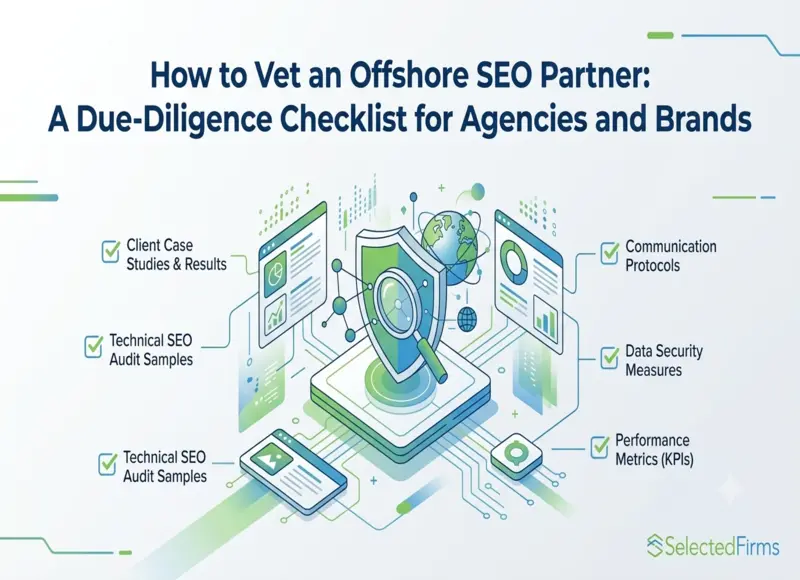
How to Vet an Offshore SEO Partner: A Due-Diligence Checklist for Agencies and Brands
-
08 Oct 2026
-
8 Min
-
263
Jane Hart
Benchmarking GPU Providers: A Practical Guide to Comparing Cloud Compute Options
-
07 Oct 2026
-
6 Min
-
173
