


How to Eliminate Bottlenecks in Your Marketing Agency Project Management Process
-
Last Updated:

11 Dec 2025
-
Read Time:

7 Min Read
-
Written By:
 Elia Martell
-
2508
Table of Contents
Bottlenecks can delay marketing agency workflows, overwhelm teams, and affect client satisfaction. This guide covers how to identify bottlenecks, understand their causes, and apply practical strategies to remove and prevent them, helping agencies streamli
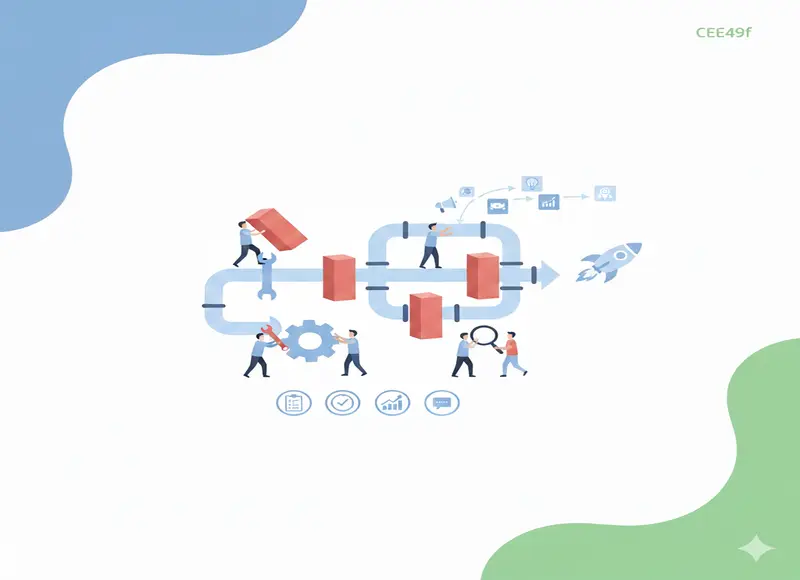
Marketing agencies depend on smooth workflows to deliver projects promptly without compromising quality. When bottlenecks appear, projects slow right down, and teams lose momentum. This, in turn, impacts client satisfaction and increases pressure on the operation as a whole.
To ease and prevent bottlenecks, marketing agencies need to understand their root causes. Here, we’ll take you through practical ways to identify them, common causes, and methods to both eliminate and prevent them.
What are Bottlenecks in Marketing Agency Projects?
Bottlenecking refers to points where the processes experience slowness, which leads to accumulated backlogs as one of the most frustrating elements, as they do not allow the process to move at the pace at which it is ideally supposed to move, rendering backward assignments and pressure on supporting teams.
What a Bottleneck Looks Like
There is no single presentation for a bottleneck. They can take several forms and appear at several points in a workflow. However, as a general rule, you can expect to find one if work starts gathering around a single person or team, or turnaround times stretch out without a clear explanation. You might also find that tasks sit waiting for approval or clarification, or that clients become frustrated and request answers about your slow progress.
When the workstation pauses at a certain stage, it signifies imbalanced workflows, and it likely means that a part of the processing cannot match up to the requirements put on it.
Common Causes of Bottlenecks
Common causes of bottlenecks include unclear workflow structures, poor resource allocation, and uneven task distribution.
If you have a close relationship with subject-matter experts, it is very likely that there are many bottlenecks that are caused by the lack of availability and the extended workload of a few people. Similarly, inconsistency in communication can hold up work as the teams wait for the missing pieces of the jigsaw.
If you don’t have standardized procedures or your tools are poorly integrated, there’s likely to be extra friction in your system, which can also play a role in holding things up.
How to Identify Bottlenecks Early
Identifying a bottleneck early makes it much easier to deal with. If you can get to them quickly, you’ll have time to rebalance and clear workloads before things get out of hand.
Process Mapping and Workflow Audits
Process mapping clarifies each step of a project. It helps managers to see where tasks slow down or accumulate. Audits, meanwhile, highlight unnecessary approvals, duplicated steps, or unclear handovers.
Auditing and process mapping help identify bottlenecks as they begin to form, and clearly pinpoint areas where they might form in the future. Management can then take evidence-based actions to smooth things out.
Monitoring Key Metrics
Keeping track of metrics is helpful to improve your digital marketing work and understand where the bottleneck vulnerabilities become elevated. By keeping a close watch on the metrics such as cycle times and the average stage duration, one can immediately pinpoint them or the location where they might begin popping up. Similarly, monitoring resource utilisation and workload distribution can reveal uneven distribution patterns that could cause problems at busy times.
Feedback Loops
Feedback loops are the perfect means for teams to point out issues, such as delays that seem to come up time and time again. Structured evaluations enable a free-for-all about the bottlenecks, and employing customer feedback brings an added point of insight into the perfectly clear delays that occur. Good, solid feedback loops are a handy tool in recognizing and averting bottlenecks if implemented consistently.
The Best Strategies to Eliminate Bottlenecks
Bottlenecks are frustrating, but they can be eliminated with well-targeted actions.
Optimize Resource Allocation
Allocating resources based on real-time availability will improve the balance of your workflows. Use project management tools to help distribute work evenly and to avoid overloading any part of the process. You can reduce any reliance on specific individuals with cross-training and by bringing in external support at peak periods. This will help ease pressure on your core teams and maintain strong delivery standards.
Automate Repetitive Tasks
Automation is a great way to minimize the time spent on repetitive manual tasks such as reporting and data collection. By bringing in tools like accounting software for marketing agencies, you can both simplify workflows and free up specialists to focus on higher-value, higher-priority work. You can also slash delays caused by administrative steps by automating aspects of the approval process.
Improve Communication and Transparency
Clear communication reduces misunderstandings and prevents delays, all while building trust among staff and clients. Again, tech can be your friend here. Shared dashboards improve visibility of tasks and progress, and centralized project documentation gives teams quick and clear access to information.
As part of your communication strategy, make sure to issue regular updates to keep everyone on the same page.
Implementing Agile and Lean Practices
Agile and lean methods are beneficial for predictable delivery and continuous improvement. They help marketing agencies to adapt to changing needs without losing any workflow stability.
Breaking Work Into Manageable Sprints
Agile methodologies divide larger projects into smaller, time-boxed segments known as ‘sprints’. Each ‘sprint’ has natural checkpoints at the beginning and end, which can be used to identify potential slow points and adjust workloads.
Sprints also have client-facing benefits. You can use them to demonstrate clear, comprehensible progress as your teams move through each sprint. This keeps clients informed and helps to manage client expectations.
Continuous Process Improvement
The main strategy in Lean is to remove anything unnecessary. If you are confused about how to get started, remember that a few small adjustments here and there are precisely what will deliver a streamlined, efficient system for you.
To be successful, this kind of continuous process improvement relies on regular review, feedback, and reliable data. So, be sure to have the right tools and feedback loops in place before you begin the process.
How to Prevent Future Bottlenecks
To prevent bottlenecks, you need clear procedures, a well-prepared workforce, and accurate forecasting.
Standard Operating Procedures (SOPs)
SOPs clearly document what activities need to be undertaken at each juncture in a project. This kind of scaffold provides support to all staff (in particular, new arrivals), renders workflows more predictable, and minimizes the time and effort spent while asking and answering procedural questions. All of this, put together, is a great liberator from, and oppressor of, bottlenecks.
Capacity Planning and Forecasting
The managers need capacity planning to deal with the anticipated workflow volume. In providing insight into upcoming high demands, they can plan to allocate resources well in advance and make an informed decision regarding hiring, outsourcing, and scheduling.
Typically, capacity planning is about gauging future project needs, calculating the hours required for assignment, and then comparing the time required and allocated resources to identify what should be further allocated and when and where inventory bottlenecks might arise.
Forecasting supports this process by predicting seasonal or client-based peaks, usually by studying historical data. For example, software clients may need more support around product launches, and you may need to pour more resources into retail and e-commerce campaigns around the holidays.
The forecast can be in the form of assessing the likelihood of a pipeline opportunity to convert. For example, a given higher-chance project may be counted with just 60% to 70% probability of expected hours. This way, the forecast offers a clearer tune of future demand without too much overloading for the teams.
Training and Skill Development
Training, a capacity enhancer in and of itself, means higher competencies in teams and hence higher numbers of workers who shall have developed some specialized mastery. Then development in Project Management, Data Management, and creative skill increases the flexibility of operational support for the long run.
Conclusion
As annoying as bottlenecks are for everyone involved, they cause delays, steal efficiency, and can create a substandard experience for our customers. Why not begin spotting them right ahead and acting on well-structured strategies to remove these bottlenecks, such that we maintain continuity of workflow and maximum satisfaction for our clients?
A few of the key ingredients to make it all happen smoothly are agile practices, clear communication, effective automation, and robust project management. To ensure that doses do not pile up again in the future, there has to be a structure of regular checks, training, and continuous improvements.
With the right systems in place, even the busiest marketing agencies can get rid of bottlenecks, deliver projects on time, and maintain smooth, stable workflows.

Marketing Manager
Recent Blogs

Elia Martell
5 Virtual Recruiting Support Operations for Tech and Healthcare Teams
-
09 Oct 2026
-
8 Min
-

45

Jane Hart
Why LinkedIn Campaign Optimization Requires More Than CPC and CTR
-
09 Oct 2026
-
8 Min
-
31

Jane Hart
How to Vet an Offshore SEO Partner: A Due-Diligence Checklist for Agencies and Brands
-
08 Oct 2026
-
8 Min
-
68
Jane Hart
Benchmarking GPU Providers: A Practical Guide to Comparing Cloud Compute Options
-
07 Oct 2026
-
6 Min
-
96
