


Ecommerce Development Agency vs. Freelancer: Pros, Cons & How to Choose
-
Last Updated:

05 Oct 2026
-
Read Time:

12 Min Read
-
Written By:
 Isha Choksi
-
164
Table of Contents
Choosing between an ecommerce development agency and a freelancer depends on more than the upfront cost. Compare their strengths, limitations, risks, timelines, and long-term support to find the right fit for your ecommerce project.
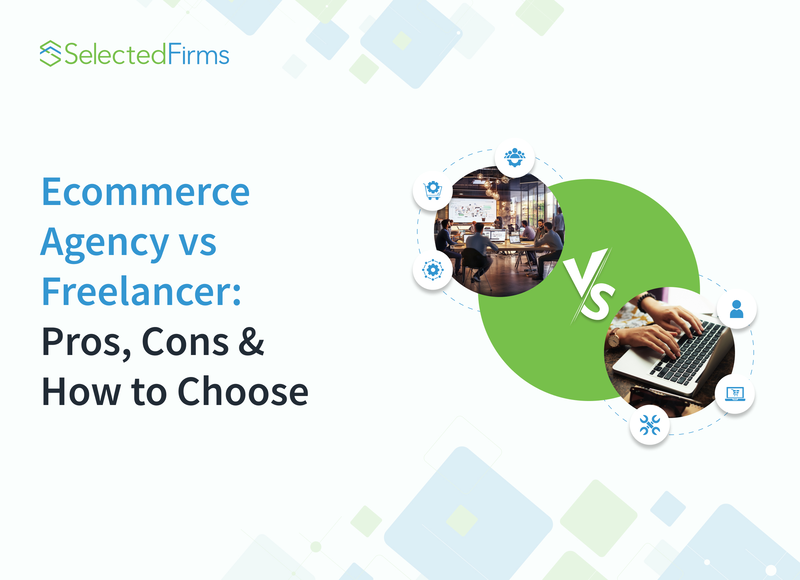
Your online store needs to get built. That much is settled. Who builds your tech stack is not.
The ecommerce development agency vs freelancer decision looks simple from a distance. One option costs more, one costs less.
It stops looking simple once your architecture, your integrations, and your launch date are all on the line.
Bring in a freelancer for a build that actually needed a full development team and process, and you inherit stalled sprints. The one engineer who understood your codebase goes quiet mid-project.
Bring in an agency for a build that needed speed and a lean budget, and you're funding organizational overhead your project never touched.
This guide settles the question properly.
You'll see how a development agency and an independent developer compare on cost, timeline, and technical risk. You'll get the pros and cons of each, a decision framework, and what to diligence before a line of code gets written. And you'll see where this decision most often goes wrong.
By the end, the choice won't come down to price or gut feeling. It'll come down to what your business, and your build, actually require.
Ecommerce Agency or Freelancer: What’s the Real Difference?
The decision isn't really about price. It's about how much technical and operational risk you're willing to carry yourself.
A freelance developer is one person: fast, flexible, and personally invested in your codebase. An ecommerce development agency is a system: project managers, UX/UI designers, backend and frontend developers, and QA engineers working from a defined delivery process.
When you hire a freelance ecommerce developer, you're betting on one person's technical skill and availability. When you compare an ecommerce development agency vs freelancer more broadly, you're weighing whether to pay a premium for engineering redundancy. If one developer on an agency's team gets sick or moves on, another engineer picks up the codebase. If your freelancer does, your build stalls.
The Difference at a Glance
|
Freelancer |
Agency |
|
|
What you're betting on |
One developer's skill and availability |
A cross-functional team and delivery process |
|
Structure |
Individual, informal |
Project managers, engineering, and QA working together |
|
If someone gets sick or leaves |
Build stalls, codebase knowledge gap |
Another engineer picks up the codebase |
|
Investment style |
Direct, hands-on with your business |
Process-driven, built for repeatable delivery |
|
What you're really paying for |
The development work itself |
Redundancy against the build stopping |
That premium is real, and it shows up fastest in the numbers. Before you weigh the trade-off in the abstract, it helps to see it on paper, which is exactly why founders increasingly start their search on verified ecommerce development agencies rather than picking a development partner blind off a freelance marketplace.
A Quick Scenario
Picture two founders building the same kind of digital storefront: a mid-size catalog with a custom checkout flow and one ERP integration.
Founder A hires a freelance web developer off a marketplace. The build moves fast for the first six weeks. Then the developer takes a full-time engineering offer elsewhere, mid-integration, with no handover documentation and no one else who understands the code.
Founder B hires a software development agency. The build costs more and takes longer to kick off. But when the lead engineer goes on leave in week four, a second developer on the team picks up the codebase without missing a sprint.
Neither founder made the wrong call in isolation. They matched the wrong operating model to their project.
Why This Framing Matters More Than Price
Most founders start this decision by asking who's cheaper. That's the wrong first question for a software build.
The right first question is: how much can your platform afford to have interrupted mid-build? A simple landing-page style storefront with no live inventory sync can survive a freelancer going dark for a week. A high-traffic, multi-currency ecommerce platform generally cannot.
Price becomes the second question, not the first. The comparison in the next section makes that trade-off concrete.
Ecommerce Agency vs. Freelancer: Cost, Timeline & Risk Compared
Headline rates only tell part of the story. What actually separates a freelance developer from a development agency shows up across cost, delivery speed, and what happens when your build hits a technical snag.
The spread is wider than most founders expect. US-based development agencies currently bill between $125 and $300 per hour for senior software development work, while offshore agencies in APAC and Latin America bill between $35 and $95 per hour.
Freelance developers typically charge $50 to $150 per hour, or $1,500 to $8,000 for a full project build.
The build-cost gap follows the same pattern. Freelance ecommerce developers generally quote $3,000 to $10,000 for a custom storefront build, with complex projects exceeding $50,000.
Full custom ecommerce development on Shopify Plus or headless architectures typically lands between $45,000 and $250,000, depending on catalog complexity, custom features, and third-party integrations.
The same project brief can generate a $6,000 freelancer quote and a $90,000 agency quote, without either number being unreasonable given what's actually being delivered.
Here's the comparison side by side.
|
Factor |
Freelance Developer |
Development Agency |
|
Upfront build cost |
$3,000–$10,000, up to $50,000+ for complex builds |
$45,000–$250,000+ for custom, complex builds |
|
Hourly rate |
$50–$150/hr |
$125–$300/hr (US); $35–$95/hr offshore |
|
Typical timeline |
4–6 weeks for standard builds |
8–16+ weeks, onboarding included |
|
Ongoing maintenance |
Ad hoc, hard to schedule consistently |
Retainer-based, more predictable |
|
Risk if unavailable |
High. No backup developer on the codebase |
Low. Team continuity covers the gap |
|
Scalability |
Limited to one developer's bandwidth |
Built to absorb complex, high-traffic platforms |
|
Accountability |
Informal, relationship-dependent |
Contractual, process-driven |
|
Best fit |
Simple to mid-size storefronts |
Complex, business-critical platforms |
Two things stand out here. Cost and technical risk move in opposite directions. The cheaper option carries more exposure if the build fails; the pricier option is structured to absorb that failure before it reaches your business.
Rate alone doesn't predict value here. Delivery speed, developer seniority, and the downstream cost of fixing rushed code all change the effective cost of a build substantially. Neither side of this table is universally right for every business. It depends entirely on what your project and your revenue can survive.
Find the Right Development Partner for Your Store
Comparing freelancers and agencies on paper only gets you so far. See real portfolios, verified reviews, and pricing from ecommerce development agencies actively taking on new software development projects.Ecommerce Development Agency: Pros and Cons
An agency isn't just a bigger, pricier freelancer. It's a different engineering operating model, and that model carries its own trade-offs for your business.
Pros:
- A Full Team, Not a Generalist
Backend engineering, frontend development, UX/UI design, and QA each get a specialist instead of one generalist handling all four adequately. Your platform doesn't ride on a single developer's range of skills.
- Accountability Is Structural
Missed deadlines have a contract, a project manager, and a delivery process behind them. It's not just a personal apology from someone juggling five other client builds.
- Built to Scale Your Business
A storefront running real-time inventory, multiple currencies, and ERP or CRM integrations is safer in the hands of a team that has shipped that kind of architecture before. Technical complexity is where agencies earn their premium.
Cons:
- Higher Cost
The same deliverable often runs several times higher than a freelance quote. You're funding the delivery system behind the work, not just the code itself. - Slower Start
Process is a feature of good software development, but it's also a tax. Expect weeks of discovery, onboarding, and sign-off before development actually begins. - Attention Isn't Guaranteed to Be Senior
If your budget sits at the smaller end of an agency's client roster, you may get junior developers staffed on your build. This is exactly where checking verified client reviews before signing matters more than a polished pitch deck.
Freelance Ecommerce Developer: Pros and Cons
A freelancer's strengths and weaknesses tend to be mirror images of each other. The same trait that makes them fast also makes them a business risk.
Pros:
- Lower Cost
No account managers, no agency overhead padding the invoice. You pay for the development work itself, not the infrastructure around it. - Direct Communication
You talk to the person actually writing the code. There's no relay through a project manager translating your business requirements. - Speed on Small, Well-Defined Jobs
A single experienced developer can ship a focused storefront faster than an agency's onboarding process even gets started.
Cons:
- Single Point of Failure
If your developer gets sick, disappears, or takes a full-time engineering role, your build stalls. There's no backup engineer who knows your codebase. - Narrow Skill Set
Most freelance developers are strong in code, design, or conversion strategy. Rarely all three at once, which means gaps get filled by you or a second hire. - Post-Launch Support Thins Out Fast
Once the invoice is paid, ongoing bug fixes and platform updates often turn into a slow email chain. This is the exact gap that makes checking a freelancer's past client feedback non-negotiable.
Something SelectedFirms' verified reviews are built to surface before you commit, not after.
Should You Hire a Freelancer or an Agency for Ecommerce?
There's no universal answer for every business. There is a clear framework for matching the hire to the build.
The right approach is to match your development partner to the technical scope of the project, not to default to whoever's cheapest or most polished on a sales call.
Choose a Freelancer When
- Your storefront is straightforward: a focused product catalog, standard checkout, one or two integrations.
- Your budget is limited and you need to move fast on an MVP.
- You're comfortable managing the build yourself and writing a clear technical brief.
- You have a contingency plan if your developer becomes unavailable mid-build.
Choose an Agency When
- You're building something complex: multi-currency support, custom business logic, ERP integrations, or high-traffic architecture.
- You need design, engineering, and business strategy handled together, not stitched from separate hires.
- Your budget supports it, and you want contractual accountability behind the delivery timeline.
- Downtime would cost your business real revenue, so engineering redundancy is worth paying for.
Most founders already know which list their project belongs to. The harder part isn't the decision. It's finding a development partner who actually matches it, which is where the next section comes in.
What to Check Before Hiring an Ecommerce Development Partner
The build cost is never the full cost of your software. Most founders budget for the invoice and forget everything that comes after launch.
-
Get the Contract Right
A verbal agreement or a one-line email isn't a development contract. You need defined technical scope, defined deliverables, a payment schedule tied to milestones, and a clause covering what happens if either side exits early.
Vague contracts are where scope creep quietly moves in. "A few extra features" becomes a month of unpaid engineering work if the scope was never written down.
-
Ask Who Owns the Code
Get a written IP and code-ownership clause before you pay a cent. Some freelance developers, and even some agencies, build on proprietary frameworks or retain rights to reused components.
If the relationship ends, you need to walk away owning your platform outright, not licensing it back from the developer who built it.
-
Check Live Stores, Not Screenshots
A portfolio page shows the best five minutes of a project. Ask for links to live ecommerce platforms currently in production, and stress-test them yourself. Pay particular attention to the buying experience, including navigation, mobile checkout, page speed, and how easily customers can find what they need.
Slow load times, broken mobile checkout, or outdated dependencies tell you more about engineering quality than any case study. Businesses should also evaluate the broader ecommerce customer experience before choosing a development partner.
-
Budget for the Hidden Lifetime Cost
Whichever development partner you choose, you'll likely build on Shopify, WooCommerce, or a similar platform, and those come with recurring software costs.
Shopify's 2026 published pricing runs from around $39 a month on the Basic plan up to $399 or more on Advanced, before app subscriptions and transaction fees are added.
Most storefronts also run paid apps for reviews, upsells, or shipping logic, and those add up fast. Then there's maintenance.
Ask what happens after launch, specifically: is there a retainer, a response-time SLA, or a flat hourly rate for future development.
None of this shows up in a build quote. All of it lands on your monthly operating budget for years after launch.
Why Businesses Choose the Wrong Ecommerce Developer
Most bad hiring decisions in this space aren't the result of picking a bad freelancer or a bad agency. They're the result of skipping a diligence step before the engagement ever starts.
-
Misjudging Project Complexity
Founders routinely underestimate what their platform actually needs. A "simple" storefront turns out to need real-time inventory sync, multi-state tax logic, and a loyalty system integration nobody scoped at the start.
Get the complexity assessment wrong, and you've hired the wrong development model before a single sprint begins.
-
Chasing the Sticker Price Instead of Total Cost
A $4,000 freelancer quote looks like the obvious win next to a $40,000 agency quote. It stops looking obvious once you factor in three months of stalled development after the freelancer disappears, plus the cost of a second developer brought in to finish the job.
Total cost of ownership, not the invoice, is the number that actually determines ROI on your software investment.
-
Skipping Vetting Entirely
A polished portfolio and a confident sales call aren't vetting. Real vetting means live platforms, developer references, and a written technical scope, checked before any budget changes hands.
Skipping this step is how businesses end up with a development partner who can't actually deliver the architecture the pitch promised.
-
Comparing Candidates in Silos
Here's the mistake underneath most of the others: founders get one freelancer quote from a marketplace and one agency quote from a referral, then compare two completely different technical scopes as if they were the same offer.
That's not a comparison. It's a coin flip with extra steps.
The fix is evaluating both paths on the same terms, side by side, against verified reviews and real project history.
That's precisely the gap a B2B platform letting businesses compare development agencies and freelancers on the same page instead of guessing across disconnected sales calls.
The Right Ecommerce Development Partner Depends on Your Project
There's no universally right answer to ecommerce development agency vs freelancer. There's only the right answer for your platform's technical complexity, your budget, and your business's tolerance for risk.
A simple storefront on a tight budget usually favors a freelance developer. A complex, business-critical platform usually favors an agency's process and engineering redundancy.
Most founders already know which category their build falls into once they stop asking "who's cheaper" and start asking "what can my business afford to have go wrong mid-build."
Before you sign anything, run the full math: development cost, platform fees, app subscriptions, and maintenance retainers, not just the number on the first invoice. Then vet whoever you're about to hire the same way you'd vet a technical co-founder, because for the length of this build, that's functionally what they are.
If you're not sure where to start, browse verified ecommerce development agencies with real client reviews before committing either way. The right development partner is easier to spot when you're comparing real options side by side, not picking blind.
FAQs
A freelancer is one person handling your project, while an agency has a team with different areas of expertise. Freelancers usually offer lower costs and direct communication, while agencies provide broader expertise, scalability, and backup support.
Freelancers are generally cheaper upfront, while agencies usually charge more because they provide a larger team and broader services. The better choice depends on your project scope, complexity, and long term support needs.
A freelancer may complete a standard ecommerce website in four to six weeks. An agency may take eight to sixteen weeks or longer when the project involves custom features, integrations, testing, and multiple approval stages.
Review relevant ecommerce projects, client feedback, pricing, contracts, ownership terms, communication processes, and post launch support. Always confirm the project scope and deliverables before signing an agreement.
A skilled freelancer can handle some complex projects, but larger stores may require broader technical expertise and ongoing support. An agency can reduce this risk by providing a team that can manage integrations, scalability, maintenance, and unexpected issues.

Head of SEO Operations
Recent Blogs

Elia Martell
5 Virtual Recruiting Support Operations for Tech and Healthcare Teams
-
09 Oct 2026
-
8 Min
-

627

Jane Hart
Why LinkedIn Campaign Optimization Requires More Than CPC and CTR
-
09 Oct 2026
-
8 Min
-
189
Jane Hart
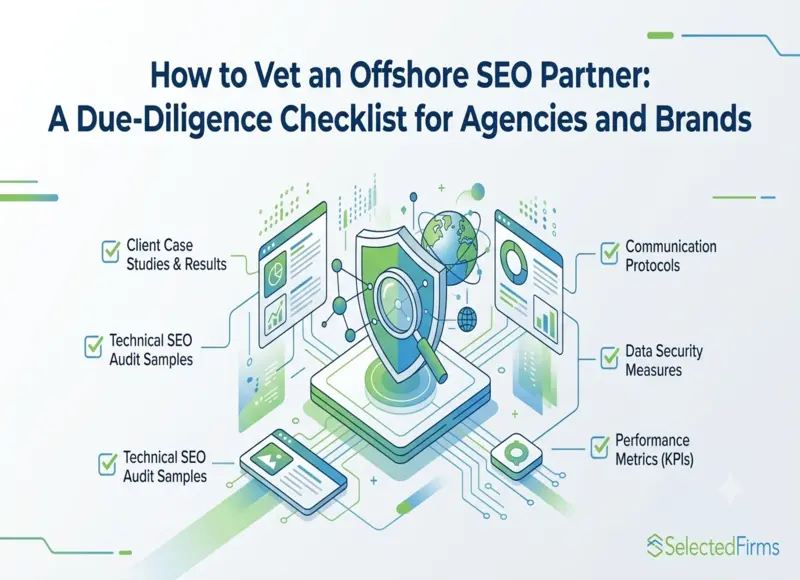
How to Vet an Offshore SEO Partner: A Due-Diligence Checklist for Agencies and Brands
-
08 Oct 2026
-
8 Min
-
323
Jane Hart
Benchmarking GPU Providers: A Practical Guide to Comparing Cloud Compute Options
-
07 Oct 2026
-
6 Min
-
187
