


Table of Contents
Vendor proposals often name tools and dates while key questions stay open. Use this article as a guide to test a vendor’s judgment, confirm who does the work, and plan for handoff.
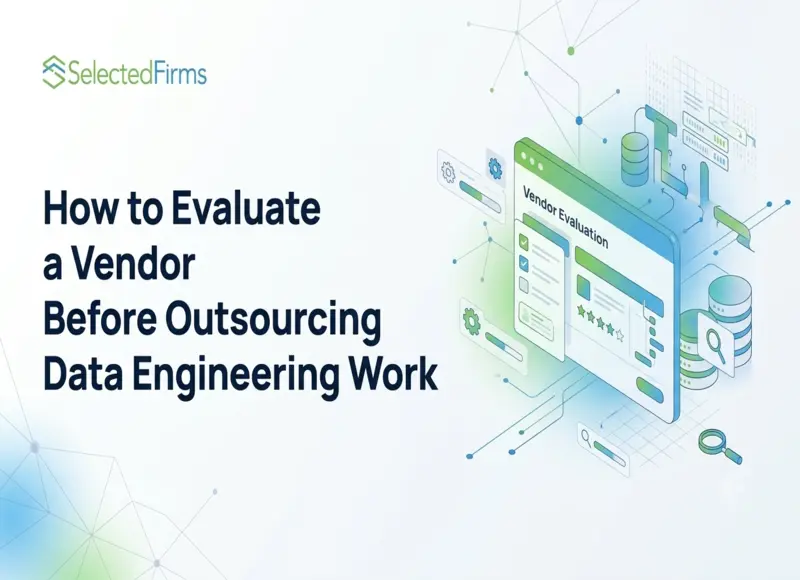
A data engineering proposal can make the project sound settled before anyone examines the data. A vendor may name a cloud warehouse, an orchestration tool, and also a delivery date. Yet, the hardest decisions often depend on details still unknown. Such as how a source system behaves, who can access it, and what the business considers a correct result.
A useful outsourcing evaluation tests how a prospective partner handles those unknowns. Ask the team to explain its assumptions, trace a realistic failure, and show how it would leave your staff able to operate the result. Public profiles of data engineers available for hire can show which skills a firm advertises. The evaluation establishes who will do the work and how they make decisions.
Start With A Business Outcome, Then Expose The Assumptions
“Build a data platform” is not a comparable project brief. One vendor can include source integrations, a warehouse, and also tested transformations. Another one can assume that the client already has clean data and an established cloud environment. These proposals can differ in both price and timeline: they describe different kinds of work.
Define the first business outcome instead. A retailer, for instance, might want a daily inventory table that combines point-of-sale and warehouse data so planners can identify stock discrepancies. Specify when the data must be available, who will use it, and what decision it should support. Then describe known constraints. These can include source systems, approximate volumes, update frequency, existing platforms, access limitations, and data quality issues.
The gaps are just as important. If the source system’s update behavior is undocumented, then you should say so. Ask vendors to explain how exactly they would investigate it and what they need from your team; it matters. A confident estimate that treats every unknown as resolved is going to be less useful than a proposal that identifies dependencies and explains how they affect cost or schedule.
A daily inventory snapshot can provide planners everything they need for the first release. Building a streaming pipeline at this stage would add complexity without changing their decisions. If a later use case depends on minute-by-minute stock levels, then the team can revisit the architecture. You should ask the vendor to tie each technical choice to a particular business need.
Use A Failure Scenario To Test Technical Judgment
Technology lists are easy to compare, but they can also be hard to interpret. Public profiles of data engineers available for hire can show which skills a firm advertises. A more revealing discussion starts with a plausible problem in the proposed workflow.
Take the retailer’s overnight inventory feed as a test case. The point-of-sale system might add a field, send the same transaction twice, or miss its scheduled delivery. Ask the vendor to explain how exactly the team would notice the problem and decide whether the pipeline should pause or continue processing unaffected data.
Then, you should follow the data through recovery. Where would questionable records go, who would be notified, and also how would the team rerun the load without counting a sale twice? The answer to the questions above should take into account the source system’s behavior as well as the way downstream inventory tables are updated.
Listen for reasoning tied to the system. Not a recital of tool names. Retries can actually recover from temporary failures. At the same time, they do not automatically prevent duplicate writes. Depending on the destination and data model, a pipeline might use idempotent writes, unique transaction keys, merge logic, or another type of deduplication strategy. Google Cloud’s Dataflow pipeline guidance discusses idempotency as one design consideration. The right implementation depends on the platform and workload.
Ask how the team will verify the inventory table before planners use it. The checks in question could confirm that transactions have IDs, quantities fall within plausible limits, and that the latest batch has arrived. Agree on what happens when a check fails. Because, unfortunately, you should also take into consideration such an unpleasant scenario as well. The pipeline might hold the affected data, quarantine suspect records, or alert someone in order to start an investigation. Without those checks, a pipeline can finish successfully while publishing stale or incomplete inventory numbers.
Make The Technical Interview Resemble The Work
A technical interview should reveal how the people assigned to the project approach its actual constraints. Give them a short brief and ask what they would need to learn before choosing an architecture.
For a migration from a legacy database to a cloud warehouse, the team might need to consider how to load historical records, capture changes during the transition, compare old and new outputs, and also plan the cutover. These details matter greatly. Does the source support change data capture? How much downtime is acceptable? How are corrections to older records represented? Which reports depend on the existing tables?
There is no useful “right answer” without those facts. Look for engineers who make their assumptions explicit and explain how new information could change the design. Ask how they would test a transformation or verify that the migrated tables reconcile with the source. If possible, use a sanitized schema or sample so the discussion is grounded in the kind of data the project will handle.
Meet the technical lead or representative engineers who would actually contribute. A polished sales presentation does not show whether the delivery team can explain its choices or work through ambiguity. The interview should also clarify your team’s role. For example, who will answer domain questions, approve definitions, or grant access? Data engineering decisions often depend on business meaning as much as on code.
Ask References About Handoff And Day-To-Day Work
Vendor references are most useful when they can speak to a similar constraint; for instance, source-system complexity, migration risk, or the need for internal ownership after launch. A reference may not be able to disclose any client names or, for that matter, architecture details. A generalized account should still be able to explain how the vendor handled a difficult decision.
Ask how early the data engineering vendor surfaced risks, how it handled changes to assumptions, and check whether it updated the estimates transparently. Find out how well the client’s team was able to operate the pipelines after handoff, where documentation fell short, and how defects were resolved. These questions reveal more than a general endorsement.
Request sanitized examples of relevant work products. A data flow diagram, a transformation test plan, an alert, and a handover guide. Check whether they identify system ownership, dependencies, and failure handling. Not just the happy path.
Also, you should definitely clarify production access, credential management, data transfer, and also whether sensitive data can be masked during the development process. For safeguards your team can apply, review ways to protect your data. NIST’s cybersecurity supply chain risk management guidance offers a broader framework for assessing risks that come with external providers. Your own controls should absolutely reflect the data and systems involved.
Choose A Commercial Model That Fits What You Know
A fixed-price project is easier to manage when requirements, access, acceptance criteria, and dependencies are understood. If source behavior or data quality is still unclear, a bounded discovery phase can establish those facts before the parties commit to a larger build. It should produce concrete outputs. For instance, a source assessment, proposed architecture, delivery plan, and revised estimate, instead of an open-ended discussion.
An engagement model sets who will direct the work. With staff augmentation, your manager assigns tasks and handles day-to-day decisions. The vendor supplies engineers in order to fill specific gaps. A dedicated team, on the other hand, gives the vendor more responsibility for coordinating delivery.
At the same time, your product or data lead still needs to set priorities and answer questions about business rules. Fixed-price terms require a clear boundary around the migration. Like which sources are included, what the data engineering vendor will deliver, and also how you’ll accept the work. Agree on how new findings affect scope and cost, since profiling often uncovers source-data problems that weren’t visible at the outset.
A lower bid may assume your team will clean the source data, prepare the environment, or write the runbooks. Check those assumptions before comparing prices. Make sure each proposal covers the same work, including validation, deployment setup, handoff, and support after launch, and identify what your staff will need to provide.
The platform choice affects who maintains the system later. A managed service leaves less infrastructure for your team to run, but can tie parts of the pipeline to that provider. Custom components give you more control over the implementation and leave your team with more code to maintain.
Before signing, you should make ownership at the end of the engagement explicit. Your team should know exactly who can change pipeline logic, how schema changes are reviewed, where both runbooks and credentials are managed, and also how work transfers if the relationship ends. If the vendor cannot make those responsibilities clear, you should start with a smaller discovery or pilot and use its results to decide whether a larger commitment with a particular vendor is justified.


Head Of Digital Marketing
Recent Blogs


Elia Martell
Best SEO Agencies Helping Independent Retailers Compete Online
-

20 Nov 2026
-

10 Min
-

61


Isha Choksi
How Much Does a Search Marketing Agency Really Cost in 2026?
-
19 Nov 2026
-
6 Min
-
98
Jane Hart
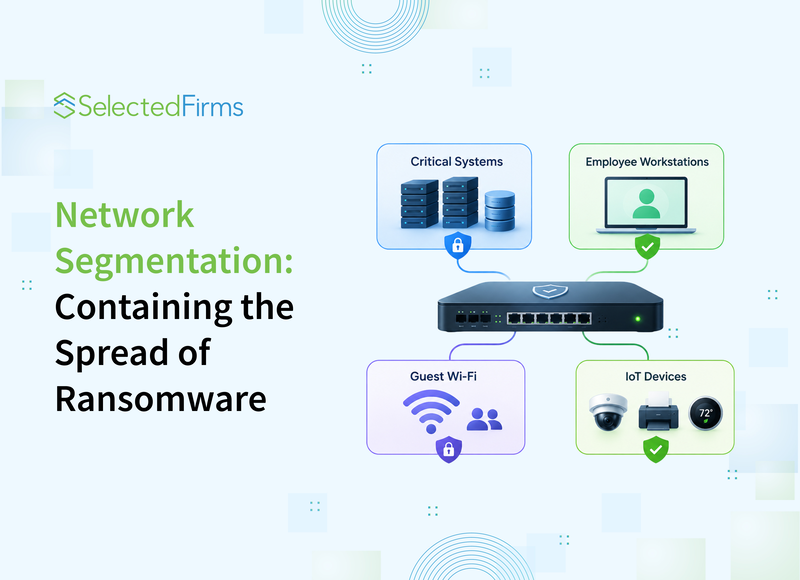
Network Segmentation: Architecture, Implementation and Ransomware Containment Guide
-
19 Nov 2026
-
7 Min
-
76
Jane Hart
Custom Shopify Development: When a Theme Stops Being Enough and How to Scope the Build
-
19 Nov 2026
-
6 Min
-
117
