


Table of Contents
Large farms can't watch every animal all day. Learn how computer vision uses AI-powered cameras to improve livestock monitoring, animal welfare, and farm efficiency.
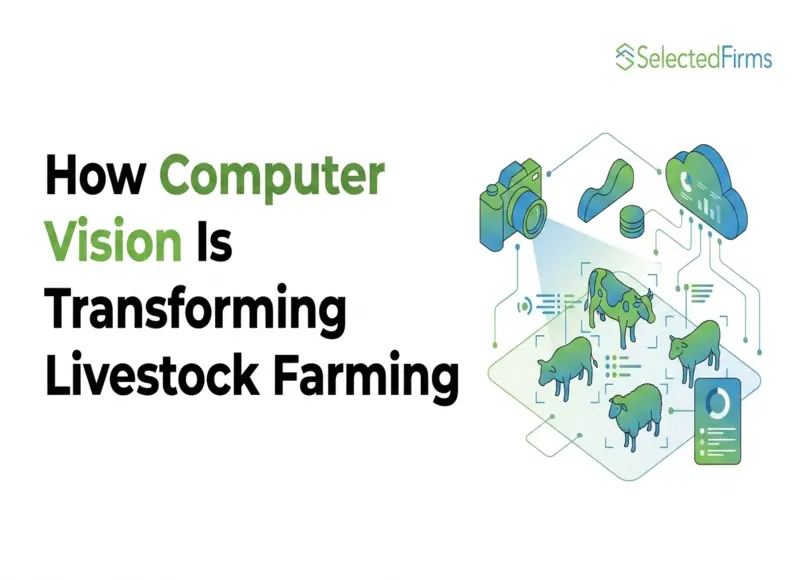
Livestock farms are growing larger, making it increasingly difficult to monitor every animal manually. Computer vision helps solve this challenge by using AI-powered cameras to track livestock behaviour in real time, enabling earlier health detection, better animal welfare, and more efficient farm management.
According to the Food and Agriculture Organization (FAO), global demand for animal protein is expected to increase significantly over the coming decades, making efficient livestock management more important than ever.
Why Farms Need Smarter Livestock Monitoring
Livestock farming has been rapidly increasing over time. The process of managing huge numbers of animals in livestock farms makes it nearly impossible to have manual monitoring. Even highly professional farm workers are not able to monitor every animal during the day, which prevents detection of early signs of different diseases and stress levels.
This is where AI-based visual monitoring comes into play by:
- Analyzing livestock behavior instead of simply recording video footage.
- Processing video footage into actionable insights that help detect abnormal behavior and improve animal living conditions.
- Continuously monitoring livestock activity to provide more meaningful information than traditional surveillance systems.
Unlike the traditional systems of monitoring, the AI solutions are capable of evaluating animal behavior patterns over time. They compare the data obtained at the moment with the past information so that any changes might be detected. This makes it possible for the farm workers to intervene before the symptoms are observed.
The World Organisation for Animal Health (WOAH) estimates that around 20% of global livestock production is lost each year due to animal diseases, highlighting the importance of early detection and continuous monitoring.
How AI Detects Problems Early
This system can sense vital signs such as movement, feeding, drinking, and sleeping patterns.
The platform is different from other systems because it assesses multiple instances of a particular activity over time. For instance, if there is a small amount of feeding, limited motion, or strange postures, this system can detect potential problems in advance.
This system is capable of working 24 hours a day and cannot be compared with ordinary observation of one supervised process alone. The farm managers are immediately notified if any unusual activities occur.
As this technology transforms video images into substantial information, it allows farming companies to react to any issues promptly and improve efficiency.
Building Solutions That Work on Real Farms
Developing computer vision for agriculture is very different from building AI for warehouses or factories. Farm environments are unpredictable, making it harder for visual models to deliver consistent results.
Some of the common challenges include:
|
Challenge |
Impact |
|
Changing lighting |
Reduces image consistency |
|
Dust and humidity |
Affects image quality |
|
Animal movement |
Makes tracking more difficult |
|
Animals gathering in groups |
Can cause overlapping and missed detections |
According to Grand View Research, the global AI in agriculture market is expected to grow at a CAGR of over 25% during the forecast period, driven by the adoption of precision farming and livestock monitoring technologies.
Building systems that reliably perform under these conditions requires specialized expertise. Beyond training AI models, developers need to optimize camera placement, process farm-specific data, and ensure the system integrates with existing farm management systems. This is why many agricultural businesses rely on computer vision development services to build solutions that can scale across large livestock operations.
Expanding Beyond A Single Farm
In order to deploy a solution across multiple farms, it requires more than copying the same model to every location. Different farms will differ in Barn layouts, camera placement, livestock density, and environmental conditions.
To maintain accuracy, businesses test and retrain their models using new data collected from each site. This allows the platforms to adapt as conditions change and improves performance over time.
Many farms also process video close to the cameras using edge computing. This enables reduction of network traffic, delivers faster alerts, and allows monitoring to continue even when internet connectivity is limited.
Using Visual Insights in Daily Farm Operations
The technology is most effective when integrated into everyday farm management.
It can connect with:
- Livestock management software
- Environmental sensors
- Veterinary records
- Production dashboards
This helps managers make informed decisions while supporting compliance and long-term planning.
Regular model updates keep the system accurate as farm conditions change.
The adoption of AI-powered livestock monitoring continues to grow as farms invest in precision agriculture and data-driven management.
The Future of Livestock Monitoring
The significance of computer vision in animal agriculture is growing. The prospective systems will not stop at identifying problems but will also enable forecasting of diseases and technical failures before they impact production.
With visual AI technology integrated into IoT and robotics, farms will be able to monitor business activities in real time. This information will facilitate decision-making, enhance animal welfare, and boost efficiency.
The AI in agriculture market is projected to grow at over 20% CAGR, reflecting increasing adoption of precision livestock technologies.
The objective is not to take the place of agricultural workers but to give them the possibility to oversee all processes involving livestock.
FAQs
Computer vision analyzes livestock activity using AI-powered cameras. It helps identify unusual behavior, detect potential health issues early, and gives farm managers real-time insights for better decision-making.
Yes, computer vision can detect health problems before they become obvious by monitoring changes in feeding, movement, posture, and resting patterns. The technology can identify early warning signs that may indicate illness, injury, or stress.
Farm environments present different challenges such as changes in lighting, dust, humidity, and unpredictable animal movement. These conditions require models trained specifically for agricultural settings to maintain reliable performance.
Yes. The technology can be used across multiple farms, but models must be tested and updated for differences in barn layouts, camera placement, livestock density, and environmental conditions.
No. The technology is designed to support farmers by providing continuous monitoring and actionable insights. Final decisions about animal care and farm operations remain with farm managers and livestock specialists.


Head Of Digital Marketing
Recent Blogs


Elia Martell
5 Virtual Recruiting Support Operations for Tech and Healthcare Teams
-

09 Oct 2026
-

8 Min
-

477

Jane Hart
Why LinkedIn Campaign Optimization Requires More Than CPC and CTR
-
09 Oct 2026
-
8 Min
-
155

Jane Hart
How to Vet an Offshore SEO Partner: A Due-Diligence Checklist for Agencies and Brands
-
08 Oct 2026
-
8 Min
-
263

Jane Hart
Benchmarking GPU Providers: A Practical Guide to Comparing Cloud Compute Options
-
07 Oct 2026
-
6 Min
-
173
