


Table of Contents
Want to expand your agency? Get insights into selecting the technical stack and infrastructure that enables effectiveness, scalability, and future success.
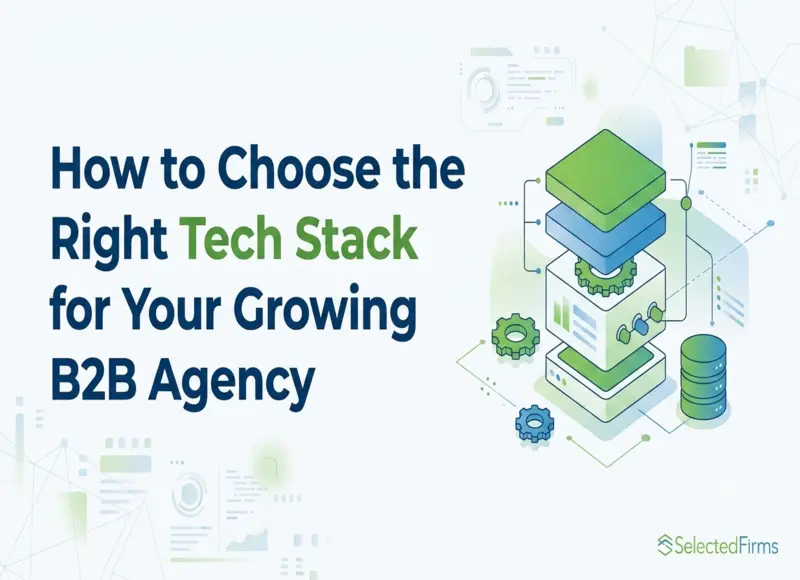
As a B2B agency grows, technical decisions begin to influence more than just day-to-day operations. The right technology stack and infrastructure can improve scalability, client satisfaction, and long-term business stability, while poor choices often lead to performance issues, rising costs, and difficult migrations.
As agencies scale, many complement their technology stack with managed VPS hosting to simplify server management and support growing infrastructure needs without increasing operational complexity.
Why Your Tech Stack Matters as Your Agency Grows
B2B agencies operate under high demands: strict SLAs, data security, complex integrations with clients' corporate systems. Poorly defined and inconsistent choices regarding technology will pose significant limitations on the speed of business development and naturally increase the cost of future updates.
Choosing a tech stack involves much more than selecting frameworks or programming languages. This is a long-term decision, which affects scalability, flexibility, and maintainability.
Your decision regarding technology will be a defining factor for responsiveness to changes, the ability to increase the volume of business activities, and the ability to involve the required specialists.
As your agency grows and your client base expands, your technology stack should be built around three principles: predictability, scalability, and maintainability. Lacking these principles, you will face plenty of technical problems in the future.
What to Look for When Choosing a Tech Stack
Before selecting specific technologies, take the time to answer a few important questions: what problems is the agency solving, what technical expertise does the team already have, and what are the clients' needs for integrations and security? You can then go to specific tools.
There is no universal solution. However, there are proven guidelines. These guidelines help you make an informed decision. A good B2B agency stack typically includes the following characteristics:
- A broad developer ecosystem for long-term support
- Compliance with enterprise security standards
- Horizontal scalability to accommodate growth
- Long-term support (LTS) releases
- Compatibility with modern CI/CD workflows
- Native integrations with common ERP and CRM platforms
Choosing a tech stack also depends on the skills of your team and the availability of experienced developers. Many growing agencies evaluate software development companies when they need specialized technical expertise or additional development capacity.
Why Infrastructure Is Just as Important as Your Tech Stack
Even the perfect stack won't save you if your infrastructure is unstable. This is especially true for agencies that serve clients across multiple countries or work with high-load projects in e-commerce, fintech, or SaaS. Many agencies address these challenges by adopting managed VPS hosting solutions that provide scalable resources, stronger reliability, and simplified server management as their infrastructure grows.
Most importantly, when selecting an infrastructure partner, do not just look at price. Also, check the data center's geography, reliability level (Tier III or higher), DDoS protection, and the availability of custom settings. Choosing a provider based on price alone often leads to performance issues during periods of increased traffic, creating higher costs in the long run.
Agencies expanding into cloud or hybrid environments often work with cloud consulting companies to design scalable infrastructure that supports long-term growth.
Infrastructure should also support a variety of workloads, from traditional web applications to AI, analytics, and other compute-intensive projects, allowing agencies to scale resources as client requirements evolve.
Dependable virtualization technologies help isolate client environments, ensuring consistent performance and preventing one client's workload from affecting another. This isolation is particularly vital for organizations with numerous clients’ projects hosted on the same infrastructure.
How to Choose the Right Hosting Provider
Choosing a hosting provider isn't a one-time decision. It's a long-term partnership. This directly impacts the quality of service for your clients. A poor provider can cost you not only money but also key contracts. Before making a decision, check the partner for the following:
- NVMe drive support for high speed;
- API availability for automated management;
- unlimited channel bandwidth;
- ability to choose geo-IP addresses;
- transparent pricing without hidden fees;
- support for popular OSes: Ubuntu, Debian, Windows Server;
- network-level DDoS protection.
These criteria aren't abstract. Each one solves a real-world problem. For example, API access lets DevOps plug server management right into their pipelines to automate daily tasks. And unlimited bandwidth means no surprise bills during traffic spikes — a lifesaver for e-commerce during big sales.
Ease of infrastructure management is another important factor. Agencies that collaborate with IT consulting companies often benefit from infrastructure that is easier to deploy, manage, and scale across multiple projects.
Build Infrastructure That Scales with Your Business
An agency that serves 10 customers at present may support more than 50 clients over the course of one year. The infrastructure needs to be set up to accommodate that growth, rather than expanded only when capacity becomes an issue.
As agencies expand, infrastructure should scale without requiring significant changes to its architecture. This includes support for horizontal scaling, containerized deployment, and flexible allocation of resources to allow teams to take on new clients without affecting previously done work.
Security and backup deserve special attention. It's important to think through a backup and recovery strategy in advance. Losing customer data is not just a technical affair. It's a reputational and legal risk for the entire agency, potentially jeopardizing the entire business.
Agencies working with international clients should also consider regional data residency requirements. Choosing infrastructure with multiple data center locations makes it easier to meet regulatory obligations while maintaining low latency.
Why Your Tech Stack and Infrastructure Should Work Together
Agencies often view stack selection and hosting selection as independent decisions. This is a mistake. These two components must work together.
Different workloads place different demands on infrastructure. Lightweight web applications prioritize fast storage and networking, while analytics platforms require higher compute capacity and AI projects often benefit from GPU acceleration.
A good infrastructure partner should provide configuration customization for specific work, not just fixed pricing plans. This approach allows agencies to avoid overpaying for unnecessary resources without hitting performance ceilings.
Choosing a tech stack and infrastructure partner is a strategic decision, not a technical detail. A growing B2B agency needs infrastructure that scales with the business and a technology stack the team can confidently support. Choosing a reliable infrastructure partner is equally important for maintaining performance and long-term stability.
Don't chase trendy technologies. Choose what solves the real problems of your business and clients. Regularly review architectural decisions. The market is changing. What worked two years ago may become a bottleneck today. This is especially true in rapidly developing areas like AI, fintech, and e-commerce.
Investments in infrastructure rarely deliver immediate visible returns, but they create the foundation for consistent performance, reliable service, and sustainable growth. Choosing a partner that offers flexibility, transparency, and global scalability is an investment in long-term resilience, helping your agency adapt to changing client demands and future growth with confidence.
FAQs
By selecting a proper tech stack, agencies can scale their operations, simplify their processes, grow in the future, and provide stable services to their customers.
The company’s capabilities, its growth requirements, safety regulations, integration needs, and total cost of ownership should be considered.
Good infrastructure provides consistent performance, ensures the company’s ability to grow, increases safety, and minimizes downtime for customers.
High uptime, flexibility of resources, good security, API support, transparency in pricing, modern storage solutions, and many data centers.
To meet the growing requirements, companies use infrastructure relying on horizontal scaling, flexible resource allocation, managing the process automatically, and global deployment.


Head Of Digital Marketing
Recent Blogs

Elia Martell
5 Virtual Recruiting Support Operations for Tech and Healthcare Teams
-

09 Oct 2026
-

8 Min
-

477
Jane Hart
Why LinkedIn Campaign Optimization Requires More Than CPC and CTR
-
09 Oct 2026
-
8 Min
-
155
Jane Hart
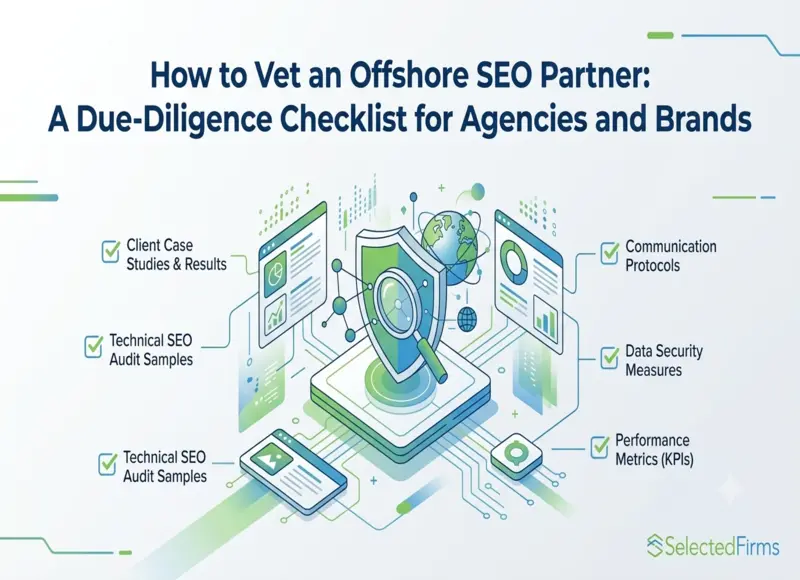
How to Vet an Offshore SEO Partner: A Due-Diligence Checklist for Agencies and Brands
-
08 Oct 2026
-
8 Min
-
263
Jane Hart
Benchmarking GPU Providers: A Practical Guide to Comparing Cloud Compute Options
-
07 Oct 2026
-
6 Min
-
173
