


Table of Contents
Find out how AI voice generators help businesses create better training, customer experiences, and multilingual content with less effort.
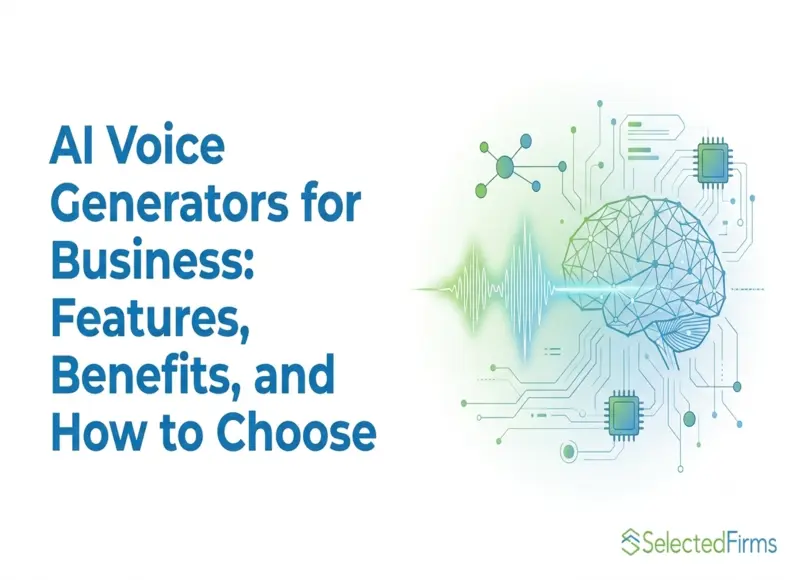
AI-generated voices are becoming part of enterprise workflows rather than experimental AI projects. Organizations now use them to localize training, automate customer interactions, improve accessibility, and reduce production costs. McKinsey reports that 78% of organizations now use AI in at least one business function, reflecting its growing role in enterprise workflows.
AI voice generation has moved beyond robotic text-to-speech. Today it includes neural voices, voice cloning, automated dubbing, and real-time voice agents. For US-based enterprises operating globally, these tools can support training, customer experience, accessibility, and multilingual content while creating obligations around consent, disclosure, and data handling.
This guide is for practitioners in IT, data and AI, operations, contact centers, L&D, and marketing who need to evaluate options carefully and pilot a solution.
What does AI voice generation mean now?
AI Voice Generation includes neural text-to-speech (TTS), which converts written scripts into natural-sounding audio; voice cloning, which creates a synthetic version of a specific voice; dubbing, which translates and re-voices audio; and voice agents, which handle live, two-way conversations.
Live agents usually rely on:
- Speech-to-Text (STT): Transcribes the caller's speech into text.
- Language Model (LLM): Interprets the request and generates an appropriate response.
- Text-to-Speech (TTS): Converts the generated response into natural-sounding speech.
- Latency: Each stage adds processing time, which directly affects how natural and responsive the conversation feels.
- Low-latency solutions: Platforms such as Microsoft's Voice Live API combine STT, generative AI, and TTS into a single interface to reduce latency and improve real-time voice interactions.

Business use cases with practical value
Several use cases are mature enough to justify a focused pilot.
- Training and L&D: voiceovers for courses, with faster localization into multiple languages. The corporate e-learning market continues to grow as organizations invest in scalable and multilingual employee training.
- Marketing content: narration for explainer and product videos that can be updated without re-recording. According to Wyzowl, 95% of marketers consider video an important part of their marketing strategy.
- Accessibility: spoken versions of documents and interfaces for users who need audio alternatives. The World Health Organization estimates that around 1.3 billion people worldwide live with a significant disability, making accessible content increasingly important.
- Contact centers: voice agents and modern IVR that understand and respond in natural language. Customer expectations continue to shift toward faster, always-available support, making AI-powered voice automation a growing priority for service teams.
- Product interfaces: embedded voice output in apps and connected devices. Voice-enabled interactions can improve usability by providing hands-free access and more intuitive user experiences across digital products.
- Compliance communications: consistent messaging delivered across regions and languages. Standardized AI-generated voiceovers help organizations deliver accurate and consistent communications while reducing the risk of messaging variations.
Marketing and L&D teams adopting synthetic presenters should build disclosure in from the start, since ethical video marketing norms now shape audience trust as much as production quality does.
6 Core Features To Evaluate
Compare platforms against actual business requirements rather than polished demos. The right features should improve voice quality, simplify production workflows, support enterprise governance, and reduce operational risk.
-
Naturalness and control
Natural-sounding speech is essential for customer-facing and training content. Look for SSML support, pronunciation and phoneme controls, and adjustable speaking styles to ensure accurate delivery of product names, acronyms, and technical terminology.
-
Language and voice coverage
Choose a platform that supports the languages, dialects, and voice styles your business needs. CSA Research found that consumers are more likely to engage with content in their preferred language, making multilingual support an important consideration for global deployments.
-
Real-time versus batch
Different use cases require different delivery models. Batch synthesis works well for reviewed content such as training videos, while real-time synthesis is better suited for voice agents, where latency and natural turn-taking directly affect the user experience.
-
Voice cloning and consent
Voice cloning should be backed by clear governance policies. Look for platforms that verify identity, capture explicit consent, and maintain audit trails. Microsoft, for example, requires written permission from voice talent before creating a custom neural voice.
-
Data handling
Enterprise deployments should include strong data privacy controls. Evaluate how providers handle text retention, data residency, encryption, and compliance. AWS and Microsoft state that customer text submitted for TTS is not retained, while ElevenLabs offers enterprise options such as SOC 2, HIPAA, GDPR, EU data residency, and zero-retention.
-
Safety and provenance
Responsible AI features help reduce the risk of misuse and build trust. Look for capabilities such as watermarking, content credentials, and impersonation safeguards. OpenAI requires Voice Engine partners to disclose AI-generated voices and implement measures to prevent unauthorized voice impersonation.
Tools Can be Used for AI-voice generation
Group options by what they optimize for rather than ranking them in a single list. Each category is designed for different enterprise requirements, from developer APIs to end-to-end video production and localization.
- Cloud TTS platforms such as Google Cloud Text-to-Speech, Amazon Polly, and Azure AI Speech offer broad APIs and infrastructure controls for larger systems.
- Specialized voice platforms such as ElevenLabs focus on cloning, dubbing, and enterprise compliance options.
- Voice plus video suites pair narration with avatars and localization for training and marketing teams.
If you need voiceovers paired with AI avatars and multilingual video creation, consider an AI voice generator that bundles voices with video editing and localization, such as Synthesia. Synthesia requires an Enterprise plan to create an AI voice clone within its platform (Synthesia). Fit depends on how central video is to your workflows.
A decision framework for choosing
Start by defining business requirements before comparing individual platforms.
- Define target use cases and expected content volume.
- Set guardrails for consent, disclosure, and retention.
- Choose real-time for agents or batch for content production.
- Specify SSML, phoneme, and pronunciation needs.
- Confirm required languages, dialects, and voice styles.
- Validate licensing terms and model provenance.
- Pilot with red-team scripts, edge cases, and mispronunciations.
- Check roles, audit logs, and data residency.
- Plan integration with SDKs, CMS, learning platforms, or contact centers.
- Run a two- to four-week proof of concept with clear success metrics.
Compliance and responsible use before using AI-generated Voice
Global deployments face rules that vary by region. EU transparency obligations for AI-generated or manipulated content under Article 50 begin applying on August 2, 2026 (European Commission, transparency of AI-generated content). In the United States, the FCC declared AI-generated voices in robocalls illegal under the TCPA on February 8, 2024 (FCC, 2024). Avoid synthetic voices for unsolicited calls and build disclosure into customer-facing use.
Consent should be handled by design. Document who consented, the approved scope of use, the duration, and how consent can be revoked.
Implementation patterns and QA
Most projects follow one of two patterns. Content pipelines move from script to TTS to quality check to publishing. Voice agent pipelines move from telephony to STT to model tool calls to TTS. For agents, a common target is under one second to first audio, so plan a latency budget across each step. Teams should also evaluate conversational AI capabilities, API compatibility, and integration with existing business systems.

Common pitfalls include unnatural SSML, inconsistent licensing terms, weak consent logs, and multilingual mispronunciations. Require phoneme and lexicon testing for every language, and confirm captioning parity for accessibility.
Conclusion
AI voice generation is now a practical business tool instead of merely a niche AI function. From training to customer service, access to digital content, and multilingual communication, it helps businesses to ensure consistency and scalability in voice experience and the efforts required for its production.
Organizations need to consider responsible AI use in the evaluation process as well. Such factors as consent, transparency, safety of handling and data use, as well as compliance with constantly changing laws, are just as important as voice quality. The running of the structured proof of concept with measurable success criteria will help the teams check the functioning of a selected platform and reduce possible risks related to the choice made.
FAQs
In many cases, yes. OpenAI requires Voice Engine partners to disclose AI-generated voices, and EU obligations will require labeling of AI-generated or manipulated content. Treat disclosure as a default for customer-facing audio.
AI voice generation converts text into speech using synthetic voices, while voice cloning creates a digital replica of a specific person's voice. Voice cloning typically requires explicit consent and additional governance controls.
Yes. Many enterprise platforms offer APIs and SDKs that integrate with learning management systems, content management systems, contact center software, CRM platforms, and custom applications.
Businesses should evaluate voice quality, language support, pronunciation controls, real-time capabilities, security, compliance, data handling policies, and integration options based on their intended use cases.
Yes. Many enterprise AI voice platforms support multiple languages, regional accents, and localized pronunciations, making them suitable for global training, customer support, and marketing content.


Head Of Digital Marketing
Recent Blogs

Elia Martell
5 Virtual Recruiting Support Operations for Tech and Healthcare Teams
-

09 Oct 2026
-

8 Min
-

477
Jane Hart
Why LinkedIn Campaign Optimization Requires More Than CPC and CTR
-
09 Oct 2026
-
8 Min
-
155
Jane Hart
How to Vet an Offshore SEO Partner: A Due-Diligence Checklist for Agencies and Brands
-
08 Oct 2026
-
8 Min
-
263
Jane Hart
Benchmarking GPU Providers: A Practical Guide to Comparing Cloud Compute Options
-
07 Oct 2026
-
6 Min
-
173
