


The Rise of the Chatbot Therapist: Why AI Therapy Is Growing in 2026
-
Last Updated:

12 Jan 2026
-
Read Time:

6 Min Read
-
Written By:
 Isha Choksi
-
3433
Table of Contents
Chatbot therapists and AI therapy are transforming mental health support by improving access, reducing stigma, offering personalized emotional assistance, and helping people manage stress, anxiety, and well-being more consistently daily.
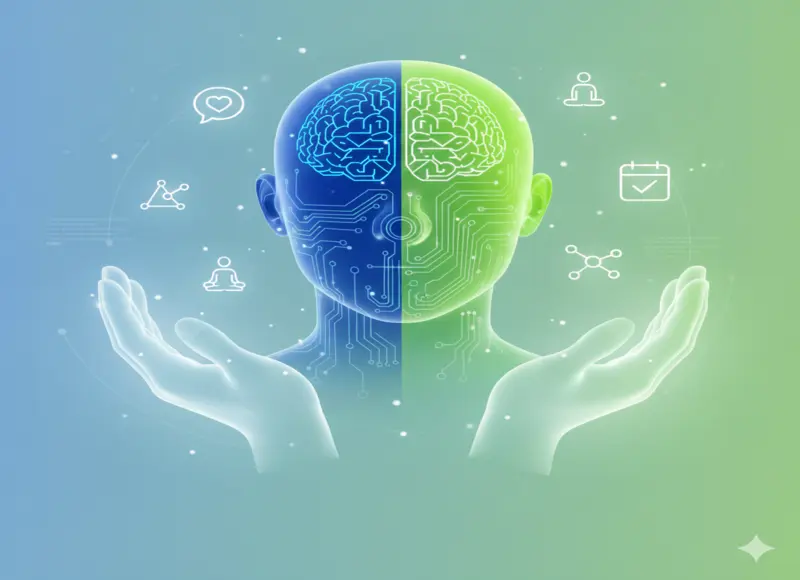
The mental health landscape is undergoing a profound shift. In 2026, chatbot therapists powered by artificial intelligence (AI) are no longer experimental tools; they are mainstream mental wellness companions used by millions worldwide.
Driven by rising mental health demand, therapist shortages, and advances in AI, chatbot therapists are reshaping how people access emotional support. But why exactly is AI therapy growing so fast in 2026, and what makes chatbot therapists so appealing now?
This article breaks down the reasons behind the rise, the evidence supporting AI therapy, and what this trend means for the future of mental health care.
What Is a Chatbot Therapist?
A chatbot therapist is an artificial intelligence system designed to simulate therapeutic conversation and mental health support through text or voice-based interaction.
These systems combine:
- Natural language processing to understand user input
- Machine learning models that adapt over time
- Psychological frameworks such as Cognitive Behavioral Therapy (CBT), mindfulness, and emotional regulation techniques
Therapists who use CBT chatbots are much more focused on supporting mental well-being through aimfully guiding users in identifying patterns and managing emotions and applying the necessary coping habits.
In 2026, chatbot therapists are most commonly used as:
- Daily emotional check-in tools
- Stress and anxiety management aids
- Between-session support for people in traditional therapy
- First-step resources for those hesitant to seek human care
Why Is AI Therapy Growing So Fast in 2026?
Global Mental Health Demand Continues to Rise
Mental health challenges are increasing worldwide. Anxiety, depression, burnout, and emotional fatigue are now among the most reported health concerns across all age groups.
Recent global data shows:
- Nearly 25% of adults experience a diagnosable mental health condition each year
- Over 60% of people worldwide lack adequate access to mental health services
- In the U.S., more than 150 million people live in areas with insufficient mental health providers
This demand-supply imbalance has given rise to a huge care gap. Chatbot therapists are a scalable solution that can provide immediate support without cumbersome lead times and geographic restrictions.
24/7 Availability Aligns With Real Emotional Needs
Emotional distress doesn’t follow a schedule. Stress spikes often occur late at night, early in the morning, or during moments when professional help is unavailable.
Studies show:
- Over 70% of anxiety-related rumination happens outside standard office hours
- Late-night emotional distress is one of the strongest predictors of burnout
Chatbot therapists' meetings take place in real time. These are times when you feel high levels of emotional importance. The quality is so good in the kind of service that it annihilates the room for programs.writeln
Stigma-Free, Personalized Support Expands Early Help-Seeking
People face disapproval, fear of being judged, and discomfort sharing their thoughts with a person, especially in distress's earliest stages. This barrier poses a serious threat to the initiation of early intervention, often when it yields its best fruit.
Recent insights show:
- Over 40% of adults report hesitating to seek mental health support due to fear of being judged
- Young adults and first-time help-seekers are more likely to engage with anonymous digital mental health tools than traditional therapy
- Users disclose sensitive emotions faster and more openly in nonjudgmental, AI-based conversations
AI-based therapy provides assistance that is quite private, customized, and without any form of pressure. The presence of chatbot therapists who evolve as per the listener’s emotions and style of communication, facilitates persistence and self-liberation in regard to one’s emotions on the loyal client’s part. This has been one of the major reasons why, in 2026, AI therapy in the entire world has become more widespread.
What Research Says About the Effectiveness of AI Therapy
Evidence is one of the strongest drivers behind the growth of chatbot therapy.
Multiple studies indicate that:
- AI-driven CBT interventions can reduce anxiety and depressive symptoms by 20–30% within weeks
- Users who engage in short, daily check-ins show up to 35% improvement in emotional awareness
- Adherence rates for chatbot-based interventions are higher than many traditional self-help programs
While it would be inappropriate to suggest that artificial intelligence can replace human therapy from these results, they remain in favor of the hypothesis that chatbots can offer significant emotional benefits-reason that they will appear as helpful treatments for milder and moderate community burdens.
Why Users Are More Comfortable With Chatbot Therapists
Reduced Stigma and Emotional Pressure
One of the most surprising findings in mental health research is how comfortable people feel opening up to AI.
Surveys reveal:
- Over 55% of users disclose personal thoughts more freely to a chatbot than to a human
- Fear of judgment, embarrassment, or saying the “wrong thing” is significantly reduced
For many users, chatbot therapists provide a psychologically safe space, especially for first-time therapy seekers.
Greater Sense of Control and Autonomy
Modern chatbot therapy platforms emphasize user agency. People can start or stop conversations at will, choose topics, and progress at their own pace.
This sense of control increases trust and encourages consistent use, which is critical for long-term mental wellness.
Benefits of Chatbot Therapists in 2026
Key benefits driving adoption include:
- Immediate access with no waiting lists
- Lower cost compared to traditional therapy
- Personalized coping strategies based on user patterns
- Consistent emotional tracking and reflection
- Reduced stigma around seeking help
- Support during everyday stress, not just crises
As AI Chatbot Apps become more refined, they are increasingly viewed as everyday mental health tools rather than emergency resources.
How AI Advancements Made 2026 a Turning Point
Early chatbot therapists were often rigid and repetitive. In contrast, today’s systems are far more sophisticated.
Advances include:
- Improved emotional language recognition
- Contextual memory across conversations
- Adaptive responses that change with user behavior
- Built-in safety mechanisms for distress escalation
These improvements make chatbot therapists feel more responsive, empathetic, and human-centered, key factors in sustained engagement.
Are Chatbot Therapists Replacing Human Therapists?
The short answer is no.
Mental health professionals agree that chatbot therapists:
- Cannot replace clinical diagnosis
- Are not suitable for severe or complex conditions
- Should not be used as sole support during crises
However, they excel as complements to traditional care. Many users now rely on chatbot therapists for daily regulation while seeing human therapists for deeper work.
This hybrid model, AI support plus human expertise, is increasingly seen as the most effective and sustainable approach.
Why Chatbot Therapists Matter for the Future of Mental Health
From a public health perspective, chatbot therapists:
- Expand access to care at scale
- Reduce pressure on overwhelmed clinicians
- Normalize daily emotional self-care
Market projections estimate the AI mental health sector will grow at over 25% annually, signaling long-term adoption rather than temporary interest.
Why AI Therapy Is Growing in 2026
In 2026, the dawn of mental health care will be re-occurred in the form of therapy chatbots. They can be located wherever the "person" is at the exact time he needs help, e.g., emotional challenges, anxiety, and minor everyday exasperation issues.
Unlike traditional therapy, AI therapy provides 24/7 accessibility, consistent check-ins, and personalized feedback, helping users develop self-awareness and emotional resilience over time.
AI therapy must cooperate closely with human care in order to elucidate vital lessons and mend discontinuities for those encountering issues of access. Current AI chatbot apps are not test tools anymore but have become indispensable for assisting one's mental wellness; scientific literature shows nearly 20-30% reduction in anxiety and depression for regular referring by users.
Years after its rise, AI therapy is no longer something of a luxury but a practical aid. In 2026, it is a trusted tool among the population, which is used by everyone, since it helps millions to overcome that emotional thing with courage, while others persistently push to hurt and humiliate.

Head of SEO Operations
Recent Blogs


Elia Martell
5 Virtual Recruiting Support Operations for Tech and Healthcare Teams
-
09 Oct 2026
-
8 Min
-

462

Jane Hart
Why LinkedIn Campaign Optimization Requires More Than CPC and CTR
-
09 Oct 2026
-
8 Min
-
150

Jane Hart
How to Vet an Offshore SEO Partner: A Due-Diligence Checklist for Agencies and Brands
-
08 Oct 2026
-
8 Min
-
249

Jane Hart
Benchmarking GPU Providers: A Practical Guide to Comparing Cloud Compute Options
-
07 Oct 2026
-
6 Min
-
171
