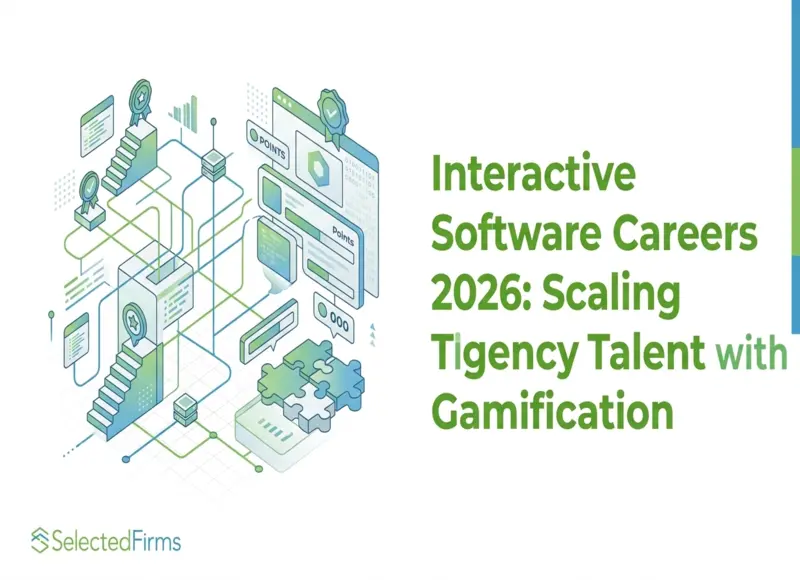
Interactive Software Careers 2026: Scaling Agency Talent with Gamification
-
Last Updated:

06 Apr 2026
-
Read Time:

5 Min Read
-
Written By:
 Elia Martell
-
6
Table of Contents
A comprehensive look at how gamification and interactive design talent help agencies improve user engagement, increase retention, boost conversions, and drive measurable growth across SaaS and eCommerce platforms in an increasingly competitive digital lan
Agencies building for SaaS and eCommerce face a simple truth in 2026: clean interfaces alone no longer cut it. Clients want experiences that actually hook people – the kind that make users stick around, click more, and spend again. Game design skills deliver exactly that quiet advantage. Progress bars, smart rewards, branching choices – these little touches turn ordinary apps into sticky platforms that boost every important number.
The 1-year game design program has become one of the go-to sources for exactly this kind of talent. It compresses what used to take years of messy trial-and-error into focused, deadline-driven work. People start prototyping from week one. They test under pressure that feels a lot like real agency sprints. The result? Portfolios full of mechanics that actually move metrics – not just pretty concepts sitting on a hard drive.
Graduates come out with hands-on experience in current engines, clean scripting habits, and a pretty good instinct for what keeps users engaged without sliding into gimmick territory. Agency leaders quietly admit the same thing: these hires slot in quickly and start contributing from the first project. In tighter 2026 markets, that speed matters. Ramp-up time shrinks, and client wins appear faster – especially for SaaS and eCommerce projects where every extra week of iteration hurts the bottom line.
Why Gamification Suddenly Matters for Real Business Growth
Static dashboards and plain checkout flows feel flat these days. Users scroll past them. But slip in even a subtle progress system or a well-timed badge – and suddenly session times stretch. Early drop-off shrinks. People actually come back.
One mid-size SaaS platform added achievement mechanics. Monthly active users climbed 31% inside six months. Another eCommerce brand tested narrative branches during product discovery. Completion rates jumped noticeably. Nothing flashy. Just thoughtful interactive layers that made the whole experience feel alive instead of obligatory.
Industry reports keep showing the same pattern. Gamified apps hold onto users noticeably longer – often 22–35% on average. Satisfaction scores can rise by up to 15 points when interactive elements enter the picture. These aren’t vanity metrics. Lower churn and higher upsells show up directly in the revenue column – the kind of lift clients notice and remember when renewal time rolls around.
Agencies that bring in the right specialists also cut prototype cycles dramatically. One firm went from eight weeks to three. Client feedback improved because the delivered features simply performed better in the wild. (Crazy how much difference a couple of well-placed feedback loops can make.)
Talent Pipeline That Actually Delivers for Agencies
Certain intensive programs have carved out a reputation for feeding agencies sharp interactive talent. They focus on production sprints rather than endless theory. Students learn to prototype fast, iterate under real deadlines, and ship mechanics that respect both user psychology and performance constraints.
The people who come through these tracks tend to arrive with habits shaped by studio-style collaboration. They don’t overbuild. They focus on what moves the needle – retention loops, subtle personalization, feedback that feels natural rather than forced. In cautious markets, that efficiency is gold. Agencies get specialists who reduce ramp-up time and start delivering measurable impact almost immediately for SaaS and eCommerce clients.
How Game Design Skills Turn into ROI
The real power sits in how these skills travel across projects. Scripting logic builds better dynamic frontends. Procedural thinking sharpens personalization. Engagement mechanics teach retention strategies that feel earned, not engineered.
Look at the pattern across sectors. A B2B tool added subtle reward layers – monthly active users grew steadily. An online retail platform introduced loyalty tiers with light gamification – transaction frequency rose 17–24%. Even fintech apps saw better results when thoughtful branching appeared in user flows.
These outcomes don’t happen by accident. They come from professionals who know how to:
- Prototype fast in real engines for quick UX mocks
- Iterate based on actual user data instead of guesses
- Script dynamic behaviors that respond to user actions
- Optimize across devices without killing performance
- Align feedback loops with real conversion funnels
When agencies hire people who think this way, client projects stop feeling like guesswork. They start delivering measurable growth.
Key Takeaways: Business Benefits of Interactive Gamification
|
Interactive Feature |
Typical Business Impact |
Example ROI Lift |
|---|---|---|
|
Progress trackers & badges |
Longer sessions, lower early drop-off |
+22–35% retention |
|
Achievement & reward systems |
More frequent logins and activity |
+31% monthly active users |
|
Narrative branching |
Higher completion in discovery and onboarding |
Up to +42% in similar flows |
|
Personalized engagement loops |
Reduced churn, stronger upsells |
+15 points in satisfaction scores |
|
Gamified loyalty mechanics |
Increased transaction frequency |
+17–24% in transaction volume |
These numbers come from real implementations and industry benchmarks. Done right, gamification compounds – small daily improvements stack into serious competitive advantage for your agency’s clients. (And yes, sometimes the lift is even bigger when the mechanics feel invisible.)
What Agencies Should Watch in 2026
Generative tools now speed up asset creation and even suggest behaviors. Smart talent knows exactly when to use them and when to step back. Human judgment still wins when it comes to understanding real user motivation – the stuff no algorithm quite nails yet.
The best interactive specialists bring something simple but rare: they make decisions under constraints. They focus on what actually moves the needle instead of building everything “just in case.” That mindset fits agency life perfectly, where deadlines are tight and client expectations keep climbing.
Cross-platform demands keep growing too – cloud scaling, latency handling, experiences that work smoothly on phones, desktops, and whatever comes next. Talent trained with modern demands already thinks in those terms.
Positioning Your Agency for the Next Wave
Interactive software careers aren’t standing still. Passive screens keep losing ground to experiences that feel responsive and rewarding. Agencies that deliberately bring in game design talent put themselves right in the middle of that shift.
Business owners evaluating partners should pay attention to teams that already speak this language. The right specialists don’t just add features – they engineer engagement that shows up in retention reports, revenue numbers, and happier clients.
In 2026 and beyond, that difference compounds. Choose talent pipelines that have proven they can deliver both creative craft and business results. The market rewards agencies that move thoughtfully. When gamification sits in the right hands, the numbers tend to follow – often faster than expected. And sometimes, the biggest wins come from the smallest, most human-centered tweaks.
Marketing Manager
Recent Blogs
Trends

Isha Choksi
Digital Transformation in HR: 10 Signs to Automate Your Employee Recognition Workflow
-
06 Apr 2026
-
8 Min
-

9
Trends

Jane Hart
What Features to Look for in a Logistics-Focused LMS App for Transport
-
06 Apr 2026
-
6 Min
-
13

Trends
Isha Choksi
Why MVP Development Is Preferred By USA Startups Before A Full-Fledged Product
-
01 Apr 2026
-
6 Min
-
148