


Why Most 'Earned Links' Aren't Actually Earned
-
Last Updated:

06 Feb 2026
-
Read Time:

8 Min Read
-
Written By:
 Isha Choksi
-
1434
Table of Contents
The idea that great content naturally earns links is one of marketing’s biggest myths. This article breaks down what’s actually behind most “earned links” and explains what Google truly values when evaluating backlinks.
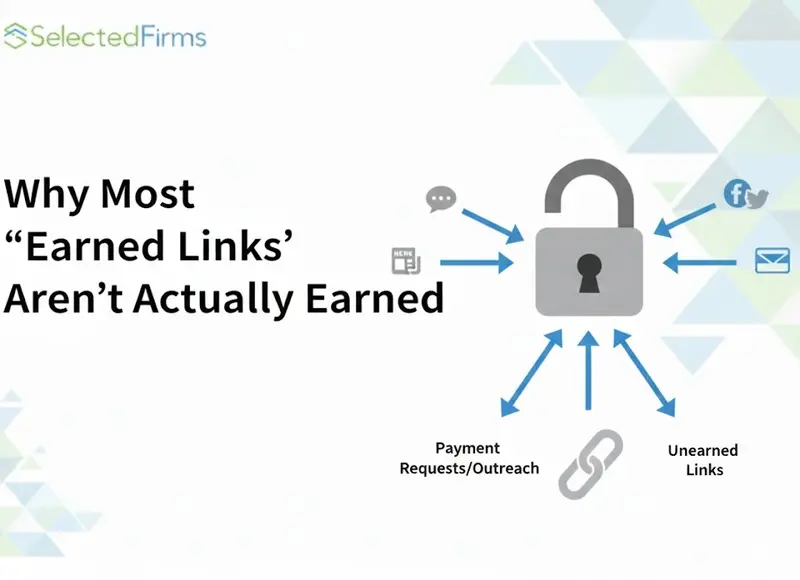
In the world of marketing, the term 'earned links' sounds like the gold standard, the cleanest form of marketing available. No ads, no payments, it's just content that's so insanely valuable that people want to link to it. Just like that. Yes… This is the story everyone wants to believe in.
And marketers? Man, they trust that term almost without question.
The reality is, you should always question everything. If it's too good to be true, then it is, and that's kind of the case with earned links. A huge chunk of them aren't really earned in that idealized sense. In fact, they're the direct result of incentives and shortcuts.
Clever shortcuts, for sure, but still shortcuts.
Confused yet?
Let's try making some sense out of this.
What's Actually Behind Most Earned Links Today
Look at any report, and you'll see that earned links are the best thing since sliced bread. Technically. But if you look at what's behind that idea of earned links, you see it's not so black and white.
Money, Favors, and Soft Obligations
Ah, the elephant in the room. Money.
Are you even surprised at this?
The truth is, a lot of those supposedly earned links start with a financial transaction. Paid guest posts, "sponsored content" that's made to look editorial, publications charging an editorial fee," it's all the same thing pretty much.
Pay up, and you get your link(s). If the article itself is decent, then the link might get dressed up as earned, but that door was opened by a check, and that's it.
The trick (and real goal) here is to make the link look as if it was a genuine recommendation. Google’s crawlers prefer these types of links because they do look contextually relevant AND natural, which is what Google wants.
Outreach at Scale Instead of Relevance
Basically, this is the modern 'hustle'. Instead of taking the time to create a pitch for that one perfect website, you send hundreds of generic emails all over the place and hope someone will notice you. It's honestly a numbers game.
Your focus isn't on checking whether the site is actually relevant for you, but on what your chances are for literally anyone to say yes. In this case, the quality of your content doesn't mean much, but then again, you're shooting for quantity, not quality, anyway.
If you get a yes, it doesn't mean "Hey, your content is great, and we're happy to work with you," but "Oh, alright, I have to fill my calendar somehow, might as well be with you." Once again, you didn't earn that link through value.
Connections Doing Most of the Work
So who do you know? Is anyone important? Maybe you're partners with another company or part of a tight industry network. Maybe you're even on friendly terms with a few editors. These are all undeniably valuable relationships when it comes to your business, but earning links? You might get a few, but yet again, it's not an organic discovery.
To be clear, there's nothing wrong with building relationships. In fact, you should strive to build as much as possible because that's smart business.
But it's just not the same as having a random stranger deciding your work is something they feel is worth linking to.
The Myth of “Link Worthiness” Content
There’s a belief almost every marketer secretly holds onto:
| “If the content is good enough, the links will come.”
It sounds logical. It sounds fair. It sounds like how the internet should work.
But it’s not how the internet actually works.
Every single day, thousands of genuinely useful, well-researched, beautifully written articles are published… and they receive zero links. Not because they lack value, but because nobody sees them.
That’s the uncomfortable truth most link-building advice skips.
Quality is not the bottleneck. Visibility is.
Search the web and you’ll find endless in-depth guides, original research, and thoughtful resources sitting on page 6 of Google with no backlinks pointing to them. Meanwhile, average content on high-authority websites attracts links simply because it’s already in front of people.
This is where the idea of “link worthiness” falls apart.
Content does not earn links in isolation. Content earns links only when it’s distributed, promoted, pitched, shared, and placed in front of the right eyes. Without that, it doesn’t matter how “linkable” it is.
In other words:
| Distribution > Quality
That doesn’t mean quality is irrelevant. It means quality is not enough.
People don’t link to content they don’t know exists. Journalists don’t cite studies they’ve never seen. Bloggers don’t reference resources that never crossed their inbox or feed.
What marketers call “earned links through great content” is almost always:
- Great content plus outreach
- Great content plus relationships
- Great content plus visibility
- Great content plus strategic placement
Remove the second part, and the links disappear.
The real currency of the web isn’t quality.
It’s attention.
And attention is never accidental.
Why Search Engines Treat Links Differently Than Marketers Do
Search engines couldn't care less about the label you put on a link.
Not one bit.
They don't care if you paid for the link, pitched for it, got it because you're friends with someone, traded some magic beans, etc. What search engines look at is context, intent, and placement.
Google won't judge your outreach strategy; it'll pay attention to the editorial logic of the page where your link lives. If the link truly helps a reader understand a topic, you've struck gold regardless of the way you got that link to be where it is.
Google will like it, and it'll reward you because you made it happy.
At its core, that’s the primary difference between having a link that’s placed and having actual/real visibility. The first is a straight-up exchange, and the second comes from editorial interest.
A good way to start that is with a pitch, like using blogger outreach services. Blog outreach services can help secure relevant, high-quality links coming from websites that contextually make sense for what you offer (service and/or product) – the type of links that search engines prefer when determining search page rankings.
But the only way to get the link to be valuable is if it's genuinely useful for the readers; there's more reason to outsource this to a specialized link-building company, since they'll know exactly what to do and how to do it in order to maximize returns on investment.
What Marketers Should Actually Optimize For (Instead of “Earned”)
Once you accept that the label “earned” doesn’t mean much, a more useful question appears:
What should we optimize for instead?
Not the story behind how the link happened, but how the link lives on the page.
Search engines don’t reward effort. They reward signals. And those signals come from four things that matter far more than whether a link was “earned” or “placed.”
Context
Where does the link sit?
Is it naturally part of the discussion, or is it awkwardly inserted into a paragraph that would make perfect sense without it?
Links that exist within a relevant context look editorial. They make sense to readers. They help explain something. That’s what search engines pick up on.
Relevance
Does the topic of the page genuinely connect to what you offer?
A link from a high-authority website means very little if the topic has nothing to do with your niche. Meanwhile, a link from a smaller but highly relevant site can send much stronger signals.
Relevance beats authority when it comes to link quality.
Reader Value
Ask a simple question:
Does this link help the reader understand the topic better?
If the answer is yes, the link is doing its job.
If the answer is “it’s there for SEO,” both readers and search engines can feel it.
Editorial Fit
Does the link feel like it belongs there?
Not because you asked for it. Not because you paid for it. But it fits the tone, purpose, and flow of the article.
This is the difference between a link that looks placed and a link that looks referenced.
And that difference is everything.
When you start optimizing for context, relevance, reader value, and editorial fit, the label stops mattering.
Whether the link came from outreach, PR, a relationship, or a pitch becomes irrelevant.
Because to search engines, the only thing that matters is this:
| Does this link make sense here?
If it does, you’ve done it right.
Conclusion
The point of all this is that you shouldn't focus on the label because it doesn't mean much.
Create something useful and interesting, that's all you really need to do. Then, get that piece in front of people who will be interested in it, it doesn't matter how.
A smart pitch, a good relationship, exchange of money or cupcakes, who cares? Google sure doesn't, and neither should you.

Head of SEO Operations
Recent Blogs


Elia Martell
5 Virtual Recruiting Support Operations for Tech and Healthcare Teams
-
09 Oct 2026
-
8 Min
-

462

Jane Hart
Why LinkedIn Campaign Optimization Requires More Than CPC and CTR
-
09 Oct 2026
-
8 Min
-
150
Jane Hart
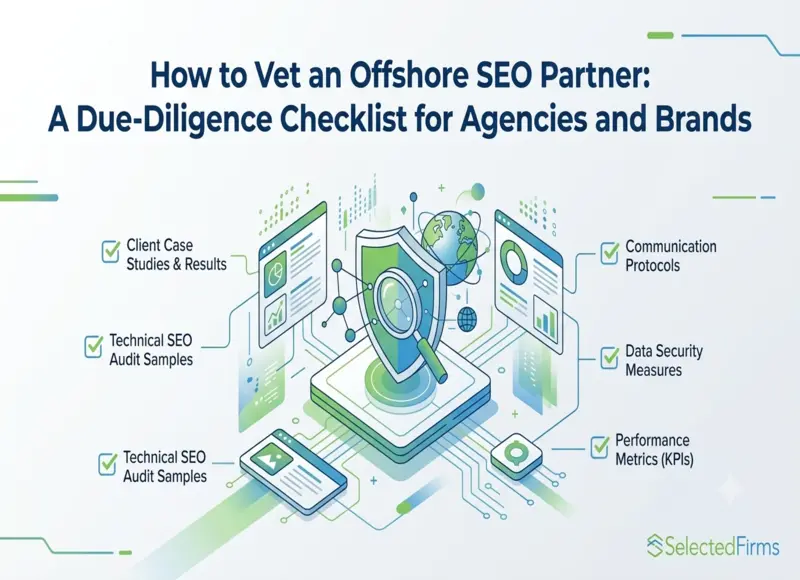
How to Vet an Offshore SEO Partner: A Due-Diligence Checklist for Agencies and Brands
-
08 Oct 2026
-
8 Min
-
249
Jane Hart
Benchmarking GPU Providers: A Practical Guide to Comparing Cloud Compute Options
-
07 Oct 2026
-
6 Min
-
171
