


Table of Contents
AI is transforming workplace safety — from predicting hazards before they happen to detecting unsafe practices in real time. This article breaks down the key benefits of AI health and safety management software and how it helps safety teams move from reac
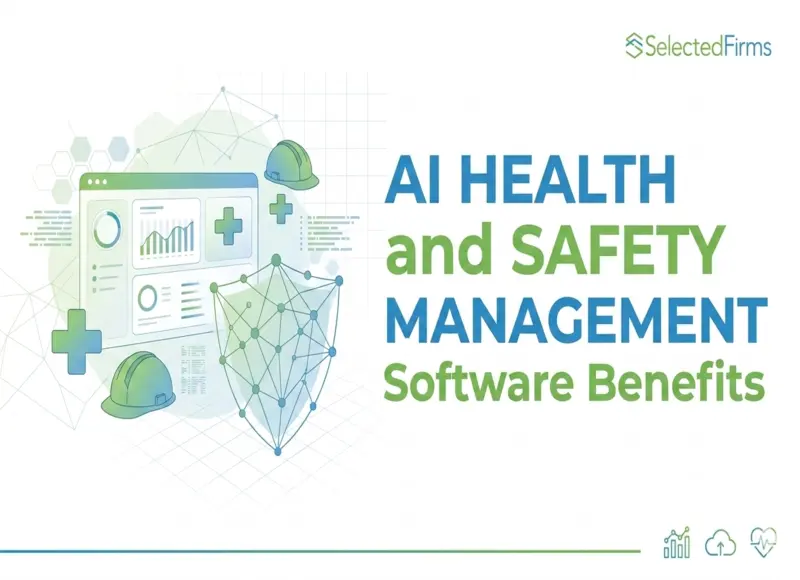
Workplace safety is a big deal. Every day, people working in construction, factories, warehouses, and utilities face real risks. Safety teams have to spot hazards, stick to regulations, and keep workers safe. But old-school safety management leans heavily on manual inspections, piles of paperwork, and reacting to problems only after they've already happened.
AI is starting to flip that script. Instead of relying only on people walking around with clipboards, AI systems dig into workplace data. They find patterns. They flag risks before anyone gets hurt. That shift moves safety teams from playing catch-up to staying ahead.
Many businesses now combine artificial intelligence with their digital solutions. Health and safety management software functions as a comprehensive platform that unites inspection procedures with risk evaluation methods and safety documentation and incident reporting systems. The system enables organizations to track safety standards and fulfill their legal obligations with greater efficiency.
Getting to grips with the AI health and safety management software benefits can help safety leaders figure out how these tools fit into their overall strategy.
Improving Workplace Safety Through Data Insights
One of the biggest wins AI brings to health and safety is fast data analysis. AI systems can chew through massive amounts of workplace data. That includes historical data, safety records, incident reports, and operational data.
Safety managers work in complicated environments. Hazards aren't always obvious. But AI can spot patterns in that data that hint at growing risks. For example, near misses happening repeatedly in one spot, or equipment that keeps breaking down, might point to a bigger problem lurking underneath.
AI can also keep tabs on environmental stuff like air quality or temperature. These can quietly affect worker health without anyone noticing. Catching them early means safety teams can act before things go wrong.
This kind of data-driven insight helps organisations build safer workplaces. It also gives safety professionals much better information when they need to make decisions.
Predicting Potential Hazards Before Incidents Occur
Another real strength of safety AI is prediction. Instead of reacting after accidents happen, AI-driven systems try to spot trouble before it arrives.
AI models use both historical data and live workplace data to detect patterns which link to dangerous work practices and hazardous operational tasks. The system can detect patterns which show unsafe equipment usage and dangerous work activities and recurring mistakes that occur in specific operational processes.
AI-powered tools can also predict equipment failures through predictive maintenance. If a machine starts showing early warning signs of breaking down, the team can fix or swap it out before it becomes a danger.
This forward-thinking approach helps safety leaders cut down on workplace accidents and genuinely protect the people doing high-risk work.
Detecting Unsafe Practices in Real Time
AI also helps organisations catch unsafe behaviour as it's happening. Technologies like computer vision let AI systems actually watch the workplace and flag potential problems.
For instance, the AI tools can detect if workers use correct personal protective equipment, which includes helmets, gloves, and high-visibility gear. The safety team receives immediate notification when an individual fails to wear their personal protective equipment in a dangerous location.
Computer vision can also detect things like workers entering restricted zones, using machinery the wrong way, or ignoring safety rules altogether.
That real-time hazard detection lets organisations jump on safety concerns fast. Fewer delays mean fewer accidents.
Automating Incident Reporting and Safety Records
Incident reporting matters. But when it's done manually, it's slow and inconsistent. AI-driven systems make it simpler through automated reporting.
When an accident or near miss happens, AI-powered tools can pull together the relevant workplace data automatically and generate a report. Safety records stay accurate. Admin workload drops for safety professionals.
Automated reporting also makes it easier to track safety performance over time. By looking at incident data, safety managers can spot patterns, identify unsafe practices, and tighten up safety protocols.
All of that helps organisations deal with safety concerns before they snowball into something much worse.
Strengthening Compliance With Safety Regulations
Staying compliant with safety regulations is non-negotiable in most industries. For complex, multi-site organizations, AI-driven enterprise EHS software can help monitor whether safety practices are being followed consistently while highlighting trends, gaps, and emerging risks before they escalate.
AI-powered solutions can check PPE usage, track movements in high-risk zones, and flag unsafe behaviours that break safety rules.
Automated risk assessments are another bonus. AI systems can review operational data and highlight risks that need attention, making the whole process quicker and more thorough.
Better documentation and ongoing monitoring mean organisations find it much easier to stay on the right side of workplace health and safety requirements.
Reducing Human Error in Safety Management
Human error plays a role in a lot of workplace accidents. Even experienced safety managers can miss warning signs in complex environments.
AI adds another layer of scrutiny. It continuously reviews workplace data, identifies potential hazards, and highlights unsafe behaviours that might otherwise slip through the cracks.
While AI works well with human judgment, it will never take over this vital role. Human staff use AI, but they do not replace it. It is the people who decide to act and decide what the AI is suggesting. They must verify protocols and guarantee that they are adhered to.
When AI and human expertise work together, safety management gets stronger. The technology handles the heavy data lifting. The people handle judgment and accountability.
Supporting Safety Training and Awareness
AI can also sharpen safety training. By looking at past incidents and near misses, AI systems can point out where workers need more support.
With the help of the information, managers can build programmes that are precisely attend to those issues. Specific hazards awaiting makes effective training communication more powerful as opposed to the one-size-fits-all approach.
AI-powered simulations and digital training tools also give workers a safe space to practise responding to dangerous situations before they face them for real.
Better training builds awareness, encourages safer habits, and helps reduce workplace accidents over time.
Continuous Monitoring of Workplace Conditions
Another strong point of AI-driven solutions is around-the-clock monitoring. AI-powered systems don't clock off at five. They watch workplace conditions continuously and flag safety concerns the moment they appear.
Sensors paired with AI models can track environmental factors like air quality, temperature, or equipment performance. That information helps safety teams catch potential hazards early and step in before accidents occur.
Continuous monitoring also means organisations can track safety performance over time and see clearly where things are improving.
This moves organisations away from the old model of occasional inspections towards something far more proactive and responsive.
Balancing AI Technology With Ethical Considerations
AI-powered systems bring real benefits, but they also come with responsibilities. Organisations need to think carefully about the ethical side of adopting these tools.
Take employee tracking, for example. Systems that monitor worker movements or behaviour need to be rolled out thoughtfully. Transparency matters. Worker privacy needs to be protected. Strong human oversight is non-negotiable.
AI-driven systems should always function as partners to safety professionals instead of functioning as their superior. The process of safety data analysis and the management of safety issues together with regulatory compliance requires human operators to make judgment decisions.
Pair AI technology with responsible governance, and organisations can enjoy the benefits of advanced safety tools while keeping the trust of their workforce.
The Future of AI in Health and Safety
AI technology keeps evolving. Its role in workplace health and safety is only going to grow. AI-driven systems are getting better at spotting risks, predicting unsafe behaviours, and backing up safety teams with solid intelligence.
As organisations gather more workplace data, AI models will keep getting sharper. They'll detect unsafe practices more accurately. They'll analyse safety performance more deeply. They'll help prevent more accidents.
But the goal was never to replace safety professionals. It's to give safety managers, safety teams, and safety leaders much better tools to do their jobs. Better insights. Stronger risk management. Faster responses.
By bringing AI-powered solutions alongside experienced safety teams, organisations can build stronger safety management processes, protect their workers, and reduce risk right across their operations.
Understanding these AI health and safety management software benefits makes it clear why artificial intelligence is fast becoming a core part of modern workplace safety strategies.


Head Of Digital Marketing
Recent Blogs

Elia Martell
5 Virtual Recruiting Support Operations for Tech and Healthcare Teams
-

09 Oct 2026
-

8 Min
-

477

Jane Hart
Why LinkedIn Campaign Optimization Requires More Than CPC and CTR
-
09 Oct 2026
-
8 Min
-
155

Jane Hart
How to Vet an Offshore SEO Partner: A Due-Diligence Checklist for Agencies and Brands
-
08 Oct 2026
-
8 Min
-
263
Jane Hart
Benchmarking GPU Providers: A Practical Guide to Comparing Cloud Compute Options
-
07 Oct 2026
-
6 Min
-
173
