


Table of Contents
This guide explains how small businesses can make Google Ads effective by focusing on search intent, precise targeting, optimized landing pages, and conversion tracking. It highlights practical strategies to avoid wasted budget and build a sustainable, pe
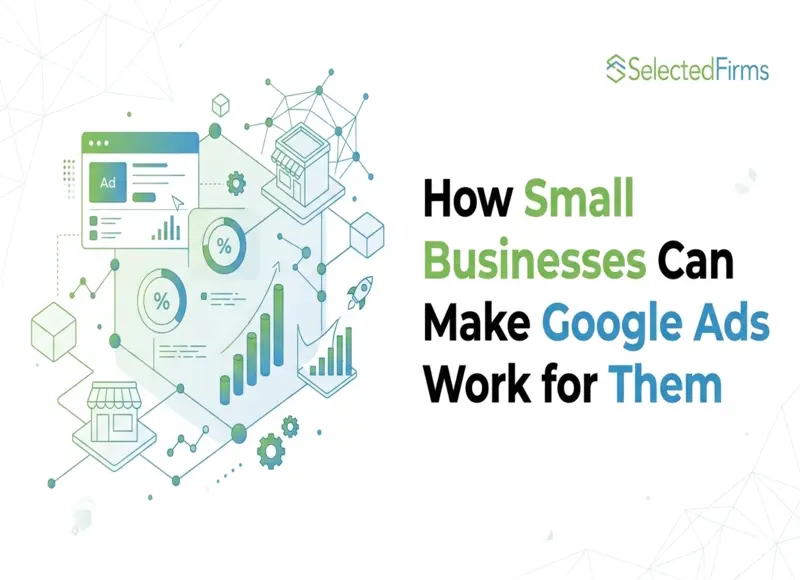
Google Ads for small businesses is often framed as a shortcut. Put in money, turn on campaigns, wait for leads. Real life is rarely that tidy.
For smaller brands, the platform can either become a disciplined growth channel or a very efficient way to burn through budget before lunch.
The difference is usually not the size. Rather, it is structure, intent, and the ability to make calm decisions when the numbers start talking back.
Why Google Ads Often Fails Small Businesses
A lot of smaller brands go wrong at the same exact point. They enter the platform with vague ambition and leave with vague disappointment.
Sometimes, more traffic sounds good until that traffic does nothing. Also, more impressions look promising until no one buys, calls, books, or fills out a form.
Actually, Google Ads does not reward hope. Rather, it rewards relevance. That means goals first, campaigns second, and ego nowhere in the room.
Having performance-driven paid advertising support can be a real advantage, particularly when a business is trying to avoid beginner mistakes and learn the system without wasting months.
That said, support only works when the business itself knows what it wants from the channel. Outsourcing confusion still leads to confusion, just with cleaner reporting.
Build Around Search Intent, Not Wishful Thinking
The strongest Google Ads accounts for small businesses are usually boring in the best way.
- Clean campaign groupings
- Tight keyword themes
- Landing pages that match the promise in the ad.
Also, there is no giant bucket of unrelated searches stuffed into a single campaign. In fact, if someone is searching in a hurry, the ad must reflect that urgency. Meanwhile, if someone is still browsing, the message should reflect that. An intent mismatch is where the budget starts leaking quietly.
Before writing a single headline, it helps to pin down the action that actually matters. Not every business needs the same kind of click, and this is where many accounts get complex fast.
It does not make sense for a local service brand, a niche eCommerce seller, and a B2B consultancy to chase the same conversion behavior. In practice, most small businesses should organize campaigns around one primary outcome at a time:
- Calls or form submissions for service businesses
- Product purchases for eCommerce brands
- Qualified visits for businesses building local or niche awareness
Know What Small Budgets Cannot Afford
A limited budget does not leave room for lazy targeting. Broad, generic keywords often feel exciting because search volume looks bigger on paper. Actually, it is not enough.
In fact, small businesses usually perform better when they stop chasing every possible click. They have to start focusing on searches with commercial intent, local relevance, or very specific need states. Also, long-tail terms are useful and help in conversion.
Negative keywords matter here more than people realize. They are not some technical extra. They are budget defense. If a business sells premium custom cakes, it does not want bargain hunters, job seekers, or people looking for recipes draining the campaign.
This is one of the demerits of paid search. However, this is where much of the profitability is protected. Small businesses do not need the loudest account. They need the cleanest one.
|
Common Small-Business Habit |
What Actually Works Better |
Why It Matters |
|---|---|---|
|
Targeting broad, obvious keywords |
Prioritizing specific, high-intent search terms |
Better alignment between the search motive and offer improves efficiency. |
|
Sending all traffic to the homepage |
Using dedicated landing pages for each offer |
Relevance improves conversion potential and user experience. |
|
Judging success by clicks alone |
Watching conversions and acquisition cost |
Traffic without action is just an expensive activity. |
|
Making one ad and leaving it there |
Testing multiple copy angles and calls to action |
Iteration reveals what actually resonates with buyers. |
The Ad Is Only Half the Job
A click is not a win. Basically, it is just permission to make the case. Too many small businesses spend hours tweaking bids and almost no time fixing what happens after the click. Then the ad gets blamed for a landing page problem, which is pretty common and a little painful.
In fact, if the ad promises a discount, the page must show it instantly. Moreover, if the ad offers a consultation, the form must be easy and visible. Also, if the page takes too long to load or feels cluttered, people leave.
Good ad copy is usually less about sounding clever and more about sounding exact. What is being offered, who is it for, and why now? That is the spine of it.
In general, small businesses tend to do better when they stop writing ads like posters. Rather, they start writing ads like answers. Also, they have tight headlines and a specific value.
Read the Signals Rather Than the Dashboard
Google Ads throws a lot of numbers at advertisers. That makes weaker campaigns look healthier than they are. Also, deep impressions can mean nothing. Even a decent click-through rate can flatter a campaign that lands cold traffic on a poor page.
Small businesses need a shorter list of questions:
- Are the right people clicking?
- Are they doing the intended action?
- Is the cost to acquire that action sustainable enough to repeat next month without panic?
That is the real audit. It also helps to accept that campaigns have seasons, moods, unnecessary dips, and timing issues. Moreover, buyer behavior changes around holidays, promotions, local demand cycles, and even simple shifts in urgency.
In those cases, a smart advertiser does not overreact to every wobble. Rather, they stay alert to patterns. That balance is the whole game, really. Steady testing, patient pruning, and quick adjustments when the evidence is clear. Not random changes because the week felt slow.
Small Businesses Make Google Ads Work By Getting Sharper, Not Louder
Google Ads can absolutely work for small businesses, but usually not in the cinematic way people imagine. Not overnight domination. Not an infinite scale from one lucky campaign. More often, it works through discipline.
In those cases, sharper targeting, better intent matching, cleaner landing pages, and smarter measurement matter a lot. These are better than raw spend.
The businesses that do well are not always the ones spending the most. Rather, they are the ones who understand the job of every click and refuse to pay for confusion. That is what makes Google Ads useful, sustainable, and worth the effort for small business growth.


Head Of Digital Marketing
Recent Blogs


Elia Martell
5 Virtual Recruiting Support Operations for Tech and Healthcare Teams
-

09 Oct 2026
-

8 Min
-

477
Jane Hart
Why LinkedIn Campaign Optimization Requires More Than CPC and CTR
-
09 Oct 2026
-
8 Min
-
155
Jane Hart
How to Vet an Offshore SEO Partner: A Due-Diligence Checklist for Agencies and Brands
-
08 Oct 2026
-
8 Min
-
263
Jane Hart
Benchmarking GPU Providers: A Practical Guide to Comparing Cloud Compute Options
-
07 Oct 2026
-
6 Min
-
173
