


How to Pick an MSSP for Cyber Security
-
Last Updated:

30 Jan 2026
-
Read Time:

6 Min Read
-
Written By:
 Elia Martell
-
1561
Table of Contents
Understand what to look for in an MSSP for cybersecurity and how the right partner can protect your business and support growth.
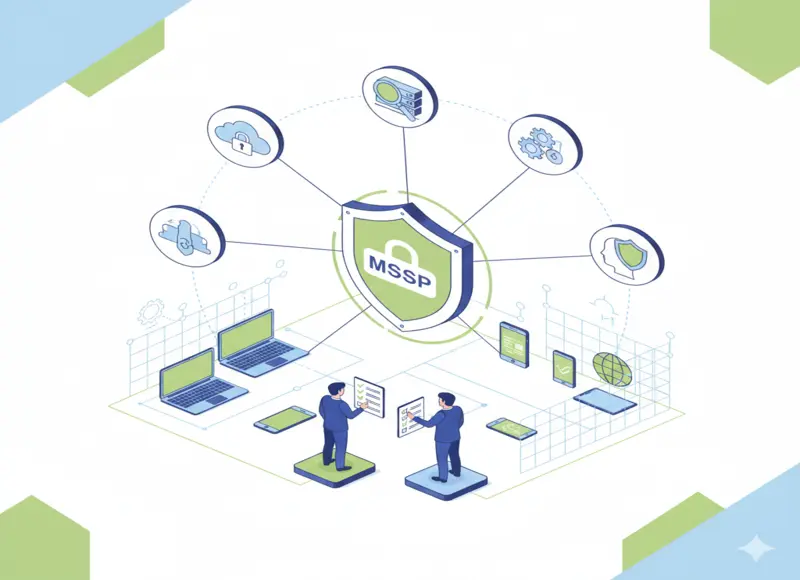
Choosing a managed security service provider (MSSP) is one of the most critical decisions a responsible business leader will make for long-term growth and resilience. As cyber threats evolve from simple viruses into a multi-layered ecosystem of sophisticated and highly targeted attacks, a do-it-yourself approach to security is no longer viable for most organizations.
However, not all providers are created equal. Selecting the right MSSP for cybersecurity means finding a partner that goes beyond basic antivirus management and acts as an extension of your internal team—providing the tools, expertise, and 24/7 vigilance needed to protect your digital assets.
Key Capabilities to Look For
Your MSSP should provide ongoing management and oversight, including:
- Identity and Access Management (IAM): Designing and maintaining role-based access controls, enforcing least-privilege access, and securing user logins to reduce credential-based attacks.
- Security Configuration and Hardening: Actively configuring and maintaining security settings to prevent oversharing, weak authentication, and accidental data leaks.
- Continuous Governance: Regular reviews of permissions, policies, and configurations to ensure they remain accurate, compliant, and aligned with evolving business needs.
An MSSP that embeds security directly into everyday work tools helps protect sensitive data without slowing down productivity—a crucial balance for growing businesses.
Step 1: Prioritize the Protection of Workplace Productivity Suites
The very first and critical step in picking an appropriate MSSP is ensuring they specialize in the particular platforms that your team works on, day in and day out. Most modern-day organizations employ cloud-based productivity suites such as Microsoft 365 and Google Workspace.
Many traditional security players still focus on perimeter defenses like firewalls, while overlooking complex and constantly changing security threats that hide inside these collaboration environments.
The platforms store critical business information, which includes sensitive emails and documents, personal identification information, and shared data. These platforms have become major targets for cybercriminals who use phishing attacks, account takeovers, and unintentional data leaks to breach security.
Step 2: Look for an Integrated Fractional External Team Model
Hiring a full-time chief information security officer (CISO) and an in-house security operations team is financially unrealistic for many small and mid-sized organizations. This is where a fractional external team model becomes invaluable.
A modern MSSP for cybersecurity should function as a strategic partner, offering access to senior-level security expertise without the overhead of full-time executive salaries.
Benefits of a Fractional MSSP Model
- High-Level Expertise: Access to seasoned security professionals with experience across multiple industries and threat environments.
- Operational Alignment: Security strategies that align with your business goals rather than slowing them down.
- Scalability: Enterprise-grade capabilities that grow with your organization.
The best MSSPs build long-term relationships. They understand your business context, maintain continuity, and provide practical, business-focused guidance—not just technical alerts.
Step 3: Demand Real-Time Monitoring and Incident Response
Cyber threats don’t follow business hours, and neither should your security coverage. A defining feature of a true MSSP for cybersecurity is 24/7 real-time monitoring combined with active incident response.
During your evaluation, ask prospective providers:
- What is the response time for threats detected outside business hours?
- How is the incident response (IR) plan tailored to my organization?
- Do you actively contain and remediate threats, or only send alerts?
The right MSSP should take ownership during an incident—containing threats quickly, limiting damage, and guiding your team through recovery with clear communication.
Step 4: Verify Capabilities in Risk Management
You cannot protect what you have not identified. A professional MSSP Cybersecurity partner should begin the relationship with a comprehensive cybersecurity assessment and repeat this process regularly.
Effective risk management includes:
- Mapping vulnerabilities across endpoints, servers, cloud environments, and remote access points
- Prioritizing risks based on likelihood and business impact
- Aligning security investments with real-world threats
Risk Management Is Key to Protecting Your Business
A 2023 IBM report revealed that the average cost of a data breach reached $4.45 million, up from $3.86 million in 2020—an increase of 13.5%. These figures highlight the growing financial impact of inadequate security strategies.
A strong MSSP for cybersecurity helps ensure your security budget is spent strategically, focusing on the risks that matter most to your business.
Step 5: Evaluate AI and Emerging Technology Consulting
Threat actors increasingly use AI to automate attacks and create extremely believable phishing campaigns. The responsible use of AI technology provides organizations with strong protective tools.
A forward-thinking MSSP should provide guidance on:
- Deploying AI-driven security tools that detect anomalies in real time
- Safely adopting AI within your organization without exposing sensitive data
- Balancing innovation, speed, and trust
The ability to explain these concepts in plain language is essential for both scientific and non-scientific audiences. Leadership teams need to comprehend AI technology, both its risks and its opportunities, yet they should not become overwhelmed by technical language.
Step 6: Ensure They Provide Remote Security Solutions
With remote and hybrid work now standard, your MSSP must protect users and systems regardless of location.
Key remote security capabilities include:
- Remote Monitoring: Unified protection for office locations and remote employees
- Secure Cloud Communications: Encrypted VoIP and collaboration tools
- Endpoint Protection: Consistent security for every device accessing company resources
An MSSP for cybersecurity should deliver visibility and control across all endpoints—no matter where work happens.
Security as a Growth Enabler
Choosing the right MSSP for cybersecurity allows your business to grow with confidence. Robust security turns technology investments into strategic assets rather than operational risks.
Your security foundation requires your organization to focus on three elements. Your organization must dedicate time to assessing its service provider through a thorough evaluation process, because selecting the correct MSSP will safeguard your organization's systems and protect its future.
FAQs
An MSSP for cybersecurity is a third-party provider that monitors, manages, and protects an organization from cyber threats. Services typically include threat detection, incident response, and ongoing security monitoring.
A traditional IT provider focuses on system uptime and support, while an MSSP for cybersecurity focuses on threat prevention, detection, and response.
Core services include 24/7 monitoring, incident response, identity and access management, endpoint security, and regular risk assessments.
No. Many small and mid-sized businesses use an MSSP for cybersecurity to gain enterprise-level protection without hiring a full internal security team.
An MSSP for cybersecurity secures remote users by monitoring endpoints, enforcing secure access, and protecting cloud-based collaboration tools.
Ask about response times, active remediation, reporting visibility, and how security strategies are customized to your business.
Costs vary by size and risk, but most MSSPs use a monthly subscription model that is more affordable than building an in-house security team.
Yes. An MSSP for cybersecurity can help implement security controls, monitor risks, and support audit preparation, though it does not replace legal advisors.
Most MSSPs begin with a security assessment, followed by phased implementation to minimize business disruption.

Marketing Manager
Recent Blogs
Elia Martell
5 Virtual Recruiting Support Operations for Tech and Healthcare Teams
-
09 Oct 2026
-
8 Min
-

627


Jane Hart
Why LinkedIn Campaign Optimization Requires More Than CPC and CTR
-
09 Oct 2026
-
8 Min
-
189
Jane Hart
How to Vet an Offshore SEO Partner: A Due-Diligence Checklist for Agencies and Brands
-
08 Oct 2026
-
8 Min
-
323
Jane Hart
Benchmarking GPU Providers: A Practical Guide to Comparing Cloud Compute Options
-
07 Oct 2026
-
6 Min
-
187
