


Table of Contents
Learn how app templates can transform your marketing funnel by helping you launch faster, capture higher-quality leads, reduce costs, and create engaging multi-channel experiences—without building everything from scratch.
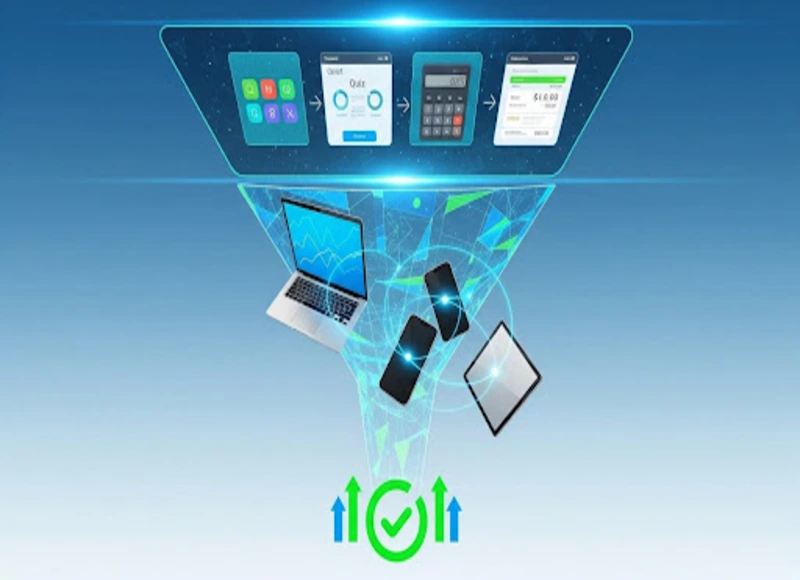
Marketing moves fast. One minute, everyone is obsessed with a specific trend, and the next minute it’s old news. If you are stuck in development hell trying to build the perfect campaign landing page or lead magnet from scratch, you are already behind. You have the strategy, the creative spark, and the drive. The problem usually isn’t the idea. It’s the execution.
Traditional marketing funnels often feel a bit flat. A static landing page with a boring form just doesn't grab attention like it used to. People want interaction. They want value. They want an experience. This is where app templates come in to save the day. They bridge that massive gap between "I have a great idea" and "It's live and collecting leads."
Using an app template isn't cheating. It’s smart. It lets you skip the tedious setup and get straight to the good stuff. Whether you are a solo entrepreneur or running a marketing team, using pre-built structures can completely transform how you attract and convert customers.
Let’s look at five ways these tools can turn a sluggish funnel into a high-performance machine.
1. Ready, Set, Launch: Speed to Market with App Templates
In marketing, timing is everything. If you have a brilliant idea for a holiday campaign but it takes three months to build the tech for it, you missed the boat. The biggest advantage of using an app design template is pure, unadulterated speed.
Imagine going from a concept on a napkin to a live, functioning funnel in a single afternoon. That is the reality when you start with a template. You bypass the lengthy cycles of wireframing, coding, and debugging that usually drag projects down. The structure is already there. You just need to fill it with your content and branding.
This speed allows for something crucial: rapid testing. Instead of betting your entire quarterly budget on one massive launch, you can spin up three different micro-campaigns in a week. You can test different messages, different offers, and different audiences.
If one doesn't work, you haven't wasted months of development time. You just pick a new template and try again. This agility gives you a massive advantage over competitors who are still waiting for their engineering team to approve a ticket.
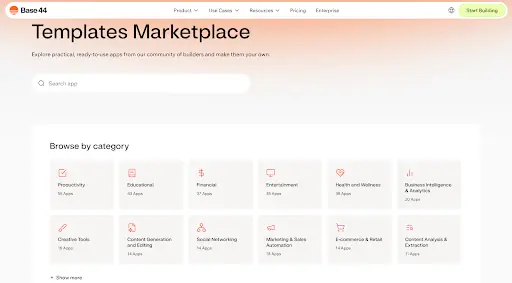
Image Source: Base44
The Power of Rapid Testing in Marketing
|
App Builder |
Features |
Pricing |
Notable Strengths |
|---|---|---|---|
|
Base44 |
Wide variety of pre-designed templates, easy-to-use UI |
Affordable tiers |
Rapid deployment and template customization |
|
BuilderPro |
Advanced analytics, drag-and-drop interface |
Mid-range plans |
Detailed insights and flexible components |
|
TemplateWorks |
Extensive template library, strong customer support |
Budget-friendly |
Great for beginners, helpful onboarding |
|
DesignForge |
Highly customizable templates, robust integrations |
Premium pricing |
Best for large teams and specific workflows |
2. Smarter Lead Capture and Qualification
Let's be honest. No one enjoys the tedious task of completing lengthy and dull forms. If your sales process is dependent on a non-interactive page that requires the submission of personal details like full name, email, phone number, and job title, then it is highly likely that a significant number of potential customers are being discouraged.
Thanks to app templates, you can now design something that is far more captivating.
Templates often come with interactive elements built right in. Think about quizzes, calculators, or interactive assessments. Instead of just asking for an email, you provide value first. A potential customer is much more likely to engage with a "Marketing ROI Calculator" or "CPM calculator" than a "Contact Us" form.
But it’s not just about getting more leads. It’s about getting better ones. These interactive templates can collect dynamic data. As users interact with your app, they are telling you about their needs and pain points.
You can set up smart scoring in the background. If a user clicks on pricing options and uses a budget calculator, they are a hot lead. If they just read a blog post, they might need more nurturing.
This allows you to segment your audience instantly. You can send a personalized follow-up email based exactly on how they answered a quiz question. It makes your potential customers feel understood, and it makes your sales team much happier because they are dealing with qualified prospects.
3. Scale Without Breaking the Bank
Custom development is expensive. Hiring a team of developers to build a custom interactive funnel can easily run into the tens of thousands of dollars. For many businesses, that price tag is a non-starter. This is where the magic of app builders comes into play.
Using templates eliminates that massive overhead. You don't need a full IT department to launch a sophisticated marketing tool. Many platforms offer a library of templates that act as a solid foundation. You get the functionality of a custom build for a fraction of the cost.
This cost-effectiveness means you can scale much more easily. As your funnel grows and brings in revenue, you can reinvest that money into ads or content rather than paying off technical debt. It also means you can run multiple funnels simultaneously.
Think of having one app design for your webinar registration, a different one for customer onboarding, and a third one for a referral program. Each of these would require custom coding, which would be a solid headache from a logistical standpoint. However, templates allow you to simply duplicate and customize your work.
For productivity, this is a game-changer. Your marketing team can operate independently, launching and managing sophisticated tools without constantly waiting on developer resources. It puts the power back in the hands of the people who actually know the customer.
4. Decisions Backed by Real Data
Guesswork is the enemy of a good funnel. You might think a certain headline or button color will work best, but until you see the data, you are just hoping for the best. Good app templates come with analytics baked into their DNA.
You don't need to be a data scientist to understand what is happening. Most modern templates connect to visual dashboards that show you exactly where people are dropping off. Are they opening the app but not starting the quiz? Are they finishing the assessment but not entering their email? You can see these bottlenecks in real time.
This makes optimization simple. Since you are working with a template, creating a variation for an A/B test is easy. You can duplicate your funnel, change one element, and split your traffic. Because you aren't rewriting code, you can run these experiments constantly.
This creates a cycle of continuous improvement. You launch, you look at the data, you tweak the template, and you launch again. Over time, this leads to conversion rates that blow traditional, static funnels out of the water. You are making informed decisions based on how actual humans are interacting with your marketing, not just what looked good in the design mockup.
5. Connected Multi-Channel Experiences
Your customers don't live on just one channel. They might see your ad on Instagram, read your email on their phone, and then visit your website on a desktop. Your marketing funnel needs to connect all these dots smoothly.
App templates are designed for this kind of integration. They aren't isolated islands. They are built to talk to your email marketing software, your CRM, and your social media pixels. When someone completes an action in your app, it can trigger an automated workflow instantly.
For example, a user finishes a "Style Finder" quiz on your mobile app. The template immediately sends that data to your email platform, which triggers a welcome sequence featuring products that match their style. At the same time, it adds them to a custom audience for your Facebook ads so you can retarget them with relevant content.
This creates a unified journey for the customer. They don't feel like they are interacting with disjointed parts of a company. Everything feels connected and consistent. The branding, the messaging, and the user experience remain steady across every touchpoint. This builds trust, and trust is what ultimately drives sales.
Your Implementation Roadmap
Ready to ditch the static pages and start building? Here is how to get moving without getting overwhelmed.
Step 1: Pick Your Goal. Don't just browse templates aimlessly. Decide exactly what part of your funnel needs help. Do you need more top-of-funnel leads? Look for quiz or assessment templates. Do you need to close more deals? Look for ROI calculators or case study showcases.
Step 2: Choose Your Foundation. Look for a template that gets you 80% of the way there. Platforms like Base44 are excellent because they offer a wide range of business-focused templates that are built to scale. You want something that looks good out of the box but allows for deep customization.
Step 3: Make It Yours. This is crucial. A template is just a skeleton. You need to dress it up. Add your brand colors, your logo, and your voice. Rewrite the copy to sound like you. The goal is for a user to never know it started as a template.
Step 4: Connect the Pipes. Before you go live, ensure your integrations are working. Test the flow. Does the email fire off correctly? Does the lead show up in your CRM? Do a full run-through as if you were a customer.
Step 5: Launch and Learn. Go live. Don't worry about it being perfect. Get it out there and start collecting data. Watch the analytics closely for the first few days and be ready to make quick adjustments.
Real-World Success Stories
It helps to see how this works in the wild. Take a boutique fitness studio that was struggling to get new members. They had a standard "Free Class" sign-up form on their site that was converting at about 2%. They switched to a "Fitness Personality Quiz" template.
Users answered questions about their goals and music preferences, and the app recommended the perfect class for them. Their conversion rate jumped to over 8% in the first month because the offer felt personalized and fun.
Or consider a B2B consultancy firm. They replaced their generic "Contact Us" page with a "Business Health Check" app template. Potential clients could grade their own operations and get a generated report. This didn't just bring in more leads; it brought in better ones. The sales team knew exactly what problems the client had before they even picked up the phone. The closing rate on those leads was double their average.
The Future of Your Funnel
The competitive edge today doesn't go to the business with the biggest budget. It goes to the business that can move the fastest and provide the most value. App templates give you that edge. They allow you to punch above your weight class, deploying sophisticated, interactive marketing tools that engage customers and drive real growth.
Building a funnel that actually converts shouldn’t feel like a puzzle. With the right tools, you can skip the technical headaches and get straight to what matters: connecting with your audience. The technology is ready and the templates are waiting for you. It’s time to start building something great
FAQs
App templates are pre-designed setups that enable companies to build their marketing funnels fast without doing the full custom design and development work. They set up the main components, such as landing pages, lead capture forms, and interactive parts, hence opening a way for marketers to run their campaigns faster and more effectively. Using app templates, you can skip the lengthy development period, which means you only need to work on your content and branding, thus getting your product out in the market much quicker.
App templates enhance rapid testing by enabling marketers to deploy multiple variations of campaigns quickly. Instead of investing in a lengthy development process for a single launch, you can use different app templates for various micro-campaigns. This agility allows you to test diverse messages, offers, and audience segments simultaneously, helping you find the most effective strategies with minimal time and resource investment.
Yes, app templates can significantly improve lead capture and qualification. Unlike traditional static forms, many app templates come with interactive elements like quizzes and calculators that engage potential customers. These interactive features not only increase engagement but also allow you to collect valuable data about users' needs and preferences, enabling better segmentation and tailored follow-up communication.
App templates offer a great way to build marketing funnels for businesses on a budget. Marketing funnel development may cost dramatically for a small team of developers, including tens of thousands of dollars in spending. These templates allow for similar functionalities except at such a price that now allows the business to spend money on ads instead of the technical building process.
App templates help create multiple channels that do not stick out, but instead blend into their background naturally. Email marketing tools, CRM, and social media platforms can all be incorporated, making it possible for customers to be engaged with their brand through multiple channels without a break in communication. For example, once a consumer completes a survey within an application, information can evoke automated replies via email and social media retargeting, therefore providing customers with a unified and efficient promotional strategy.


Head Of Digital Marketing
Recent Blogs

Elia Martell
5 Virtual Recruiting Support Operations for Tech and Healthcare Teams
-

09 Oct 2026
-

8 Min
-

477
Jane Hart
Why LinkedIn Campaign Optimization Requires More Than CPC and CTR
-
09 Oct 2026
-
8 Min
-
155
Jane Hart
How to Vet an Offshore SEO Partner: A Due-Diligence Checklist for Agencies and Brands
-
08 Oct 2026
-
8 Min
-
263
Jane Hart
Benchmarking GPU Providers: A Practical Guide to Comparing Cloud Compute Options
-
07 Oct 2026
-
6 Min
-
173
