


Table of Contents
Looking for the right self-storage software in 2026? This guide compares ten popular platforms and explains how they handle online rentals, payments, automation, and daily operations, helping operators choose tools that actually fit how they work.
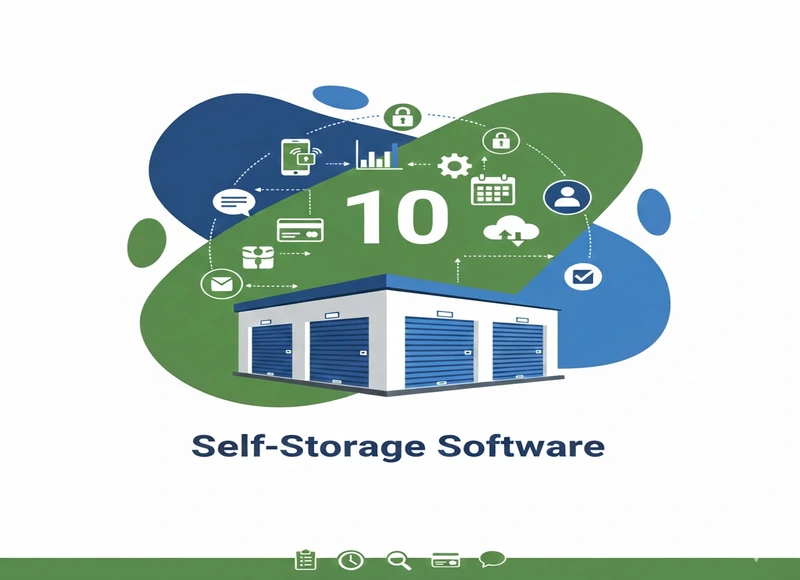
For 2026, operators are looking for more than just digital ledgers; they need self-storage software that can power contactless move-ins, automate billing, and give tenants a smooth mobile journey from first click to move-out. The right platform should feel easy for staff on day one, yet still be robust enough to support portfolio growth, flexible pricing, and multi-site oversight. This guest post starts with Storeganise as the benchmark, then walks through nine other platforms that regularly appear in operator shortlists, giving you a practical view of where each one fits.
The focus throughout is simple: less manual work, faster online rentals, and more precise data for day-to-day decisions. If you are replacing spreadsheets, consolidating old systems, or planning new builds, this overview helps narrow the Self-storage software choices to tools that actually show up in real buying conversations.
How this list was put together
Rather than chase every product on the market, this list concentrates on cloud-first platforms that support:
- Online bookings and payments
- Automation for routine tasks like billing, reminders, and lockouts
- Mobile-friendly tenant portals and dashboards for staff
Each pick is positioned for a specific type of operation: small independents, regional portfolios, unmanned sites, or mixed models. The goal is not to crown a single winner, but to give you Self-Storage Business Insights you can apply directly in demos and trials: what each platform is “best at,” and which one feels closest to your operating style.
Quick comparison snapshot
Here is a high-level look at where each platform tends to shine:
|
Platform |
Best for |
Standout strengths |
|
Storeganise |
Modern, automation-driven operations |
Contactless rentals, tenant app, open API, global-ready |
|
Syrasoft |
Established portfolios and legacy upgrades |
Mature toolkit, reporting depth, proven workflows |
|
QuikStor Cloud |
Owners want browser-based control and flexibility |
Configurable rules, remote access, fast reporting |
|
SSM Cloud |
Enterprise and multi-site teams |
Central dashboards, BI focus, portfolio-level tools |
|
6Storage |
Small and mid-size facilities |
Approachable onboarding, value-focused plans |
|
Unit Trac |
Lean operators focused on maps and payments |
Simple interface, automation of daily essentials |
|
Storage Commander |
Teams standardising core operations |
Modern UI, end-to-end basics, quick training |
|
WebSelfStorage |
Ops plus baked-in marketing |
Lead capture, online rentals, bundled tools |
|
Tenant Inc (Hummingbird) |
Newer stacks and integrated ecosystems |
Modern UX, ecosystem approach, active innovation |
|
Stora |
Unmanned and online-first models |
Fast setup, automation, remote-friendly workflow |
Use this as a first filter: circle the three platforms that best match your facility type, then dig into their details and demos.
1) Storeganise: automation at the core
Storeganise sits at the centre of many 2026 evaluations because it treats automation and self-service as non?negotiables rather than add-ons. As cloud-native Self-storage software, it is built to handle traditional self-storage, valet storage, and other models in one system, so you do not need to juggle multiple products as your offering evolves. Operators can offer branded online booking, e-signatures, and a tenant-facing app that lets customers reserve units, sign, pay, and manage their accounts from any device.
For internal teams, Storeganise provides colour-coded site maps, automated billing and dunning, access-code handling, and integrations via an open API and webhooks. That means you can connect payment gateways, marketing tools, accounting systems, and access control without heavy custom builds. Global and multi-currency support also makes Storeganise attractive for operators with cross-border ambitions or existing international footprints.
Ideal if you want:
- High share of online rentals and contactless move-ins
- A single Self-storage software platform to cover multiple storage models
- Strong automation plus flexibility to integrate with your wider tech stack
2) Syrasoft: long-running management backbone
Syrasoft appeals to owners who want a well-established platform with a long track record in the industry. Its toolset covers tenant management, reservations, payments, and reporting, all designed to support both single sites and larger portfolios. Many operators look to Syrasoft when they are standardising older locations onto a single system while still wanting a familiar, conservative approach to workflows.
If you are upgrading from older desktop software, Syrasoft often feels like a natural step: recognisable concepts, broad functionality, but with cloud and cross-device access layered on top. It is a solid fit for teams that prioritise dependability, continuity, and deep support over bleeding-edge UX.
3) QuikStor Cloud: browser-first control
QuikStor Cloud is aimed at operators who want Self-storage software that is entirely browser-based and highly configurable. Instead of leaning on heavy local installs, everything runs through the cloud, giving owners and staff quick access from any connected device. Rules and workflows can be tuned to match each facility's preferred operating practices, whether that is around gate schedules, billing rules, or reservation flows.
This platform tends to be popular with teams that like to “fine-tune” their system and want stronger control of daily processes without building a custom solution. Fast reporting and remote access also make it appealing for owners who travel frequently or manage sites from a distance.
4) SSM Cloud: enterprise visibility and BI
Self Storage Manager (SSM Cloud) is built squarely for multi-site and enterprise-level teams that need strong central oversight. Reservations, rentals, leads, payments, and portfolio reporting live in a single cloud interface, with dashboards designed for regional managers and executives. The emphasis is on business intelligence: slicing performance by site, region, or manager so decisions are based on data rather than gut feel.
If you run a substantial portfolio and want Self-storage software that can plug into existing corporate systems, SSM Cloud’s integrations and BI focus make it a logical candidate. Smaller independents may find the feature set heavier than they need, but for groups planning aggressive roll-ups or consolidations, it is worth a close look.
5) Storage: first serious system after spreadsheets
Storage is frequently chosen by small- and mid-size operators taking their first serious step into dedicated Self-storage software. The focus is on accessible onboarding, clear workflows, and pricing that makes sense when every dollar counts. Online rentals, basic automation, and clean reporting give owners a quick win over manual spreadsheets without overwhelming teams new to management software.
Because it covers the essentials well, 6Storage is often used as a “starter system” that can still grow with an operator for several years. If you want to move quickly from paper and spreadsheets to something more modern, this contender will not require months of training.
6) Unit Trac: lean maps and payment flows
Unit Trac keeps things intentionally streamlined, focusing on visual facility maps, leases, payments, and a handful of core automation paths. Rather than chase every feature under the sun, it targets the daily actions managers perform most: assigning units, updating tenant details, taking payments, and checking availability.
This lean approach suits operators who want Self-storage software that gets out of the way and lets them move fast. Device-agnostic access means staff can use it on desktops, tablets, or phones, making it a good fit for managers who are frequently on-site, moving between units, or handling field tasks.
7) Storage Commander: modern UI and fast onboarding
Storage Commander Cloud prioritises a clean, modern interface and straightforward configuration, helping teams get up to speed with minimal friction. It covers the whole chain from rentals and billing through to communication and reporting, giving operators a single environment for everyday management.
Teams often consider Storage Commander when they are tired of clunky UIs and want something easier on staff who live in the software all day. For groups standardising multiple facilities, the combination of usability and functionality can significantly reduce training time and inconsistencies in how locations operate.
8) WebSelfStorage: management plus marketing
WebSelfStorage blends traditional management with built-in marketing and lead-capture capabilities. Online rentals, payments, and tenant management sit alongside tools that pull prospects into the funnel and convert them into paying customers. For smaller operators in particular, this bundled model can be attractive because it reduces the need to license separate marketing platforms.
If your team is lean and you want a single environment to handle both operations and front-end demand generation, WebSelfStorage may be worth trialling. It is particularly useful when you do not have a full in-house marketing function but still need consistent online acquisition flows.
9) Tenant Inc (Hummingbird): ecosystem-driven stack
Tenant Inc.'s Hummingbird is commonly evaluated by operators who want a modern stack with a strong emphasis on ecosystem. Rather than existing as a standalone island, Hummingbird is designed to plug into a broader suite of tools under the same umbrella, covering everything from websites and marketing to insurance and payments.
This approach appeals to operators looking to simplify vendor management and keep most of their technology under one brand. If you are planning a complete revamp of your digital presence and operational platform, Hummingbird can function as the core around which other Tenant Inc. services are built.
10) Stora: built for lean and unmanned facilities
Stora targets online-first and unmanned operations, where automation and remote control are essential. Setup is intentionally fast, with flows focused on online rentals, simple billing, and remote-friendly management so one person can oversee multiple locations without being physically present.
For new builds, conversions, or satellite sites that will not always have staff on-site, Stora’s design philosophy fits well. It is an attractive option if your expansion plans rely on lean staffing and a strong digital experience rather than a large on-site team.
Access, automation, and integration overview
The table below gives a simplified look at how these platforms approach access, automation, and integrations:
|
Platform |
Access model |
Automation focus |
Integration approach |
|---|---|---|---|
|
Cloud, any device |
Billing, communications, access, workflows |
Open API, webhooks, and many connectors |
|
|
Syrasoft |
Cloud & cross-device |
Reservations, billing, notices |
Connectors to standard industry tools |
|
QuikStor Cloud |
100% browser-based |
Rules-based workflows, reporting |
API and partner integrations |
|
SSM Cloud |
Cloud |
Portfolio-level automation & BI |
Enterprise integrations, custom work |
|
6Storage |
Cloud |
Core billing and reminders |
Essential third-party connections |
|
Unit Trac |
Cloud |
Daily task automation |
Selected integrations as needed |
|
Storage Commander |
Cloud |
Routine processes, communication |
Range of integrations for scaling |
|
WebSelfStorage |
Cloud |
Rentals, payments, marketing flows |
Ties into marketing & payment tools |
|
Tenant Inc (Hummingbird) |
Cloud |
Full-funnel automation |
Part of a larger ecosystem |
|
Stora |
Cloud |
Online rentals and unmanned workflows |
Integrations for payments and access |
Use this to map each option against your current and future tech stack.
How to choose Self-storage software faster
To move from theory to a decision, define a short list of “non?negotiable” workflows before you book demos. For example:
- Creating and completing a move-in, including proration
- Handling a late or failed payment and sending follow-ups
- Editing a unit on the site map and adjusting pricing
- Running a simple revenue and occupancy report
Then, during demos with these platforms, time each task and count the clicks required. Run at least one of those tests from a phone, not just a desktop, because tenants increasingly expect to interact with your brand on mobile. Tie your impressions back to Self-Storage Business Insights that matter: speed of move-ins, rate of online rentals, and time saved per day for your team.
If your roadmap includes new locations, remote or unmanned facilities, or international expansion, give extra weight to platforms that support open integrations, automation, and global-ready features, often reviewed with input from a software development comapny. That way, the Self-storage software you choose in 2026 will still serve you well several growth stages from now.
Final thoughts
As the self-storage industry continues to evolve, cloud-based management software and automation have become essential tools rather than optional upgrades. These platforms now form the backbone of efficient operations, helping facilities remain competitive while meeting rising expectations for convenience and digital access.
For operators, the key to success lies in choosing software that aligns closely with day-to-day workflows, long-term growth strategies, and the needs of modern tenants. Different platforms bring different strengths, each suited to particular operating models and stages of business maturity.
By evaluating real-world use cases and balancing staff productivity with a smooth customer experience, owners can select self-storage software that simplifies current operations while supporting sustainable growth and future innovation across the industry.


Head Of Digital Marketing
Recent Blogs


Elia Martell
5 Virtual Recruiting Support Operations for Tech and Healthcare Teams
-

09 Oct 2026
-

8 Min
-

465

Jane Hart
Why LinkedIn Campaign Optimization Requires More Than CPC and CTR
-
09 Oct 2026
-
8 Min
-
152

Jane Hart
How to Vet an Offshore SEO Partner: A Due-Diligence Checklist for Agencies and Brands
-
08 Oct 2026
-
8 Min
-
249
Jane Hart
Benchmarking GPU Providers: A Practical Guide to Comparing Cloud Compute Options
-
07 Oct 2026
-
6 Min
-
172
