


Software Engineer Hiring Cost in USA: Salary vs Outsourcing
-
Last Updated:

05 Jan 2026
-
Read Time:

14 Min Read
-
Written By:
 Harshita Toplani
-
2795
Table of Contents
Not all dev roles cost the same—and that’s where things get interesting. From frontend to full-stack, software developer salaries vary based on skills, demand, and project scope. If you’re trying to manage the cost to hire software engineers without overs
?Hiring a developer shouldn’t feel like buying a luxury rocket. With rising salaries, hidden costs, and long hiring cycles, companies need smarter, more affordable ways to build great software that too without burning their entire budget.
The Real Cost of Hiring Software Engineers in Today’s USA Market
Think of your software development company as a submarine diving deep into the tech ocean. You’re hiring skilled developers in the USA and paying them thousands of bucks, but here’s the reality—salary is just the surface. Beneath it are recruiting fees, benefits, tools, and ongoing costs that quietly add up fast.
Spoiler: it’s not just salary. Hiring in-house can cost 2–3× more than expected. According to the U.S. Bureau of Labor Statistics, the average software developer earns around $130,000 a year (~$63/hour)—but that’s just the tip of the iceberg
Why Businesses Need To Rethink Traditional Hiring Models:
- Salaries rapidly escalating
- Talent shortages are pushing competition into overdrive
- Global outsourcing options offering compelling alternatives
- Increased pressure to match big-tech salaries and benefits
- Budget strain from fixed salaries during slow business cycles
- Rising expectations for remote flexibility and better work-life balance
Let’s unpack it like a developer unpacks npm install errors.
Why Software Engineer Hiring Costs Are Rising in the USA
Talent Shortage = Salary Inflation
Tech jobs are skyrocketing while available talent is not — a classic case of supply < demand. Companies now throw bonuses, equity, and perks into the mix just to get a signature.
Remote Work Widened Salary Expectations
Remote roles aren’t capped by local markets anymore — U.S. companies pay market rates even for remote U.S.-based engineers, keeping salary bands competitive nationwide.
Demand for Emerging Skills
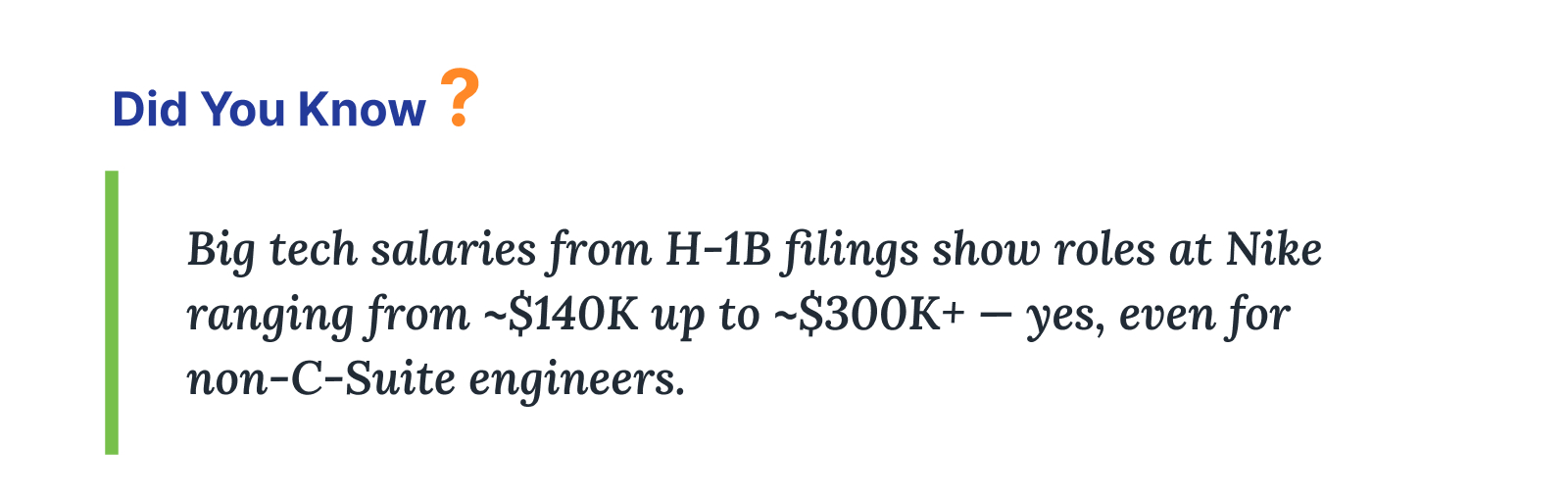
AI, DevOps, and Cloud wizards? Expect to pay serious green — specialists now command ~30%+ premiums over general dev roles.
U.S. Software Engineer Salary Breakdown
Median salary ranges you can quote in meetings.
Salary Breakdown by Experience Level
|
Experience Level |
Typical Salary Range |
|---|---|
|
Entry-Level |
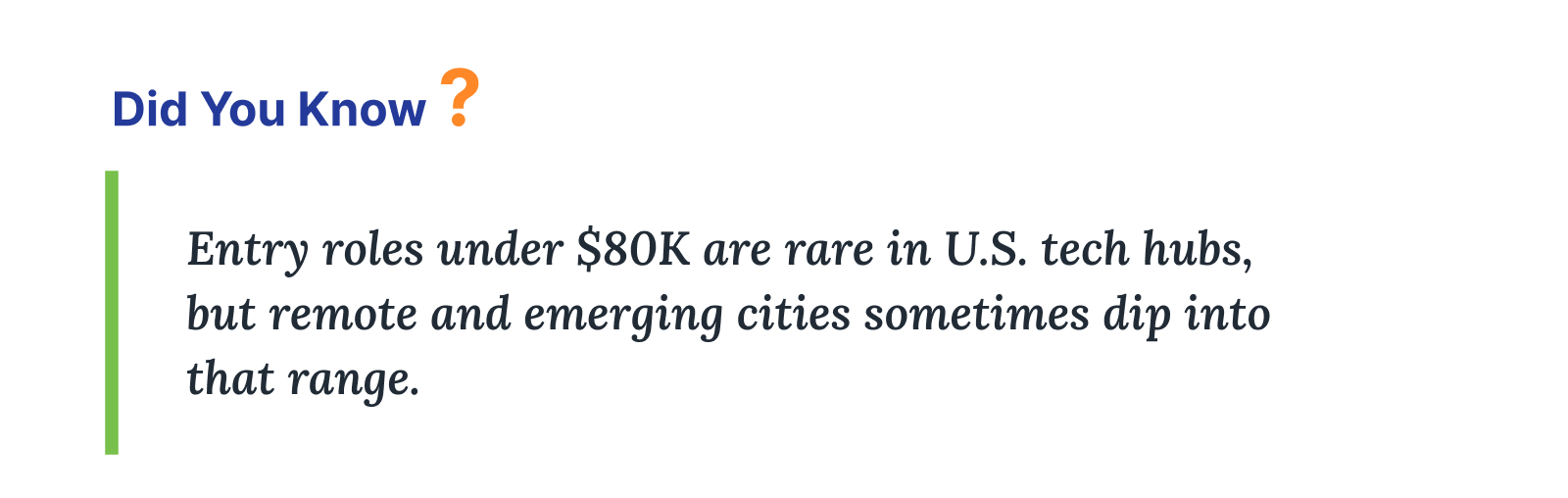
~$75K–$95K |
|
Mid-Level |
~$100K–$140K |
|
Senior |
~$150K–$200K+ |
|
Avg. National |
~$130,000 (~$63/hr) |
Salary Differences by Role
Salary levels often vary based on the specific role within a development team. Frontend, backend, and full-stack developers command different pay ranges depending on skill demand, project complexity, and experience level, which directly influences overall development budgets.
Although frontend developer salaries often depend on the scope and pricing of web development projects, role-based pricing continues to shape the broader software development landscape.
|
Role |
Typical U.S. Salary (USD) |
|---|---|
|
Backend Developer |
~$110K–$160K |
|
Frontend Developer |
~$95K–$145K |
|
DevOps / Cloud Engineer |
~$130K–$180K |
|
AI / ML Specialist |
~$150K–$220K+ |
This isn’t a menu — it’s what serious engineers command.
Salary Variation by Location (USA)
Software engineer salaries in the U.S. vary widely by location, with major tech hubs demanding higher pay. To manage these costs, many businesses partner with top software development companies in USA for flexible and cost-effective hiring.
|
Location Type |
Average Salary Range |
Key Characteristics |
|---|---|---|
|
High-Cost Tech Hubs (San Francisco, New York, Seattle) |
$150,000 – $200,000+ |
Highest salaries due to intense competition, high living costs, and the presence of major tech giants. Companies pay premium rates to attract top talent. |
|
Emerging Tech Cities (Austin, Denver, Atlanta, Raleigh) |
$110,000 – $150,000 |
Balanced mix of affordability and skilled talent. Lower operating costs with growing tech ecosystems make these cities attractive for scaling teams. |
|
Remote USA-Based Engineers |
$100,000 – $140,000 |
National talent access without big-city salary premiums. Offers flexibility, wider talent pools, and cost efficiency for companies. |
Does Location Matter While Hiring: San Francisco vs Seattle vs Boston
Indeed, location matters—especially in top-tier U.S. tech cities.
Where you hire directly impacts salary expectations, competition, and overall hiring cost. Cities like San Francisco, Seattle, and Boston continue to set the benchmark for tech compensation due to dense talent pools, major tech employers, and high living costs. Even today, salaries in these cities shape national pay standards for software engineers.
Let’s Compare Them
|
City |
Average Salary Range |
Key Hiring Insights |
|---|---|---|
|
San Francisco |
$150,000 – $200,000+ |
Highest salaries nationwide; intense competition; home to major tech giants and startups. |
|
Seattle |
$135,000 – $180,000 |
Strong tech ecosystem led by big enterprises; slightly lower costs than SF but similar skill demand. |
|
Boston |
$130,000 – $170,000 |
Known in enterprise, healthcare, and research-driven tech; steady demand with high-quality talent. |
Hidden Costs of Hiring In-House (That Most Teams Underestimate)
When you build an internal team, the expenses go far beyond salary:
- Benefits & payroll taxes add 25–30% on top of base pay
- Recruitment fees can reach 15–25% of a developer’s annual salary
- Long hiring cycles delay product launches and revenue generation
- Onboarding and training reduce team productivity for several months
- High dependency on key employees creates operational risk
- Knowledge silos form when critical expertise isn’t documented
- Employee turnover causes project delays and continuity gaps
- Compliance with labor laws increases the legal and administrative burden
- Payroll management and statutory filings require ongoing oversight
- Data security and IP protection demand constant internal controls
- Fixed salaries and benefits remain regardless of workload fluctuations
- Scaling teams up or down is costly, slow, and operationally disruptive
In reality, the “salary” is only the visible part — the real cost of hiring in-house often runs 2–3× higher once everything is accounted for.
Factors Affecting the Cost of Hiring a Software Developer
Hiring a software developer isn’t just about paying a salary—it’s a strategic investment that directly impacts timelines, product quality, and long-term growth. The cost of hiring a software developer goes far beyond the paycheck, shaped by skill demand, hiring speed, and technical complexity.
1. Experience and Skill Set
Experience is one of the biggest cost drivers in software hiring. An entry-level developer may cost $70,000–$90,000 per year, while a senior engineer or architect can easily exceed $150,000–$200,000+.
For example, a junior frontend developer may handle UI updates, but a senior full-stack or AI engineer is expected to design systems, optimize performance, and make architectural decisions—skills that directly impact business outcomes and justify higher pay.
2. Technology Stack and Role Complexity
Modern technologies like AI, blockchain, and cloud systems demand specialized expertise. These skills are scarce, making developers more expensive. Complex tech stacks can push salaries 20–40% higher than standard roles.
3. Location and Cost of Living
Location and technology strongly impact costs—top U.S. cities pay $150K+, while remote roles save 15–30%. Advanced skills in AI, cloud, or DevOps further raise developer salaries.
4. Hiring Model (Full-Time, Contract, Freelance)
The way you hire also changes the total cost structure. You can find cases where hiring a full-time engineer may cost $130K annually, while a contract developer might cost $80–$120 per hour, but only for the duration you actually need them.
5. Time-to-Hire and Urgency
Speed has a price. The longer a role stays unfilled, the greater the impact on productivity and delivery timelines. In fast-moving markets, urgency alone can increase total hiring costs by 20–30%.
Cost of Hiring Software Engineers Through Agencies
Outsourcing software development has become a strategic alternative to in-house hiring, especially for companies seeking speed, scalability, and cost control. Understanding what the software development pricing models agencies suggest for their services—and what you truly pay for—helps decision-makers evaluate the real value.
How Software Development Agencies Price Their Services
- Hourly Engagements
Ideal for short-term work or evolving requirements. Costs vary by region, skill level, and technology stack. - Monthly Dedicated Teams
A fixed monthly cost for a full-time, dedicated team. This model offers stability, better collaboration, and predictable spending. - Fixed-Price Projects
Best suited for clearly defined scopes. Agencies absorb delivery risk, while clients benefit from cost certainty.
USA-Based vs Nearshore vs Offshore Development Costs
When scaling engineering teams, understanding regional cost differences is essential. Comparing U.S.-based, nearshore, and offshore options helps businesses choose the right balance between quality and cost. IT staff augmentation services make it easier to scale teams quickly, reduce hiring overhead, and access global talent without long-term commitments.
|
Region |
Approx. Hourly Rate |
|---|---|
|
U.S.-Based Agencies |
$80–$150+ |
|
Eastern Europe |
~$25–$45 |
|
Latin America |
~$30–$50 |
|
India |
~$20–$50 |
Risk Reduction Benefits of Outsourcing
Outsourcing isn’t just about saving money—it’s also about lowering operational risk.
- Faster Team Replacement: Vendors can quickly replace unavailable resources without disrupting delivery
- Predictable Costs: Fixed or contract-based pricing removes salary volatility
- Shared Delivery Responsibility: Agencies absorb hiring, retention, and workforce management risks
In-House Hiring vs Outsourcing — Cost Comparison
|
Factor |
In-House |
Outsourcing |
|---|---|---|
|
Cost Predictability |
?Often higher & variable |
Stable and forecastable |
|
Time-to-Market |
Slower due to hiring |
Faster execution |
|
Scalability |
Limited & expensive |
Easy and flexible |
|
Specialized Skills |
Harder to source |
Readily available |
|
Legal & Payroll Compliance |
Fully owned |
Shared or managed |
Remote vs On-Site Software Engineer Salaries
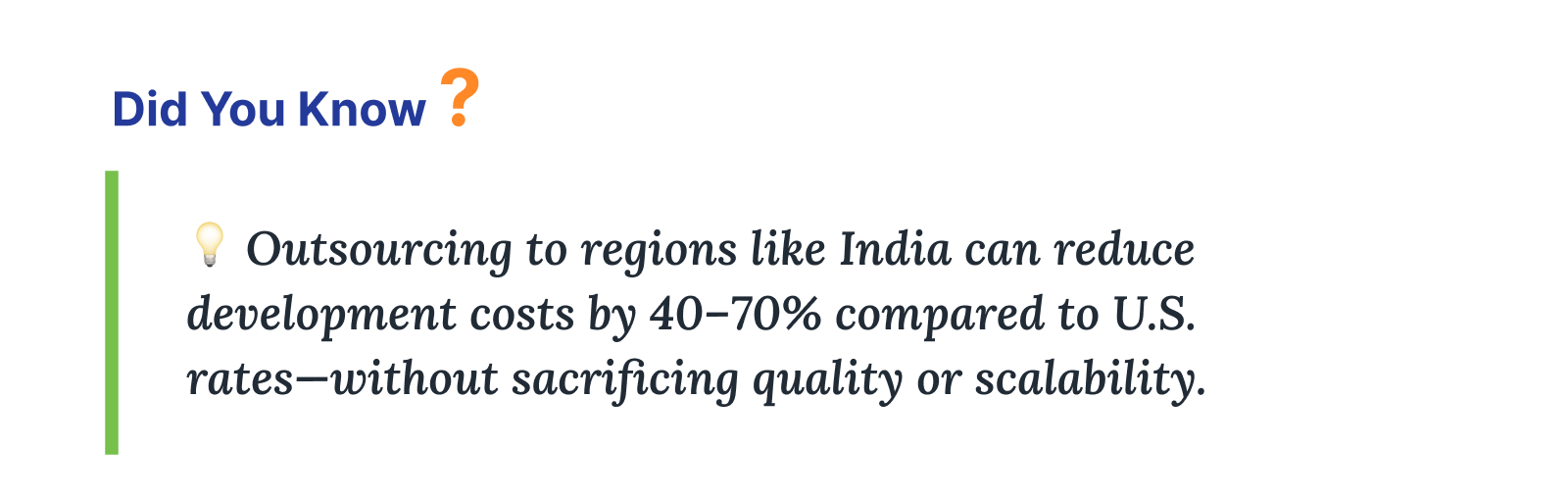
A senior U.S.-based engineer may cost $150K+ annually, while an equally skilled offshore engineer may range between $20K–$45K per year.
That’s 60–80% in potential savings—funds that can be reinvested into growth, innovation, or marketing.
Top Regions for Hiring Remote Software Developers
Hiring remote software developers allows agencies to tap into highly skilled developers worldwide without the overhead of local hiring. By recruiting talent from cost-efficient regions, companies gain access to experienced engineers while significantly reducing payroll expenses.
- India – Large talent pool, strong engineering education, excellent cost efficiency
- Eastern Europe (Poland, Ukraine, Romania) – High-quality engineering with strong technical depth
- Latin America (Brazil, Mexico, Colombia) – Time-zone alignment with the U.S. and solid technical talent
- Southeast Asia (Vietnam, Philippines) – Growing tech ecosystems with competitive pricing
Cost Difference: Hiring Remotely vs On-Site in the U.S.
|
Region |
Avg. Hourly Rate |
Cost vs U.S. |
Key Advantages |
|---|---|---|---|
|
Eastern Europe (Poland, Ukraine, Romania) |
$25–$45 |
40–60% lower |
Strong engineering depth, high-quality delivery |
|
Latin America (Brazil, Mexico, Colombia) |
$30–$50 |
35–55% lower |
Time-zone overlap with U.S., strong collaboration |
|
India |
$20–$50 |
50–70% lower |
Massive talent pool, cost-efficient, scalable teams |
|
Southeast Asia (Vietnam, Philippines) |
$20–$40 |
55–70% lower |
Fast-growing tech hubs, competitive pricing |
Hidden Costs of Outsourcing (Yes, They Exist)
While outsourcing offers clear advantages, it’s not entirely frictionless:
- Initial onboarding and knowledge transfer time
- Communication and time-zone coordination
- Ongoing project management oversight
Still, when weighed against long-term hiring costs, outsourcing often delivers a significantly stronger ROI—especially for non-core or scalable development needs.
Factors to Consider When Choosing Between In-House Hiring and Outsourcing
- Budget and Cash Flow Constraints
In-house hiring requires long-term financial commitment—salaries, benefits, taxes, and overhead. Outsourcing offers flexible pricing models that help manage cash flow and reduce upfront costs. - Project Scope and Duration
Short-term or well-defined projects are often better suited for outsourcing, while long-term, evolving products may benefit from an in-house team that grows with the business. - Need for Specialized Expertise
Outsourcing provides immediate access to niche skills and experienced specialists that may be costly or difficult to hire locally. In-house teams are better for building deep, product-specific knowledge over time. - Speed vs. Long-Term Control
Outsourcing enables faster onboarding and quicker delivery, while in-house teams offer greater control over processes, priorities, and long-term strategy. - Risk Tolerance
In-house hiring carries higher fixed costs and operational risk, whereas outsourcing distributes responsibility across vendors, reducing exposure while increasing flexibility.
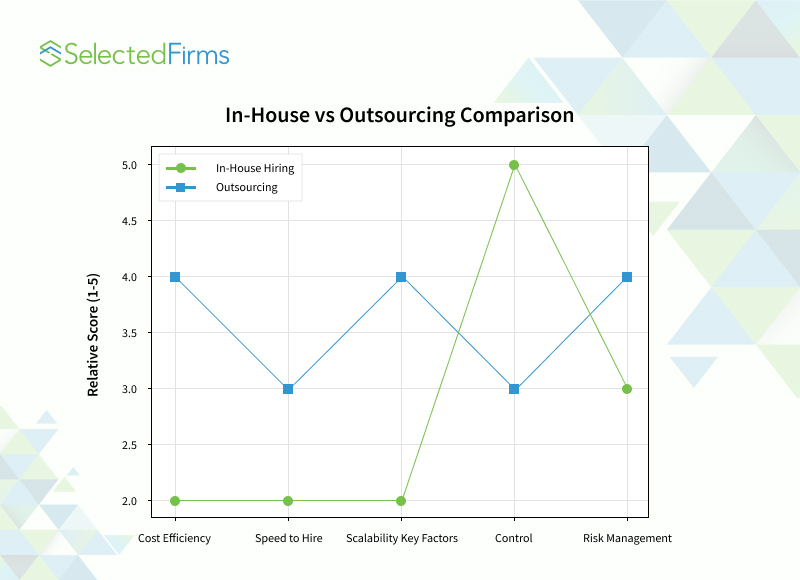
Key Takeaways from the Comparison
- Cost Efficiency: Outsourcing lowers costs through flexible pricing and reduced overhead.
- Speed to Hire: External teams can be onboarded much faster than in-house hires.
- Scalability: Outsourcing enables quick scaling without long-term commitments.
- Control: In-house teams offer stronger control over processes and culture.
- Risk Management: Outsourcing spreads risk, while in-house hiring concentrates it internally.
How to Reduce Expenses When Hiring Software Developers
- Adopting a Hybrid Hiring Model
Combine in-house leadership with outsourced or remote developers to balance control, flexibility, and cost efficiency. - Outsourcing Non-Core Development Work
Delegate maintenance, testing, or support tasks to external teams so internal resources stay focused on core business goals. - Hiring Based on Skills, Not Just Location
Expand hiring beyond local markets to access high-quality talent at significantly lower costs. - Leveraging Agencies to Avoid Long Recruitment Cycles
Agencies provide pre-vetted developers, reducing hiring time, recruitment expenses, and onboarding delays.
How to Optimize the Software Engineer Hiring Process
- Streamline Interviews
Keep interviews short and focused to make faster hiring decisions. - Reduce Time-to-Hire
Use ready talent pools and clear hiring steps to avoid delays. - Avoid Costly Hiring Mistakes
Define job needs clearly and assess skills carefully before hiring. - Use Agencies for Faster Onboarding
Agencies provide pre-screened developers who can start work quickly. - Hire for Skills, Not Just Location
Look beyond geography to find the best talent at the right cost. - Standardize the Hiring Process
Use consistent evaluation criteria to improve decision-making and reduce bias.
Influence on Hiring Software Engineers after the AI Boom
AI didn’t just knock on the door. It walked right in and changed the rules. As artificial intelligence becomes a core part of modern products, companies are rethinking how they hire software engineers. Skill sets are shifting, team structures are evolving, and traditional hiring approaches no longer work. In fact, over 70% of tech leaders say AI has already influenced their hiring priorities, and the pace of change keeps accelerating.
Key Changes in Hiring Due to AI Growth
- AI-Driven Skill Demand
Companies now prioritize engineers skilled in AI, machine learning, and automation, as demand for AI-ready talent continues to rise. - Shift Toward Specialized Roles
Hiring has moved from general developers to specialists like AI engineers, data scientists, and prompt engineers. - Higher Productivity Expectations
With AI tools boosting efficiency, engineers are expected to deliver faster and handle more complex tasks. - Rise of Hybrid and Remote Teams
Organizations increasingly combine in-house teams with global remote talent to access skills and control costs. - Greater Focus on Problem-Solving
Modern hiring emphasizes analytical thinking and system design over basic coding skills. - Intensified Talent Competition
As AI adoption grows, competition for experienced engineers continues to increase across industries.
When Hiring In-House Makes Sense
Hiring in-house is ideal when long-term ownership, control, and deep product understanding are essential. While global outsourcing is growing, 70% of executives have recently moved key functions back in-house to regain strategic control, reflecting a broader preference for internal teams to manage core development and sensitive data.While more costly upfront, in-house hiring offers stronger alignment, stability, and control over critical work.
3 Reasons In-House Hiring Makes Sense
- Building Core Intellectual Property
In-house teams are ideal when developing proprietary technology or core products that define your business and require full ownership and control. - Long-Term Product Development
For ongoing projects with evolving requirements, in-house teams provide continuity, deep product knowledge, and long-term stability. - High-Security or Regulated Projects
Industries with strict compliance, data security, or regulatory requirements often benefit from in-house teams to maintain tighter control and reduce risk.
Final Thoughts
Choosing between in-house hiring and outsourcing depends largely on your business goals, budget, and long-term growth plans. While in-house teams often come with higher salary costs, benefits, and long-term commitments, they offer stronger control, deeper product knowledge, and stability. On the other hand, outsourcing provides a cost-effective alternative by reducing salary expenses, accelerating hiring, and offering access to global talent.
To make the right decision, businesses must balance cost, speed, and risk. In-house hiring works best for core, long-term initiatives that require deep ownership, while outsourcing supports flexibility, faster execution, and lower operational costs. The most sustainable approach often blends both models—leveraging in-house teams for strategic work and outsourcing to scale efficiently without inflating payroll.
FAQs
The average cost includes salary, benefits, taxes, and overhead, often totaling 25–40% more than the base salary.
A software development agency in the USA typically charges $75–$250 per hour, depending on project complexity, expertise, and engagement model. Small projects may start around $25,000, while large solutions can exceed $150,000.
On average, hiring can take 2–4 months, including sourcing, interviews, onboarding, and ramp-up time.
In many cases, yes. Outsourcing reduces overhead, shortens hiring timelines, and offers access to skilled talent without long-term commitments.
Hidden costs include recruitment fees, onboarding time, lost productivity, infrastructure costs, compliance obligations, and employee turnover.
In-house hiring is ideal when companies need full control over proprietary systems, long-term product ownership, or have strict compliance requirements.
Startups should outsource software development when they need to reduce costs, accelerate product launch, access specialized expertise, or scale quickly without long-term hiring commitments—especially during early-stage growth or limited internal technical capacity.

Web Content Writer
Recent Blogs


Elia Martell
5 Virtual Recruiting Support Operations for Tech and Healthcare Teams
-
09 Oct 2026
-
8 Min
-

614


Jane Hart
Why LinkedIn Campaign Optimization Requires More Than CPC and CTR
-
09 Oct 2026
-
8 Min
-
187

Jane Hart
How to Vet an Offshore SEO Partner: A Due-Diligence Checklist for Agencies and Brands
-
08 Oct 2026
-
8 Min
-
318
Jane Hart
Benchmarking GPU Providers: A Practical Guide to Comparing Cloud Compute Options
-
07 Oct 2026
-
6 Min
-
186
