


Table of Contents
Influencer marketing remains a powerful driver in the B2B industry in 2026. With buyers researching independently, expert voices and trusted content strongly shape vendor choices and generate high-quality demand.
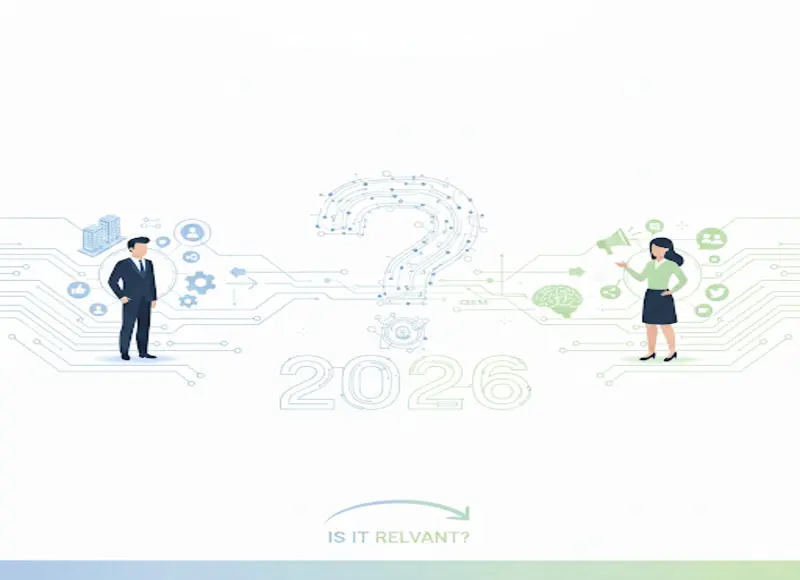
The short answer is: yes. In 2026, most B2B research happens without sales in the room. That means trusted expert voices and genuinely useful content matter more than ever.
Quality thought leadership shapes vendor shortlists and can even spark demand when it helps buyers rethink a problem.
Platforms are reinforcing this shift as well. For example, LinkedIn continues to expand creator-led video programs with major B2B sponsors. Since these initiatives launched, uploads have increased by more than 20% and views by 36% year over year — clear evidence that buyers are watching and brands are following.
In simple terms: collaborate with recognized experts, co-create helpful content (posts, webinars, podcasts), and show up where your buyers learn. Done well, B2B influencer marketing builds trust, drives qualified conversations, and supports revenue in a measurable way.
This guide breaks down the basics so you can capture all the benefits from the very beginning.
Why B2B influencer marketing works
Buyers learn in public channels and trust experts.
- To get the most impact, bring credible practitioners into the places where research happens (LinkedIn, YouTube, webinars, podcasts).
- Outcomes: trust, targeted reach, stronger mid-funnel, measurable pipeline.
- Bonus: SEO gains from expert mentions and links over time.
- Build it as a program: mix expert voices (including internal SMEs), map formats to the funnel, track demos and opportunities.
How B2B influencer marketing works
At its core, B2B influencer marketing is simple: ask trusted experts to teach your audience something valuable in the channels they already trust.
Do it well, and you gain credibility, visibility, meaningful conversations — and more authority in search.
Builds trust and credibility
People trust experts they already listen to. When those experts explain your space or validate your perspective, your messaging becomes more believable than standard advertising.
Research supports this: 73% of B2B decision-makers say an organization’s thought leadership is a more trustworthy basis for assessing its capabilities than its own marketing materials.
Here’s what Anastasia Zaichko, CMO at leading Agency in Influencer Marketing says:
“In B2B, influencer marketing builds trust because it replaces brand claims with peer proof. When a practitioner, analyst, or founder who your buyers already respect explains a problem in their own words, the message inherits their credibility. It’s not the logo that convinces—it’s the operator’s track record and the context they bring.
Credibility also comes from specificity. Vague promises feel like ads; concrete walk-throughs, trade-offs, and “what failed before this worked” feel like reality. That level of detail signals expertise and reduces perceived risk, which is the real barrier in complex purchases.
Another piece is public scrutiny. When experts share in open channels, the audience sees unscripted answers and pushback in real time. Surviving that scrutiny strengthens belief more than any polished case study.
Finally, trust compounds with consistency. Repeated exposure to the same expert POV, aligned with the same outcomes, teaches buyers what to expect from you. Over time, the brand borrows the expert’s reliability. That’s how B2B influencer work moves from “nice story” to “reliable signal”: credible messengers, specific evidence, open dialogue, and steady consistency.”
Increases brand awareness
Partnering with practitioners who already reach your niche audience helps you show up where buyers spend their time: YouTube, LinkedIn, webinars, and podcasts.
These formats travel inside organizations:
- 72% of B2B buyers share useful content with colleagues, extending your reach across buying groups.
- Buyers rank short-form posts (67%) and webinars/digital events (65%) among the most helpful formats for decision-making.
- More than one-third actively seek out content from independent creators when researching solutions.
A real example: SAP’s Tech Unknown podcast brought in independent experts and exceeded enterprise podcast benchmarks — over 101% above industry average downloads, with strong growth season-to-season and more than 52M potential reach from guest amplification.
Drives engagement and conversions
Expert-led content invites questions, discussions, shares, and demo requests because it addresses real problems in plain language.
B2B buying cycles are long, but digital research dominates:
61% of buyers prefer a rep-free buying experience.
Useful content from trusted voices helps you:
- Enter the evaluation process earlier
- influence entire buying committees
- generate higher-quality leads
Track meaningful signals: questions, comments, saves, demo requests, opportunities created, and influenced pipeline — not just views.
Boosts SEO and digital authority
Influencer partnerships pay off beyond the initial post.
When experts link to your resources, mention your insights, or reference your data:
- search engines better understand and surface your content
- You earn trust signals that grow over time
- Your helpful content gets discovered more frequently
Consistent, people-first content combined with authoritative mentions compounds long-term search visibility.
Who to partner with
Industry experts
- Who: hands-on practitioners (engineers, PMs, architects, analysts)
- Use for: clear explainers, practical evaluations
- Best formats: deep dives, teardowns, checklists
- Measure: fit, watch time, questions, demos, opportunities
Thought leaders
- Who: voices with strong POVs and influence among decision-makers
- Use for: reshaping buyer thinking, opening executive doors
- Best formats: LinkedIn series, roundtables, opinion pieces
- Measure: audience quality, ICP reach, replies, meetings
Employees as advocates
- Who: founders, SMEs, product experts, CS leaders
- Use for: fast insights, behind-the-scenes expertise
- Best formats: weekly posts, Q&As, build-in-public updates
- Measure: profile growth in target accounts, inbound questions, sourced meetings
Key Opinion Leaders (KOLs)
- Who: deeply trusted authorities in specialist fields (cybersecurity, fintech, healthcare, industrial)
- Use for: credibility in technical/regulatory spaces
- Best formats: comparison guides, clinic-style webinars, playbooks
- Measure: target-account attendance, saves, RFP mentions, opportunities influenced
Tip: Map content formats to the buyer journey and secure repurposing rights early.
Why it’s a strategic imperative
B2B buyers are active on social media
Today, over 5.2 billion people use at least one social platform including B2B buyers.
More than half of B2B buyers use social platforms to research vendors. Around 70% of decision-makers say social content influences decisions. This is exactly where expert partners and employees can meet them with helpful insights.
The digitalization of B2B relationships
B2B buying is now:
- self-directed
- digital
- multi-stakeholder
- longer and more complex
Nearly 90% of global buyers say their purchase process became more drawn-out last year. McKinsey reports that buyers want the freedom to interact across channels — “anywhere, anytime.”
Your influence needs to appear across those digital touchpoints.
Proven ROI and measurable outcomes
When you collaborate with credible experts and connect your efforts to sales, results show up in the pipeline and revenue.
Teams can track:
- sourced and influenced opportunities
- deal size
- win rate
- sales-cycle length
Real-world programs back this up. For instance, a recent B2B SaaS creator pilot with a small budget (~$12K) generated about $1.1M in pipeline tied to the campaign.
Market growth trend
Influencer marketing is no longer experimental it’s mainstream.
The global market is already valued at around $24B and keeps rising.
B2B buyers are increasingly accustomed to learning from creators, analysts, and practitioners long before speaking to sales.
Final thoughts
Yes influencer marketing is fully relevant to B2B in 2026, more than ever. Buyers learn in public channels and trust clear explanations from experts they already follow. When credible practitioners teach real lessons where your audience pays attention, you earn a place in the evaluation process — not just their feed. For most B2B teams, the fastest path to that kind of presence is working with a specialist influencer marketing agency that already maintains relationships with the technical creators your buyers actually trust.
When credible practitioners teach real lessons where your audience pays attention, you earn a place in the evaluation process — not just their feed.
Think program, not post:
- Focus on a single high-stakes buyer problem
- Pair an external practitioner with an internal SME
- Choose formats your audience already consumes
- Define one clear next step
- Measure pipeline impact (questions, demos, opportunities, wins)
If it moves the numbers, keep going. If not, adjust the topic or the messenger. That’s how B2B influencer marketing stays relevant — and valuable — in 2026.


Head Of Digital Marketing
Recent Blogs

Elia Martell
5 Virtual Recruiting Support Operations for Tech and Healthcare Teams
-

09 Oct 2026
-

8 Min
-

477
Jane Hart
Why LinkedIn Campaign Optimization Requires More Than CPC and CTR
-
09 Oct 2026
-
8 Min
-
155
Jane Hart
How to Vet an Offshore SEO Partner: A Due-Diligence Checklist for Agencies and Brands
-
08 Oct 2026
-
8 Min
-
263
Jane Hart
Benchmarking GPU Providers: A Practical Guide to Comparing Cloud Compute Options
-
07 Oct 2026
-
6 Min
-
173
