


How Digital Business Cards Improve Lead Capture at Conferences and Trade Shows
-
Last Updated:

31 Mar 2026
-
Read Time:

7 Min Read
-
Written By:
 Elia Martell
-
1249
Table of Contents
Digital business cards help capture leads instantly at conferences and trade shows, eliminating manual data entry while enabling CRM integration, faster follow-ups, and real-time analytics to improve networking efficiency and overall conversion rates.
The traditional conference floor is a graveyard of expensive cardstock. For years, the "ritual of the swap" involved collecting hundreds of physical business cards, only to have them sit in a blazer pocket until the flight home, by which time the context of the conversation had evaporated. For developers, product owners, and enterprise decision-makers, this manual process isn't just archaic. It represents a significant leak in the sales and networking pipeline.
In an era where tech stacks are optimized for every conceivable metric, the physical business card remains a stubborn, offline bottleneck. Transitioning to digital business cards is no longer about "going green" or appearing modern. It is a tactical shift toward data integrity, real-time lead scoring, and seamless CRM integration.
The Architecture of a Modern Lead: Beyond the Contact Card
When an entrepreneur or a lead developer at a startup scans a badge or a card, they aren't just looking for a phone number. They are looking for a data entry point. The primary failure of physical cards is their "static" nature. Once printed, the data is frozen.
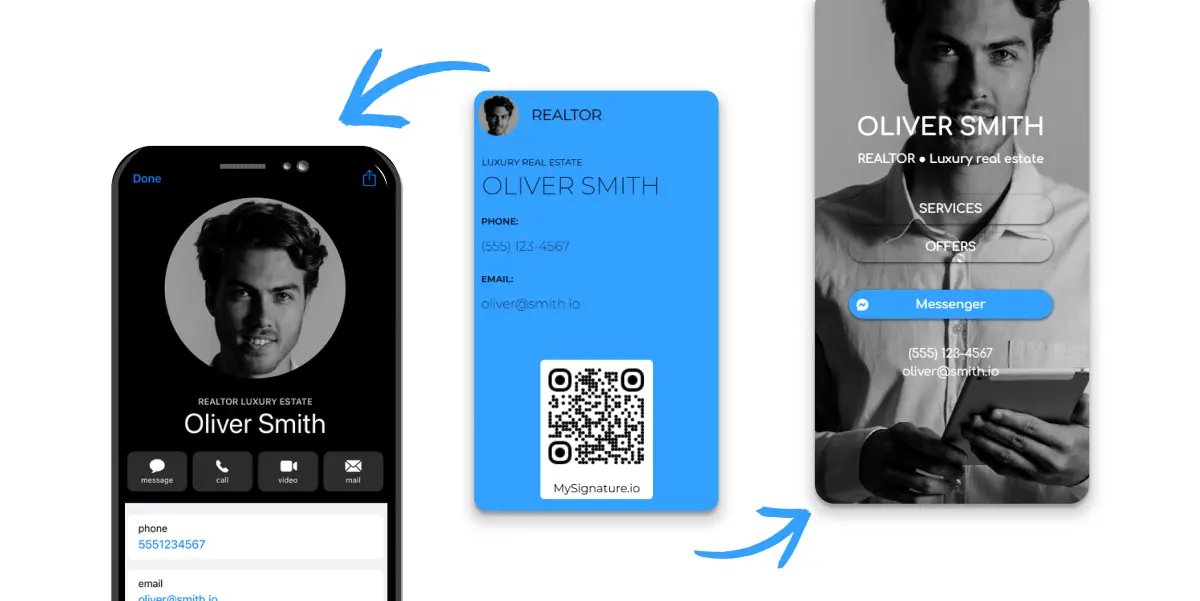
Digital alternatives transform the "handshake" into a reliable, one-tap entry point. By utilizing a robust QR code generator, companies can create a permanent digital bridge to a dedicated landing page. This static gateway provides a consistent anchor for several high-impact networking functions:
- Permanent Access Point: Unlike a physical card that can be misread or lost, a static QR code provides a high-contrast, error-free link to your most important professional hub, such as a GitHub portfolio or a specific project repository.
- Zero-Latency Data Entry: A well-generated static QR code ensures that your contact details are formatted correctly for immediate mobile import, eliminating the friction of manual typing and the risk of data entry errors.
- Direct-Action Links: You can bake specific "Call to Action" triggers into the QR destination. Even if the code is static, it can point to a lead capture form or a scheduling link, ensuring that the connection is immediately "captured" rather than just acknowledged.
According to a study by Adobe, 88% of physical business cards handed out are tossed within a week. For a mid-sized company, sending a team to a major trade show like AWS re:Invent or CES represents a catastrophic loss of potential ROI.
Digital solutions mitigate this by ensuring the contact lives directly on the lead's mobile device or in the lead's cloud-based contact list from the second.
Integrating Networking into the Tech Stack
For enterprise decision-makers, the value of a lead is determined by the speed of the follow-up. The "Time to First Touch" is a critical KPI. If your sales team has to manually transcribe 200 cards into Salesforce or HubSpot after a three-day conference, you have already lost the momentum.

The CRM Pipeline
Digital cards function as the "Front-End" of your lead generation engine. Through Zapier or native integrations, a scan can trigger an automated workflow:
- Instant Verification: The system checks if the lead already exists in your database.
- Automated Enrichment: Tools can pull the lead’s LinkedIn profile or company revenue data from the provided email address.
- Immediate Drip: An automated "Great meeting you at the [Conference Name]!" email can be sent before the lead even leaves your booth.
Data Security and Privacy (GDPR/CCPA)
In the software development world, security is paramount. Physical cards are easily lost, stolen, or left in public spaces, potentially exposing PII (Personally Identifiable Information). Digital cards offer a controlled environment. You can manage permissions, see who has accessed your data, and ensure your team collects lead information in compliance with global data protection regulations.
Real-Time Analytics: Measuring Networking ROI
One of the most significant advantages for product owners and startups is the ability to track engagement. You cannot track how many times a physical card has been viewed or shared. However, with digital business cards, every interaction is a data point.
Key Metrics to Track:
- Total Scans vs. Unique Scans: Understand the reach of your team.
- Click-Through Rate (CTR): Are people clicking your "Book a Demo" button or your "Whitepaper" link?
- Geographic Data: Useful for identifying which regional markets are showing the most interest at global events.
- Peak Engagement Times: Identify the hours of the trade show that were most productive to allocate staff for future events better.
Statistics from LinkedIn Business suggest that timely follow-ups can increase lead conversion by up to 391%. By using a digital card to create trackable, personalized links for each team member, management can see exactly which representatives are driving the highest quality engagement. This shifts the focus from the outdated "stack of cards" metric, which favors quantity, to a data-driven approach that prioritizes the quality and depth of each connection.
Practical Implementation: A Hands-on Strategy for Trade Shows
To move past the "me-too" implementation of digital cards, startups and enterprises should treat them as micro-products.
1. The "Dual-Asset" Strategy
Don't settle for a one-size-fits-all digital profile. High-performance teams deploy a dual-asset strategy by maintaining a "Networking Card" for general industry peers and a high-conversion "Lead Gen Card" for prospects.
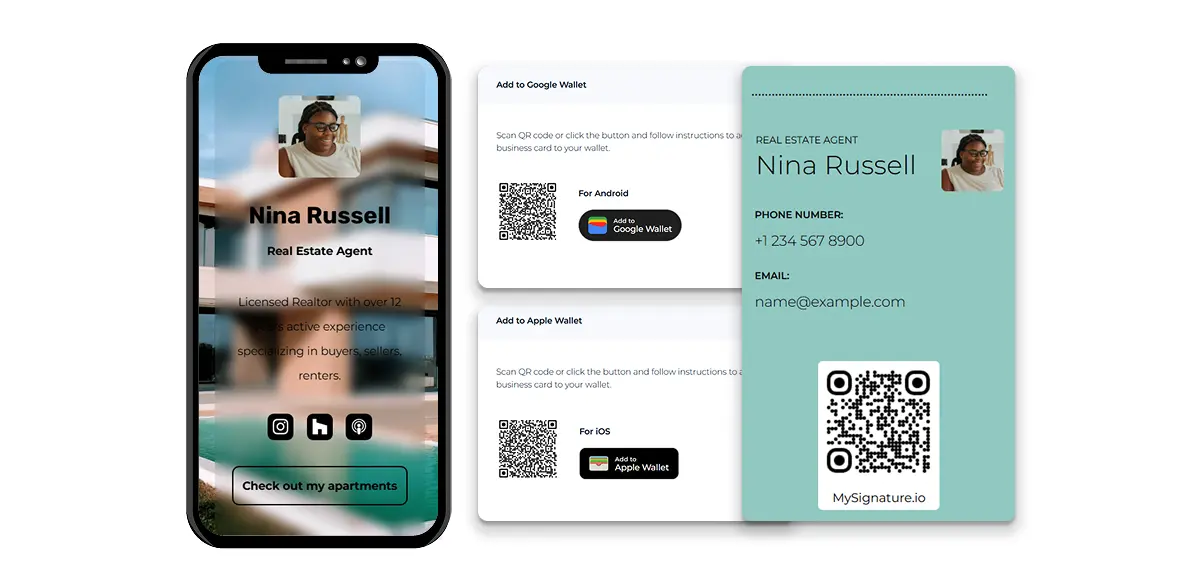
A digital business cards by MySignature works best for teams needing a polished, brand-consistent look that integrates direct "Book a Demo" links specifically for potential clients. This specialized Lead Gen version can feature a direct link to a product demo or a limited-time conference offer, ensuring that the data you collect is high-intent rather than just another name in a database.
2. The NFC + QR Hybrid
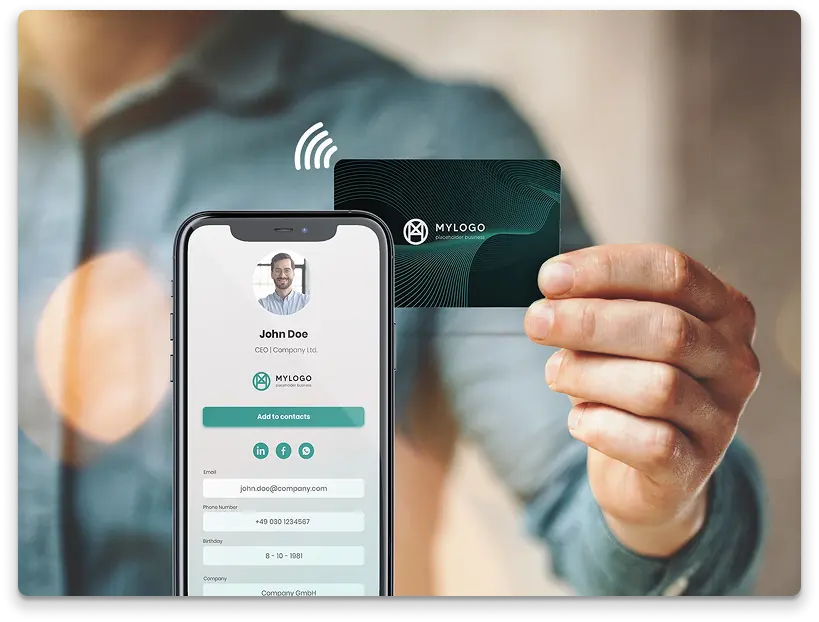
While many use a QR code generator for its universal compatibility (every smartphone camera can read them), high-traffic booths should utilize NFC (Near Field Communication) tags. A simple tap of a phone to a puck on your table can trigger the digital card, reducing the friction of opening a camera app in a crowded aisle.
3. Video Integration
For developers and entrepreneurs pitching a new SaaS or mobile app, a digital card can host an embedded 30-second "elevator pitch" video. This ensures that when a decision-maker looks at your contact info three days later, they remember your face, your voice, and your value proposition.
Case Study: A 4-Day Lead Capture Lifecycle
Imagine a mid-sized eCommerce team at a major tech expo. Using traditional paper cards, a ten-person team usually spends two weeks after the show just digitizing 500 contacts.

By switching to a unified digital business card system, they turn those four days into an active sales funnel:
- Day 1: Instant Segmentation. The team captures 450 leads. The system automatically flags 150 "Enterprise" titles. By 6:00 PM, those high-value targets receive an automated invite to an exclusive "Founder's Round Table" or a private technical Q&A session for that evening.
- Day 2: Live Content Updates. Analytics show that Day 1 leads are clicking "API Docs" more than "Pricing." The team updates their digital card link to a technical deep-dive video instantly, no reprinting required.
- Day 3: Automated Re-Engagement. The system identifies leads from Day 1 who haven't interacted yet and sends a personalized industry case study to stay top-of-mind.
- Day 4: Closing the Gap. With a "Book Demo" link embedded in the card, the team secures 40 firm calendar invites before the booth is even dismantled.
- Post-Event: While competitors start the manual data entry grind on Monday, this team starts the morning with a full schedule of discovery calls already synced to their CRM.
Digital cards move the focus from the act of collecting to the act of connecting.
Overcoming the "Friction" of Adoption
The common argument against digital cards is that they feel "impersonal." However, for the tech-savvy audience of developers and entrepreneurs, the opposite is true. An inefficient process is more offensive than a digital one.
To ensure success:
- Keep it Offline-Capable: Ensure your digital card platform caches data so you can still capture leads if the convention center Wi-Fi fails (which it often does).
- The "VCF" Direct Download: Ensure your card supports a "Save to Contacts" feature that works with one click. If the user has to manually type your name, the digital card has failed its primary purpose.
Summary of Actionable Takeaways:
- Audit your current "Lead-to-CRM" speed. If it takes more than 24 hours, your current system is failing.
- Instead of relying on static print, use a dynamic digital business card that allows for real-time URL editing to update your details or promotional links instantly.
- Standardize for your team. Ensure every employee has a consistent digital brand that aligns with your company’s web and mobile presence.
- Prioritize the "Return Exchange." Choose a platform that makes it as easy for the lead to give their info as it is for them to take yours.
The business card isn't dying. It is finally being upgraded to a version that meets the demands of the modern tech industry. By treating networking as a data-driven process rather than a social chore, startups and enterprises can ensure that every handshake is an investment that actually pays off.

Marketing Manager
Recent Blogs
Elia Martell
5 Virtual Recruiting Support Operations for Tech and Healthcare Teams
-
09 Oct 2026
-
8 Min
-

627

Jane Hart
Why LinkedIn Campaign Optimization Requires More Than CPC and CTR
-
09 Oct 2026
-
8 Min
-
189
Jane Hart
How to Vet an Offshore SEO Partner: A Due-Diligence Checklist for Agencies and Brands
-
08 Oct 2026
-
8 Min
-
323
Jane Hart
Benchmarking GPU Providers: A Practical Guide to Comparing Cloud Compute Options
-
07 Oct 2026
-
6 Min
-
187
